Actor’s Etiquette: Be Quiet

manners (1)When you’re not on stage, either in rehearsals or performance, be quiet.  The sound of your voice is distracting to those who are on stage, even if the audience can’t hear you.  The green room typically isn’t a place you can speak in normal tones.  I recently did a show where the action on stage was very quiet but the green room was very noisy, and not only did it throw me off, it was so audible to me that I can’t believe the front rows of the audience couldn’t hear it, too.

I’ve also heard people standing in the wings talk in a normal voice rather than a whisper.  It’s just disrespectful to those who are on stage.  If you have to do more than whisper, go far enough away from the stage that you are certain that no one can hear you.  Depending on the design of the theater, even the dressing room may not be far enough away.  Just think about where you are before you start speaking.

I understand that performances can be tedious if you have a small role, and staying silent for two hours isn’t the most fun in the world.  When the offstage sounds start to resemble a party, however, that’s too much.  There’s something in between.  Find it.

Feelings Aren’t Bad, They’re Just Scary

The first thing I do with all of my new acting students is introduce them to their feelings.  Even the people who seem quite emotional avoid their feelings, they just do it in a slightly different way than everyone else does.

Because feelings are an actor’s stock-in-trade, his primary tool, you have to be comfortable experiencing them.

anxietyExperiencing your feelings is different than feeling them.  Experiencing your feelings is about letting them be, sitting with them without trying to change them, for longer than you are probably comfortable doing so right now.  It’s about letting them exist without judging them.

Feelings aren’t bad, you know.  Even the negative ones – anger, frustration, sadness – aren’t bad.  They are trying to tell you something about your life, that’s all.  When a negative feeling wells up inside you, the best question to ask yourself is, “What expectation did I have that isn’t being met?”  (There are also a couple of follow-up questions to ask yourself, but that isn’t the purpose of this blog!)

But somewhere along the line, we got the idea that it isn’t good to feel our feelings, and so we opt out of them as much as we can.  Even the positive feelings.  We are only slightly more comfortable with letting ourselves feel positive feelings to the fullest than we are the negative ones.

I am always surprised when a student reveals to me, usually in the first class, that he doesn’t feel his feelings.  I use the male pronoun arbitrarily – I’ve had just as many women acknowledge this about themselves.  For me, missing out on your feelings is missing out on part of life, and knowing that I don’t feel my feelings would send me on a mission to understand why (but that’s just me.  You won’t travel that road until you’re ready to.)

It’s interesting that someone who knows he doesn’t feel his feelings would come to an acting class, but perhaps it’s his inner self sensing that he’s ready to try to do so.  Not all of the people like this who come to class stay, but the ones who do are very courageous, and they tell me the class has had an impact on their personal lives, as well as their acting.

But even the ones who don’t know they aren’t really in touch with their feelings realize it in short order.  And while it takes some time to really get comfortable with them, they also know in that moment that only by doing so can they produce acting worth watching.

shadow-peopleFeelings aren’t bad; they’re just scary.  Which is why you want to make friends with them slowly.  By gradually getting in touch with them, and by starting with the most benign feelings you can, you’ll realize that they’re just the boogeyman in the closet.  That nothing really terrible comes from feeling them; on the contrary, extraordinary good can come from feeling them, both on stage and off.

Here’s what I tell the people who are most afraid:  When I was little, I was the Good Little Girl.  I seriously believed that Perfection was possible long after I should have realized it wasn’t.  This wasn’t a stance forced on me by my parents in any way; on the contrary, it was entirely my choice.  Feelings like anger and disappointment and sadness were all things to be sucked up and ignored.  Surely no one would like me if they saw that I was capable of such terrible feelings!

But from the very beginning of my life, to the extent that one can imagine such a thing, I wanted to be an actress.  I think on some very instinctive level, I gravitated toward it because I understood, even at that tender age, that it was okay to feel all of my feelings on stage, including the “bad” ones.  It wasn’t me up there, after all – it was a character written by a playwright.  I could use all of my own emotions in service of creating a believable character without anyone judging me as wanting.  In fact, crying and screaming and being afraid – when appropriate in context – actually earned me praise.

Acting was very cathartic, because it gave me an outlet for feelings I wouldn’t release in real life.  As I got older, I realized that while those feelings I expressed on stage did indeed have their root inside the real me, no one watching had any idea what their deep, dark source was.  So I was completely free to indulge them as much as I liked!

I wonder, too, if the willingness to be so free with our feelings is one of the things that non-actors admire about us (aside from our ability to memorize all those lines!)  They know they could never be so brave, and admire those who can.

While the feelings that we feel on stage are, indeed, our own, they are conjured up not by our own experiences, but rather by what we imagine the character might feel in this particular set of circumstances.  This creates a little more freedom to let go; because the circumstances are entirely imaginary, they can’t harm us.  And when you are really working well, you become a way-station for them, not a holding tank.  By the end of the evening, if you’ve fully released them to the audience, you can make your way to that after-show party without the remnants of the tragic figure you played on stage following you home!

Actor’s Etiquette: Tech Rehearsals

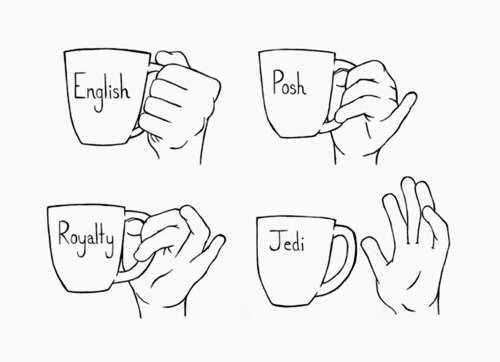
tea-etiquette-v2We hate them, but they are a necessary evil.

They are tedious.  They start late.  Everything stops while they fix a problem.  Couldn’t they have figured this out ahead of time?

It doesn’t matter.  It is what it is.  Take a deep breath and be patient.  Everyone is frustrated.  Stay attentive to what is being said by the director or the technical crew, so you can help them.  Don’t get so involved in conversations with other actors that you lose sight of why you’re here.  Be as helpful as you can by getting into position when they need you to be somewhere, and by running something as many times as they need to to get it right.

You’ve had a lot of rehearsals to get it right.  The crew gets one, and there are all kinds of other reasons you aren’t privy to that the Tech isn’t going smoothly.  Don’t roll your eyes or lose your temper.  It will all be over soon.  And don’t worry that you can’t do any decent acting at this rehearsal.  It’s not for you, it’s for them.  You can act in the dress rehearsal.

This doesn’t mean you shouldn’t try your best.  No, you may not be able to sink into the character in this rehearsal, but the crew needs to understand the general timing and events of the show so they can match their cues to them.  Be sure you give them what they need.

The Stage Director as Film Editor

The stage director has a number of functions.

  • She chooses the tone of the play and makes sure that every aspect of the production supports that tone.
  • She identifies what she thinks the playwright is trying to say, and makes sure that all the actors’ choices are consistent with that point of view.
  • She is in charge of the mise en scene, and in that role plays traffic cop.
  • She is the Big Picture artist of the production.  Actors are little picture people.  She controls the scope and feel of the evening.  We are responsible for the moment-to-moment details.

film editorIn other words, she’s a film editor for the stage.

Having a strong sense of the big picture is an essential ingredient in a quality director.  The ability to attend to detail is an asset, but it isn’t critical.  You can be a very good director if you have people around you to handle the details.

The reverse is true for actors.  The more you can work with the minutiae of what happens in a single moment (giving oneself over to it without overthinking it, that is), the better your work is apt to be.  If you can also see the big picture, so that you can tailor your work to intentionally enhance the grand scheme and ease the director’s burden a little bit, then your performance is apt to scale some impressive heights.  But it isn’t necessary, because the director is your film editor.

Unlike a film editor, who works after all the filming has been completed, the stage director does her editing throughout the rehearsal process.  That means that you, as the actor, need to provide her with quantity of film to select from.  Take after take.  And each take should be a little different.  Each take should offer something slightly (or majorly) different to the director.  Your job is to provide choices.

Now, truthfully, you’ll do a lot of the editing yourself.  You’ll try stuff in rehearsal and realize this works and that doesn’t, and select accordingly.  But there will be times, as in The Rainmaker scene I’ve cited, where you may try two materially different approaches, and both seem to work on some level.  What to do?  Which to choose?  How do I know what’s right???????

You don’t have to.  The director will.

Isn’t this a beautiful system?  You don’t have to worry about it.  The obvious choices?  Go ahead and make them.  The ones that panic you so much that you think you have to make them early and often?  Let the director shoulder that responsibility.  That’s what she’s there for.

And this frees you up to try everything you can think of.  Because a good director will give you immediate and solid feedback about what works and what doesn’t.  Good feedback, I believe I said, speeds the learning process.  So you don’t have to worry that you won’t get it all done in time.  You will.

Actor’s Etiquette: Notes

Decorum-Dress-Etiquette-BookNotes are what the director gives the actors once run-throughs begin.  He takes written notes during the run-through and comments on the actors’ performances either after the run-through or at the beginning of the next rehearsal.

The purpose of notes is twofold.  First, it allows you to run scenes or acts without interruption.  Second, it is intended to be an efficient way of communicating what is necessary.  Once you get to run-throughs, there is usually less time for the director to talk because so much time has been spent actually rehearsing.  So the idea is:  convey the information and get the hell out of Dodge.

If your director gives notes at the end of the night (which is usually more profitable, since you’re more apt to remember what he’s talking about than you will at the next rehearsal), remember that everyone is tired and wants to go home.  This means that it’s not the time to get into a long discussion about anything.  Listen to the director, acknowledge what he is telling you, answer his questions briefly and clearly, ask questions succinctly if you are confused.

And leave it at that.  If you have a bone to pick, do it after the rehearsal has ended and people are free to head to their cars.

As I’ve talked about elsewhere, bones are best picked after you’ve had the chance to sleep on it.  It’s late.  You may feel differently in the morning.  And believe me, the director is tired, too.

It’s usually a good idea to write the notes down and review them before the next rehearsal.  No matter how good your memory is, it’s easy to forget a note, because (wait for it!) it’s late and you’re tired.

Notes usually involve fine-tuning issues, things you may need to think about before the next rehearsal, but which are easily fixed.  Notes about problem areas will probably be run several times in rehearsals, but if not, don’t be afraid to ask that some general rehearsal time be spent on them.

If you get the same note repeatedly, it means this:  “You aren’t paying attention to what I’m telling/asking you, because I keep having to say it.  It would be nice if you’d actually do something about the problem before we open.”  The first time it’s repeated (because you forgot it since you didn’t write it down), the actors will forgive you.  But after that, they are all thinking to themselves, “Would you just do it already, so we don’t have to listen to this note again, because (wait for it!) it’s late and we’re tired and we want to go home.”

Exploring the Subtext

rainmaker 2Let’s say that I try the scene from The Rainmaker the way Nash wrote it.  I try it with the alternatives that I’ve suggested, and at the end of the day, apart from the step File takes toward Lizzie, which I think makes no sense at all, I end up using Nash’s choices.

Doesn’t that justify just using Nash’s choices from the beginning?  Should I waste time trying things that ultimately aren’t going to work, that are going to be tossed aside?

First off, I don’t know at the time that I am exploring my options in the scene that I’m going to end up using Nash’s choices.  It’s just as possible that I will use my own.  The only way that I can be confident that his choices are the right ones is if I explore and dispense with any other possibilities.  The confidence I gain is worth the effort.

Second, I get a good deal out of exploring the options that I ultimately don’t use.  It’s called exploring the subtext.

Because we are often unable or unwilling (often out of fear) to be honest with each other, creating the confusion and conflict of good drama, the unspoken thoughts and feelings which make up the subtext are important elements for an actor.  To create a really rich performance, you have to know what the subtext is and play it accurately.

You don’t do that by saying “File and Lizzie have been in love forever, but File keeps resisting it.”  You do it by immersing yourself in the longing you have for the other person, the desire to touch them.  Once you’ve pumped up that desire to its max, you can now layer resistance on to it and the electricity in the scene skyrockets.  Without the intimate understanding of what the love File and Lizzie have for each other really feels like, you can’t know what it is you are resisting.  The audience needs to see not just the resisting, they need to see the love, too.  If you don’t show the audience the love, then all they see is resistance, and they don’t know how to interpret it.  Do they hate each other?  Love each other?  Or are they indifferent?  If you aren’t actively resisting something, it’s apt to come out somewhere in the middle, and that looks a lot like indifference.

It’s the push me/pull you relationship of the love and the “I can’t give in to this” (File) or “I can’t let him know how much I care” (Lizzie) that is dramatically interesting.  Play one without the other, and you’re missing half of the symphony.

So however you choose to stage this scene, you need to explore both elements, text and subtext.  By experimenting with the levels (how much love, how much resistance), you discover the most interesting and powerful way to play the scene.

In other words, when there is clear subtext in a scene – when your feelings are not aligned with what you say – your performance will ALWAYS be best served if you take at least one rehearsal of the scene and play the subtext as clearly as possible (even if it appears to categorically contradict particular lines you speak).

Oh, and the negative “can’ts” up above?  It’s okay to start with them as long as you translate them into positive verbs, as in “I must resist loving Lizzie” and “I must hide my love from File”.

Actor’s Etiquette: Props

etiquette (1)If you have stage business involving props, ask your director or stage manager to provide rehearsal props.  If they don’t, bring something in yourself that will allow you to get familiar with the timing, etc., involved in the business.

If you are using props provided by the theater, respect them.  They are tools of the trade, not toys.  Handling them needlessly increases the probability that they will get broken, creating more work for someone (probably not you).  Use them in the context of the play, but that’s all.

Make sure you know where to get your props from and where to return them when you are finished with them.

Don’t touch anything on the prop table unless it is your personal prop and you need to bring it on stage with you.  The backstage crew has put things where they are for a reason.  If you have a problem with a prop’s location, have a conversation with the stage manager.

Check your props when you first get to the theater and before you begin putting on your costume and make-up, so you’re sure it’s done before the house opens.  Check both your onstage (set) and offstage (hand) props.

If something is damaged when you are using it, bring it to the stage manager’s attention as soon as you can, so it can be fixed or replaced.

Stage Directions Aren’t Always Right — An Example

rainmakerThere may be no successful playwright who has written more stage directions than N. Richard Nash, the author of the wonderful romantic comedy, The Rainmaker.  (The 1956 movie starred Katharine Hepburn and Burt Lancaster.)  The Rainmaker is chock full of emotional and physical choices, so much so that the usual measures of timing (minutes per page) can’t be used in determining the running time of the show!

Below is a portion of the scene between Lizzie, the old maid daughter of a rancher, and the Deputy Sheriff she has had her eye on for years.  Read the scene through, including the stage directions, and visualize the scene in your mind’s eye.  The directions are so extensive that I hope you can get a clear picture of how it can be played if you stick to everything in the script.

Now I’d like to show you how there are alternatives that ought to be at least considered, and by considered, I mean tried in an actual run-through of the scene.  Because you won’t know if something works or not until you try it.

I’m starting the scene at Noah’s exit, in the middle of page 67 (here’s The Rainmaker Excerpt).

File (Going to the door)  Well –

“Well” might mean, “Well, I guess I’ll be going”, but it doesn’t have to.  Perhaps it means “Well, I’m not sure what else to say.”  And even if it does indicate a departure, that’s a very good reason to not move to the door.  When a character says he’s leaving and he doesn’t leave – or he moves his upper body as if to leave, but his feet stay planted – that’s a loud and clear message that his heart is still in the room.  That’s both powerful and interesting to an audience.

Lizzie (Afraid he will leave)  if File chooses to stay where he is when he says “Well”, perhaps Lizzie isn’t afraid that he will leave after all.  And perhaps Nash is wrong when he says that Noah broke the spell between them.  Perhaps he didn’t break the spell at all, and something monumental is happening between these two.

Lizzie (Snatching for a subject that will keep him here)  If the spell still has them in its hold, then she doesn’t have to snatch.  But more importantly – the topic of his divorce is huge.  You don’t just snatch for such a sensitive topic because you want to keep someone in the room.  You offer him a slice of pie to do that.  No, the better (that is, the more dramatic choice) is for Lizzie to mention the divorce because she desperately wants to hear the details about it.  For her, the divorce is what has kept them apart.  Now is her chance to clear the air.

File:  No – I wasn’t – (Then, studying her, he changes his mind.) – but I will.

The implication is that he is still at the door, ready to leave, until he studies her and changes her mind.  Except that he doesn’t have to.  He can still be standing stock still when he says “No, I wasn’t.”  And he doesn’t necessarily change his mind, he simply decides to tell her.  And that’s a very different thing for an actor.

Lizzie (Helping him to get it said)  Kentucky?

Maybe Lizzie IS trying to help him.  Maybe she is just trying to connect with him, to indicate her understanding.  Or maybe she is covering her own nervousness about the topic but saying something, anything.  Or maybe she is puzzled by someone from so far away stealing File’s wife – how did he come to be so far west?

File (A step toward her)  Yes, she was.

Lizzie (Her hopes dashed)

If File is moving toward her, why are her hopes dashed?  When the man you love moves toward you, it’s a positive sign.  It offsets the “Yes, she was”, or at least should cause confusion.  The moment is probably stronger if he stands still and watches her while she becomes a nervous wreck.

As for Lizzie’s next lines, I almost think the start of the word “afraid” is too much.  It’s implicit in the line and is overkill if she actually says it.  If I had written the play, I would have had her stop at “That’s what I w—“, or maybe even drop the “w”.  And rather than “catches herself”, I might have said “smiles”, as in that bright smile that covers the tears.  But even if we leave the line as written, the smile still works.

Lizzie (Drearily).  Why drearily?  And on her next line, why “Agreeing – but without heart?”  What if Lizzie sincerely believes that women with black hair are the most beautiful, and her mousey brown is unattractive?

File sits when he describes the schoolteacher.  But is there any compelling reason to?  I’d have the actor try it standing, try it pacing, try it with movement that isn’t pacing, AND try it sitting.  I can’t begin to guess which choice better underlines what is going on for File emotionally until I see what impact the movement has on how he behaves and says his lines.

File (Raging)  What if the rage comes between “No I didn’t” and “Why should I?”, instead of before both sentences?

Lizzie (Astounded)   The only problem with this adjective is that the word tends to indicate something big, and the italics in her lines that follow underscore that intention.  But what if she is a combination of exasperated and astonished on “Why should you?” and then goes very quiet and intense on “Why didn’t you?”  Or the opposite:  a very quiet “Why should you?” as if she can’t believe he even asks that, it’s so absurd, followed by a loud, berating “Why didn’t you?”

Lizzie (Desperately)  What if she isn’t desperate on this, but instead challenges him with this line?

I could go on, but I hope I’ve made my point.  Nash’s choices certainly work, but so do mine.  Only by trying them can you determine which works better.  Or perhaps find a way of combining the two!

Actor’s Etiquette: Cell Phones


etiquette2Turn them off when you’re at rehearsal.  All the way off.

If you are expecting an important call that you must deal with during the rehearsal, put your phone on vibrate and give it to someone to hold, asking them to let you know at the earliest break in proceedings that your phone rang.  Most calls can wait to be returned until that break.  Unless your wife is going into labor or something equally urgent, tell anyone who needs to call you during rehearsals to leave you a message and that you will return the call as quickly as you can.

Text messages are a great way for people to get in touch with you when it’s urgent, because it saves you listening to long voicemail messages about things that can wait until rehearsal is over.

I’ve worked with people who leave their ringer on, but do not acknowledge incoming calls when they are on stage.  It’s fine except for the fact that it keeps ringing, and that is very distracting for anyone who is trying to act.  So please be courteous.  Once upon a time, we only had landline phones, calls waited until rehearsals were over, and usually nothing calamitous happened.

You are, of course, welcome to check your messages at any breaks called by the director.

The Stage Directions You Should Pay Attention To

There is, of course, an exception to every rule.  So there are stage directions that I wouldn’t think about ignoring.

godot3_p1250709Samuel Beckett’s plays are a good example.  Waiting for Godot specifies a single tree in a barren landscape.  To populate the set with some scrub brush as well would be to damage Beckett’s intention.

To have Hamm stand or Clov sit in Endgame would similarly harm the play.

In Equus and in Christopher Schario’s A Christmas Carol, the playwright calls for the actors to be on stage at all times, seated on benches at the sides when they are not part of the action.  This is a choice that should be honored in the production.

Thornton Wilder makes no such request for Our Town, but productions of his play have been staged this way, and I don’t see it as problematic.

Schario’s play calls for a fiddler on stage, who plays music at various points throughout the night.  When I directed the play, there was no fiddler available.  We turned four of the actors into a singing quartet who fulfilled Schario’s intention faithfully, I think.  However, striking the musical component entirely would have lessened the play.

Our townNoel Coward’s estate insists that his plays be staged with complete fidelity to the stage directions, including the smoking.  I’m not sure that every cigarette in Coward’s oeuvre must stand lest his plays be harmed.  (A red pen to some of his dialogue would strengthen the plays, but alas, we must draw the line there.)

Full realistic sets for Our Town would completely contradict the playwright’s purpose; however, if you indicated the gardens with something other than arched trellises, I doubt an audience would be disturbed.

In other words, examine the stage directions, playwright’s notes, and dialogue for the playwright’s intention.  Honor the intention.  If you succeed in this goal, then whatever you do will be all right.