On Auditioning

AuditionI think I’ve written a small bit about auditioning before, but I’m not going back to read it to make sure I don’t repeat myself.  My perspective today may align in some ways — at least I hope it will — with what I have written before.  But I’m going to trust that what I write today is a whole in and of itself, even if it comes with duplicate phrases.

The one thing I think I must have said previously — or if not, I should have — is that Michael Shurtleff’s book “Audition” tells you everything you need to know.  Quite honestly, I think it tells you most everything you need to know about acting, not just auditioning.  Although if all you needed was the theory, higher education of all sorts would soon go out of business.

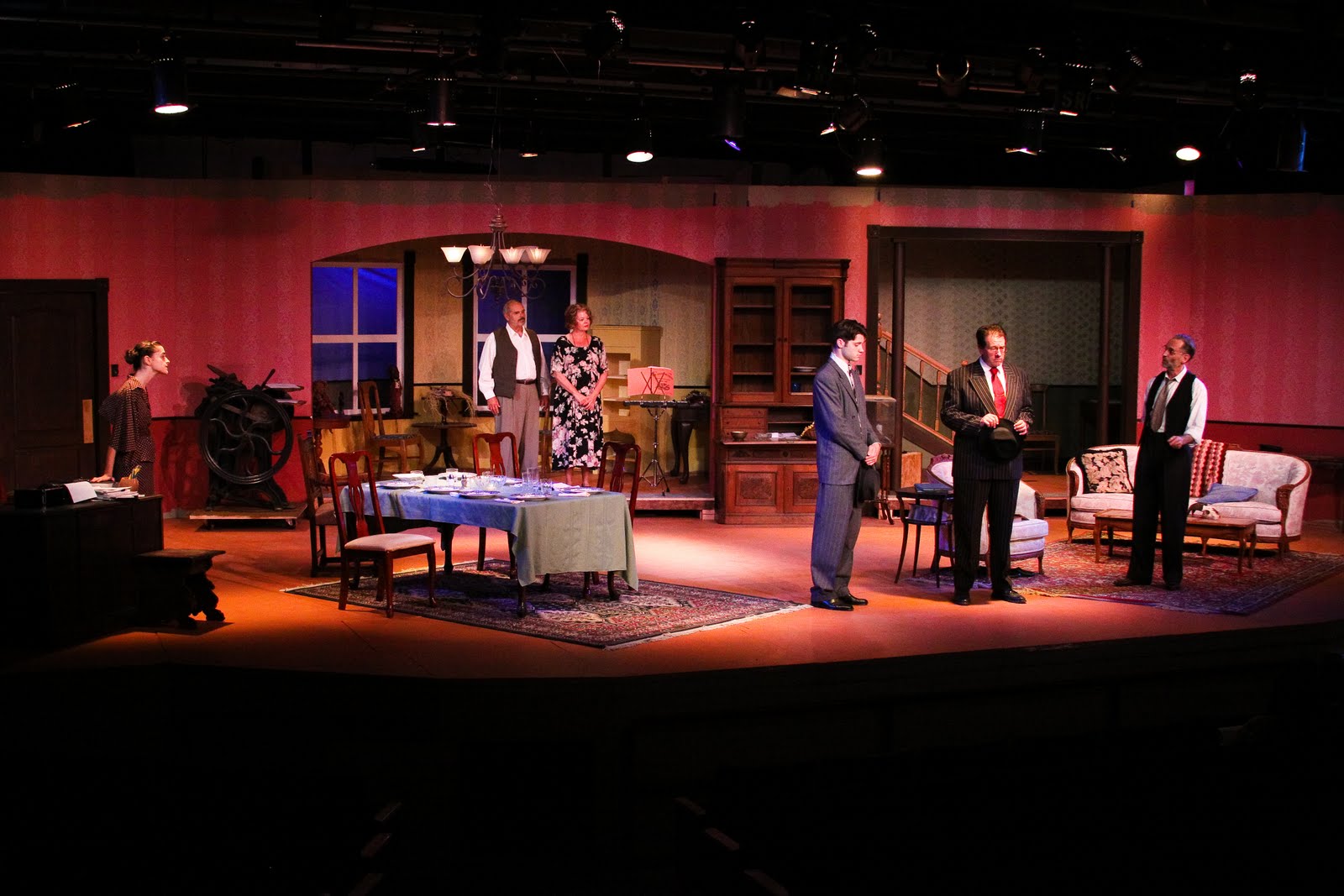
So I am vaguely contemplating auditioning for a local community theater production.  I’m not sure that I want to commit to everything doing a play means — rehearsals, performances, etc. — but I may just show up for auditions for the pleasure of saying the words I have longed to say since I first encountered the play in my adolescence, and let the future take care of itself.

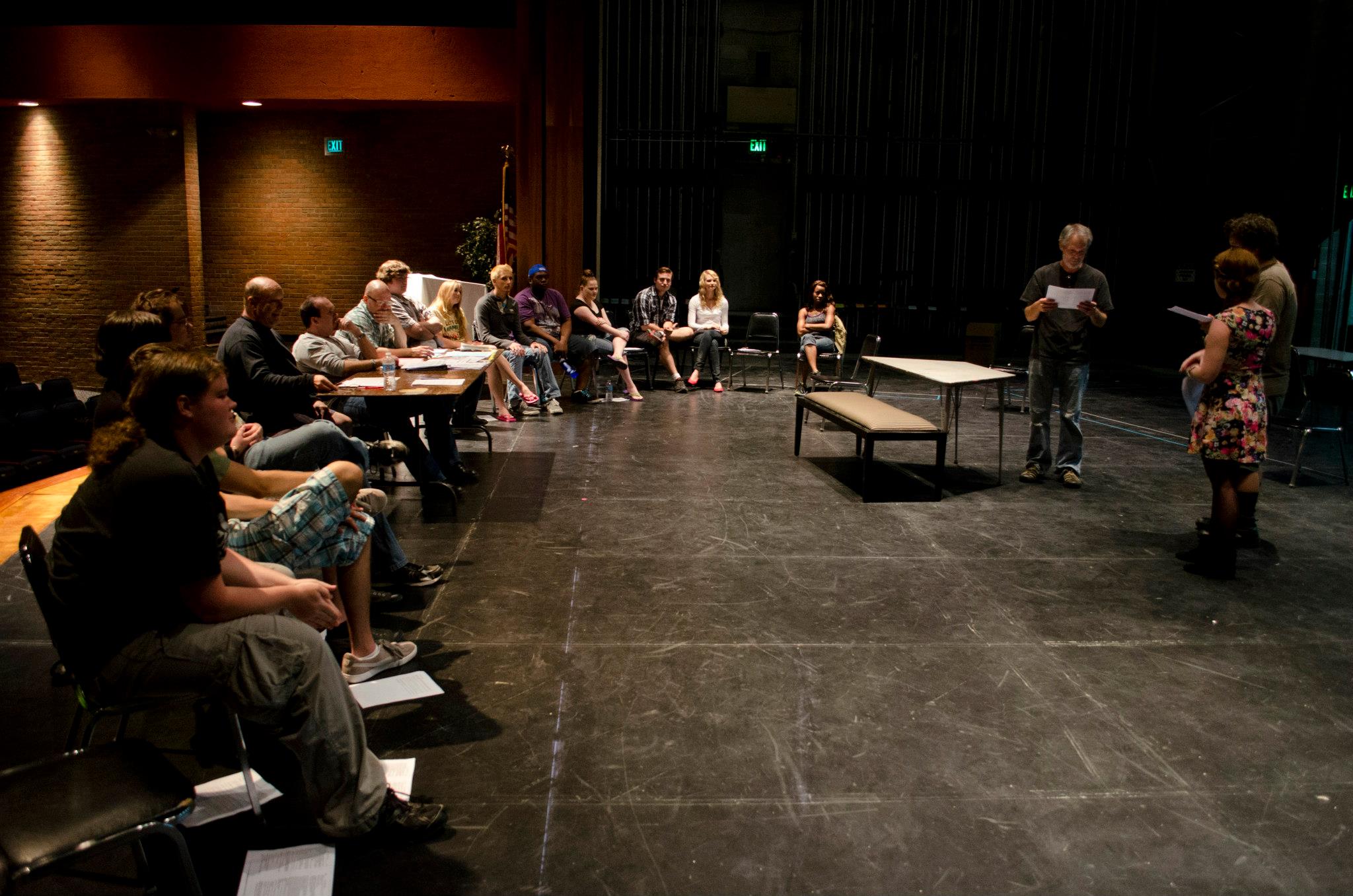
Reading through the audition sides made me ask myself, what matters most in an audition?  What do I, as a director, look for?  And what do I, as an actor, try to provide?

Understand, there are as many kinds of directors as there are people.  I’m sure there are directors hoping that someone will show up who says the lines in precisely the way they sound in the director’s head.  And they may well cast on that basis.  I won’t say that an actor who does that won’t get my attention.  But it isn’t a given that I will cast that actor, either.

So what do I hope to see at an audition if I’m a director?

  • A moment — just a moment is sufficient — of a real emotional connection with the character.  A moment where all the artifice of the audition process disappears, and the actor is truly connected with what is going on with the character.  The more moments you can provide like this, the better.  But sometimes just a fleeting glimpse of it is sufficient for me to cast someone — for instance, if no one else has come close, or if you are so right in every other respect that the flash of understanding gives me the confidence that I can pull out of you what I need to.
  • An attempt to connect meaningfully with your scene partner.  I recognize that you don’t choose your scene partners at an audition, and your scene partner may have no idea that you are trying to connect with him.  He may be incapable of receiving what you send him, at least in the context of an audition, but I won’t grade you on that.  What matters to me is that I see you, as an actor, reach out to him, open yourself to whatever he may deliver.
  • If it’s a comedy, I’d love to get the sense that you know how to deliver a comic line.  I recently saw a musical comedy performed by a talented troupe of high school students, and was amazed by the fact that everyone with a funny line delivered it with great comic timing.  Very unusual, in my experience, and kudos to the woman running the program.  (Please give me the secret!)In a perfect world, you want a comedian/commedienne to deliver all the punchlines, but you won’t always get them.  Many times, the ingenue/juvenile or leading lady/man need to deliver punchlines, and you can do so successfully even if you aren’t a comedian by nature.  So at an audition, I want to see clear evidence that you know what “funny” means.

It’s nice if you’ve done you homework (if the play isn’t an original) and know something about the play and its characters.  If nothing else, it tells me that you are willing to work.  And while I don’t put a lot of weight on it, yes, reading the lines in a sensible way helps me to get past the rest and to see the first two things that I’m looking for, which are really two of the most important things you can convey in an audition.

The last thing you can bring to the table is sometimes taken care of by any of the things I’ve already mentioned.  It is also the most ephemeral thing to describe.

I’m looking for something unusual.  A creative take that isn’t expected.  A single moment of surprise, something that makes me joyful because whatever you do is so out of the ordinary and yet fits perfectly.  It can be the tiniest moment, but a moment that shows me that you can bring something unique to the play matters.  I want to see that you are a creative artist.  It doesn’t even matter if you make the wrong choice.  Just make an interesting choice.  I’m not going to assume that you have read the play before, or that even if you have, that you have digested it as thoroughly as you will over the course of rehearsals.  So I won’t penalize you for creative choices that aren’t right for the role.  On the contrary, just showing me that you can be creative is key.  I’ll assume that you will make creative choices in rehearsals that make better sense.  I just want to know that you have it in you to dig for the unusual.

Remember, I’ve got mere minutes with you in an audition.  To stand out, you need to do something — even just one thing — that no one else is doing nearly as well.  Stop worrying about doing it “right” and worry about doing it “interestingly”.

If you do all of these things but I don’t cast you, the reason is probably one of balance.  I’ve got to put together an entire cast that makes sense — physically, tonally, etc.  You may be brilliant, but you may also be the odd man out.  In that case, it may kill me to not cast you, but I’ve got no choice.

As an actor, assume it is killing me to not cast you.  Assuming that gives you the strength to keep going in this very difficult profession.

Pacing: Speed vs. Connection

I went to see a new play this weekend, a respectable work a friend of mine was in.  The cast, while largely amateurs, were talented people with respectable acting resumes.  It was an enjoyable afternoon.

Still, I left the theater wondering whether a different cast would have erased some of my concerns about the play.

The play, in parts, was a little more about telling than about showing.  The good news is that the telling was pretty interesting (which doesn’t mean that it was the best choice dramatically-speaking).  But I couldn’t help but wonder if greater connection between the characters might have made me less concerned about this aspect of the play.

I actually have greater success working with new actors than I do with actors who have experience, because actors assume that because they have done ten plays, they are good at what they do.  Why would they continue to be cast if they weren’t?

Why?  Because they audition better than everyone else.  Or because while they are still falling short, they have enough natural talent that, in community theater, they are still better than the competition.

Don’t get me wrong — there are some FABULOUS actors in community theater.  I grew up in NJ community theater and can attest to that.  And the people in the show this past weekend are all talented actors.  But being a talented actor doesn’t mean you know how to make the best use of your talent.

And unfortunately, talented actors who don’t know how to make the best use of their talent will resist the notion that they have something to learn until something causes them to wake up.  For me, back in the days when I was a young actor going to professional auditions, it was a callback audition where I felt outclassed by the competition.  Finally, I had encountered people who not only were more skilled than I was, but who I was willing to acknowledge were better than I was.  For me, in that moment, the obvious question was, “How do I get to be that good?”  (And the obvious answer was, go to school.)

But okay, not everyone is ready to do that.  FIne.

disconectedLet’s talk about the most common “miss” I see from talented actors:

It has do with pacing.

Directors usually harp on their actors to “pick up the pace.”  With good reason; actors can be self-indulgent.  The trick, as an actor, is to tread the fine line between feeling connected to the moment and keeping the play moving.

Rehearsing is breaking the scene down into slower moments so you can get in touch with what is going on emotionally, and then speeding up that experience as much as you can while staying connected to the emotion as well as your scene partners.

The problem comes in that most actors are doing the serious work on these moments at home, without anyone to disturb them.  As a result, the work becomes a solo act, not a scene between two characters.  Each actor walks into the rehearsal room with some pre-conceived ideas about what should be happening in this scene.  And that is where the scene stays, for them.

It looks pretty good.  And it sounds pretty good.  It really does.  But the problem is that there is nothing really happening between actors (and therefore the characters) onstage.  So the story is well told, but no one’s heart is moved.  In order to move an audience emotionally, you must directly connect with your scene partner and let the audience join in that connection.

That connection comes in the spaces between the words.  Pacing is all well and good, but when the spaces are full of emotion, they don’t slow down the play.  Too often, I see good actors rushing through a scene.

To connect with your scene partner in a way that electrifies an audience means listening to and receiving the emotions your scene partner is sending your way.  Really receiving and reacting only to what you receive.  And vice versa.  It means living those spaces, not speeding through them at 70 mph.

This is why I ask all my actors to do the Mystery Play exercise.  It forces the actor to listen and react.  If you’re paying attention, you can clearly understand the difference between what you’ve been doing and what really moves an audience, and why rushing, no matter how well orchestrated, is insufficient.

I Haven’t Gone Away

Just in a very busy transitional part of life right now.  I miss writing these blog posts as much as I hope you miss reading them.  Please bear with me as I navigate an interim position at work, selling a house long distance, looking for a new one in far too many locations, and adopting a cat.  I promise to try to find a few moments to write a post in the next two weeks, because I have many things in my head that would like to be put on paper.  So please revisit the blog and have patience if new posts aren’t up as soon as you’d hoped!  And, as always, please feel free to ask questions, because questions are the best source of new posts (to me, anyway).  Questions often force me to look at things from an angle I hadn’t thought to, and that often pushes me to write posts even when I am busy!

My Top Ten Most Useful Acting Posts

All right, they may not be my Top Ten.  I’ve written about 200 posts in the past two years, and I haven’t gone through each of them.  But I’ve noticed in the last couple of months that everyone in the world is suddenly obsessed with the difference between impersonation and acting, a post I wrote a year ago.  Now, it’s a good post, but it is hardly the most important one I’ve written, and it certainly isn’t a very practical one.  I wrote it in response to a student’s question, so it was sort of a diversion from what I typically write about.  (I love these diversions! – so keep asking questions.  But that doesn’t always make them the most useful posts I have.  Having said that, two of the posts I’m about to list were answers to questions.)

The impersonation post was visited again today, which made me think:  if I could direct readers to a handful of posts, which ones would I want them to read the most?  So here’s my quick-and-dirty list, in no particular order.  And oh — it’s eleven, not ten, simply because I miscounted and don’t want to eliminate any of them!

(By the way, I’ve noticed that some of the links from one post to the next aren’t working again.  No idea why this happens, but it seems to periodically.  I’ll get to fixing them soon, I hope.  In the meantime, you can search for the posts to get the right links!)

Line Readings, and Why They Don’t Work

The Learning Process, Part III (The Fastest Route)

Acting as Storytelling:  It’s About Competition

Equus, Part III:  The First Five Minutes

Actor’s Etiquette:  Deliberate Practice

The Subconscious Effect, or Why You Can’t Do Any Acting Until You’re Off Book

What Are Play Rehearsals For, Part III

Big Verbs vs. Little Verbs

Verbs & Beats – Moonlight & Magnolias

Playing the Verbs, Part III – Raising the Stakes

An Example of Why Verbs Make a Difference


A Few Thoughts on Blocking

You-Cant-Take-It-With-You-5281-701187I just got back from AACTFest 2015 and am reflecting on a couple of questions a director from Rochester asked me after the Blocking Workshop I gave on Friday:

  • Is it wrong to have an actor move when someone else is speaking?
  • What if you need an actor to move, but you have no good reason for him to move?

The questions arose, in part, in response to comments I had made about not moving when it is someone else’s “scene” and the need to have a reason to move, be it emotional or practical.  Let me address them in reverse order.

Anyone who has directed a play has encountered a moment when you realize that Actor A needs to be in Position B for one line and Position C for a line that follows, but you have no good way of getting him there.  You backtrack to see if there is another way to block the scene to eliminate the problem.  You try three different options, but none of them are satisfactory — either none of them solve the problem, or else you lose more than you gain.  There’s no real choice — Actor A has to move on another actor’s line when he has no real need to move.  What to do?

In a perfect world, you want to find a reason for him to move, because people just don’t move without a reason.  But the reason doesn’t have to be important or even material to the play.  Have you ever spotted a pin or a penny on the floor and picked it up?  Found something in your pocket you want to throw out and walked to the wastebasket to do just that?  No reason why you can’t have your actors do that.  Adds a bit of verisimilitude to the scene.  Done slowly enough and with minimal motion, it shouldn’t disrupt the scene, especially if the actor is carefully paying attention to what is being said at the time.  His focus on the speaker while he moves actually redirects the audience’s eyes back to the speaker.  Clearly, they think, the speaker must be saying something important!

But let’s say that there is no wastebasket and bending over would be just a little too distracting at that point in the play.  It’s not unheard of for someone to take a step or two for the simple reason that they are tired of standing in one spot.  Even without the excuse that the character wants to lean against the piece of furniture a few steps away, moving just to physically change position is fairly normal.  Is the speaker saying something that Actor A needs to consider?  Sometimes pacing helps people to think, and taking a few steps while pondering what the speaker is asking looks entirely believable to the audience.

Worst case, have the actor slowly sidle to the new location.  It’s unlikely the audience will notice it happening unless he is standing directly behind the speaker.

Which brings us back to the first concern:  is it a bad choice to have an actor move on anyone’s line but his own?

Well, there are times when it is entirely appropriate to do so.  Say there are five of us in the room plotting a bank robbery.  We’ve been going through a dry run, and the lady of the household arrives home with the groceries.  I’m the leader of the gang, and I start shouting out orders, telling everyone what to pick up and where to hide it, so she won’t know what we’re doing.  Everyone should be moving while I speak in that scenario.

But let’s say it’s a domestic scenario with a husband and wife.  Here’s my rule of thumb about virtually everything that happens on stage in a realistic play:  Does it happen in real life?  That is, in real life, do people walk when other people are talking?

Of course they do.  If it happens in real life, it can happen on stage.  Do it in a very real, natural way that does not distract from the important stuff in the play, and it will probably enhance the believability of the scene.

Having said that, there are times when you shouldn’t walk on someone else’s line.  I’m sure it’s not a comprehensive list, but here’s some examples:

  • Important plot points are being revealed.  For instance, in a murder mystery, you want to make sure the audience hears the red herrings.  Don’t do anything to interfere with that.  On the other hand, feel free to muffle the real clues just a little by some sort of sleight of hand — tossing it off as entirely unimportant or covering it with some sort of distracting physical action — not enough so the audience doesn’t hear it, but enough so they don’t think it matters.
  • Very dramatic or very funny moments.  Someone is telling you about their rape twenty years ago?  Don’t move a muscle.  There’s some funny shtick going on?  Keep still.  Someone is giving the punchline?  Hold your breath until two seconds after it’s finished.
  • When your action is big.  A simple short cross is often not a problem.  Nor are physical activities (business) that make sense for your character.  But anything too involved will draw the audience’s focus.  Make sure that whatever you’re doing is less interesting than what the speakers are doing and saying.  That way, if the audience looks at you, they think, “Oh, that’s believable” and not “Wow, that’s a lot more interesting than what the leads are doing!”

When should you walk on someone’s line?  Draggy scenes or extended exposition.  If these have stayed in the play to publication, it’s probably because no one — neither the playwright nor the original director — could figure out how to write the play without them.  Kind of like you with the actor stuck behind the chair when you need him over by the table!  Bail the playwright out by providing visual interest so the exposition won’t go down like bad-tasting medicine!

More About Verbs

Tampa - Selecting Beats & Verbs

Real Table Work — Selecting the Beats and Choosing Verbs

I recently spent a day with a community theater outside of Tampa, a very rewarding day with twelve actors who were so open to what I was sharing with them.  It was a joy to work with them.  As often happens, I have stayed in touch via email with one of the actors.  One of the perqs of hiring me to give your group a workshop is that in addition to the low per-person cost, I’m happy to respond to questions via email at any time after the workshop is over.  The workshop is typically about planting seeds, not harvesting them, and so it can take a little time to really reap the harvest.  I’m happy to keep helping to nudge the process along from a distance!

When a student raises an issue that I think others will benefit from, I respond to them via this blog.  So I’d like to share some of what Linda and I have been talking about, because I think there is broad application in how she is working through the newness of choosing and playing verbs.

First, remember that while Big Verbs (which cover the play or an act) are often global, broad stroke needs/wants, the Little Verbs — those which govern your moment-to-moment work — are very simple, practical things.  They may be in service of that Big Verb/Goal in some small way, or they may be in reaction to what another character is “giving” you.  But they are very concrete in terms of action.

Beats can be as short as one word or as long as a page (more often, 3-8 lines).  That means that your verb for the beat is just what gets you through the next 20 – 40 seconds.  It’s not at all global/high-level.  It’s strictly about “what do I need to do right this very minute to get what I ultimately want to achieve in this scene?”  Sometimes it takes a lot of little actions to achieve our goals.  Pay attention to what is going on right this very minute, and you’ll find some interesting things you didn’t realize were there.  I’ll give some practical examples of this in the next post.

But Linda found helpful something that I haven’t precisely highlighted before.  Scenes are a give-and-take between actors.  You and I may have very different goals in the same scene.  I may want you to help me prepare dinner for company, and you may want me to finance your new business idea.  Sometimes we’ll talk about food, sometimes you’ll try to sell me on yet another hair-brained idea.  Remember the tug-of-war analogy I used to describe conflict?  We can also use it to talk about who is controlling the situation at any given moment.  This will impact which verbs you choose.

I may want to talk about cooking, but your agenda can derail my own.  I will sometimes respond to what I am getting from you and temporarily put aside my own concerns, but I’m going to bring up what I want to talk about as soon as I can do it easily.  My need to talk about my own stuff may contribute an urgency to how I bring it up, or I may or may not listen very well to what you’re saying.  A close reading of the text should make its influence on what I do and say relatively apparent.

In other words, not everything I do and say in a scene is necessarily directly connected to my Big Verb.  Sometimes I am just responding to your need.  Think of it as tossing a ball back and forth.  When you hold the ball, you are controlling the scene.  When you toss it back to me, I take control.

Who is driving the scene at any given moment matters.  By driving, I mean, whose topic of conversation is being discussed?  Whose needs are we focusing on the most?  If we’re talking about the weather because you just came in the house complaining that you had to park halfway down the street because the snowplows have done a poor job of clearing and much of the on-street parking is unusable as a result, and I change the subject to talk about how I can’t find a dress for the office holiday party, then you were driving the first beat, and I am driving the second one.  I’m listening to you complain in Beat One, and you’re listening to me complain in Beat Two (alright, not the most scintillating dialogue or interesting plot.  But you get the idea.)

Understanding who is driving the beat helps you to connect with your scene partner, because you have a clearer sense of the fact that this moment in the scene isn’t really about you, it’s about you listening to and responding to someone else’s need.  In real life, we do this switching back and forth with ease and regularity.  So should it be on stage.

Of course, in a really well-written play, the best scenes will be where we are at odds over the same thing (that is, in conflict!)  When that happens, it is possible that no one character is really driving the scene — we are both fighting tooth and nail for what we want.  Identifying these moments can help us to focus more clearly on where and how the other character keeps throwing obstacles in our path.

But here’s the really wonderful thing that Linda wrote in her last email, which tells me that she is starting to understand the role verbs play and why they give such power to an actor:

“Your approach adds a more dynamic and complex layer to portraying a character.  Because what that character might be thinking or feeling is not in a vacuum; it’s in relation to another person or situation and it’s not static and, like much in life, it may be in conflict with ‘the other’.  It’s why verbs, not adjectives, tell the story.  So, yesterday when I was mulling over what you had written, I said to myself, ‘your emphasis is on how the character is thinking, wanting, doing, feeling, reacting, controlling, manipulating, etc (all verbs!), in relation to another person who is doing all those things as well.  [The emphasis is mine.]  It’s almost as though the actor is transmitting how that character’s mind operates and reacts in any given moment.  Which creates tension and excitement.  And even in glorious harmony with another person, it’s a result of working through all of the above.'”

The very fact that she is speaking the words I’ve boldfaced above indicates that she is starting to really understand how verbs work.  In her previous email, verbs showed themselves occasionally, but often in weak form, and sometimes not at all.  Of the seven verbs she’s used here, the last two are the kinds of verbs you want to choose.  They are actions you can play.  “I want to control my situation.”  “I want to control what you do with your life.”  “I want to manipulate you into doing what I want while thinking it is all your idea.”  Underscore your beat with those very powerful verbs and phrases, and you’re cooking with gas, as my mother used to say.

Once you can begin to use verbs on any level to describe what is going on with your character, you are on the path toward using verbs, and it is very difficult to turn around and go back to using adjectives.  Nor will you want to!

Overactors and Underactors

fence 3You’re one or the other.  No actor is born in the perfect equilibrium between those two positions.  We move to that equilibrium over time, and the closer we get to it, the better actors we become.  But we don’t start out there.  You naturally fall on one side of the fence or the other.

The overactors are the ones who chew the scenery.  Who perform like silent film actors from the early days of Hollywood.  Who apparently want to be absolutely sure that you understand what they are trying to communicate, and so go bigger and broader than a circus clown.

The underactors?  The majority of the population, they are the ones who’ve seen the overactors at work and been embarrassed on their behalf.  They’re the actors you can’t remember after the performance.  They use film school techniques that never even make it to the footlights, much less beyond them into the audience.  They aren’t terrible, they’re just uninteresting.  The overactors at least keep you awake.

The actors who occupy that space between the overactors and underactors have the best qualities of both types.  They have energy and life and keep you interested in watching, but they never push their performances to the point where they become unbelievable.  In fact, they can go further than the overactor and still keep the audience with them precisely because they have grounded their performance in the underactor’s naturalistic sensibilities.  They are natural without being milquetoasts.

Which are you?  If no one has ever told you, you may not know.  But if you have an opinion as to which type of actor is the “worst” to be, it’s probably a safe bet that you’re the other one.  For instance, if you’re inclined to say, “Well, if I’ve got to be one or the other, I’d rather be the overactor, because at least I won’t be boring!”, then you probably are an overactor by nature.

Or if you have someone you can persuade to be honest with you, ask them.  “If you had to call me one or the other, would you call me an overactor or an underactor?”  If your friend doesn’t understand the distinction, then ask this, “When you’ve seen me perform, have you ever thought I was exaggerating things just a bit?  Going “over the top”?  Trying too hard?”  If the answer is “yes”, you’re an overactor.

Why does it matter?  It’s important to understand your own tendencies, because they help you to know what you need to work on as you learn your craft.  If you know you’re an overactor, for instance, you’ll be more open to a teacher asking you to get more in touch with your inner life.  If you don’t know that about yourself, you’ll reject his suggestions.  If you know you’re an underactor, you’ll push yourself on the stakes question a little more than you otherwise would.

Even after you’ve honed your skills, you’ll always need to pay attention to your natural inclinations on an ongoing basis.  I’m an underactor by nature, so I have to consciously give myself permission to let loose, to go out of my comfort zone, to make things bigger and to trust that if I go too far, my director will let me know.  Knowing my own limitations actually frees me to be more creative!

(Incidentally, can you tell who is the overactor and who is the underactor in the photo above?)

Playing Bad Characters: Doubt, Scene 4

doubt jamesScene 4 reveals a number of interesting things about Sister Aloysius:

First, she is tending to plants that need to be protected from the upcoming winter, and which the gardener neglected to do.  She could ask Mr. McGinn to do it, or berate him for not having done it (and perhaps she does, in a scene we never see), but instead, Shanley shows us her doing the caretaking herself.

Yes, it’s fabulous business from the actor’s point of view, but it’s more than that.  Playwrights don’t make arbitrary choices in these matters.  Sister Aloysius’ caring for things that really need caring for is something Shanley wants us to see.

Scene 4 also reveals that Sister Aloysius was once married.  She says little about her husband in the play, other than that he died in WW II.  We are left to surmise the details, but there seems to be a connection between his death and her decision to enter the convent.  It is up to you, as the actor, to decide what that connection is – and unlike the matter of whether or not Jorgy and Bea in Other People’s Money had an affair or didn’t or are living together or not – I think this connection is critical to knowing who Sister Aloysius is and why she acts as she does.  But given so few hints, you probably won’t know the answer until deep into rehearsals.

Shanley also notes in his stage directions in this scene that “Sister Aloysius smiles for the first time.”  Now, I know I’m very fond of ignoring stage directions, but this is one I would have to think long and hard about before tossing it out.  It is very specific and speaks to Sister Aloysius’ general behavior and attitude.  More importantly, it serves the reason Shanley wrote the play to begin with:  to explore the nature of doubt.  In Scene 2, we meet a nun who isn’t particularly likable, who seems judgmental and unfeeling.  In Scene 4, we’re seeing her other side, and it puts us off-balance, which is precisely where Shanley wants us to be.

Still, she’s not yet a sympathetic character – until she starts talking about the relationship between the women and men religious in the Catholic Church as well as her understanding of the people in the parish and why Donald Muller will be hit by some classmate.  All right, she doesn’t suddenly become sympathetic, but she becomes a little more human.  When she explains to Sister James the difficulty of proving what is a hunch on both their parts, the audience starts to move into a place of uncertainty about the main plot line of the play, a move aided by the fact that Sister James has identified precisely what Sister Aloysius suspects, without clear direction from Sister Aloysius.

Has Sister Aloysius subtly manipulated Sister James into suspecting Father Flynn of child abuse?  Perhaps, but only perhaps.  There is inadequate proof in either direction, which is precisely what Shanley wants.  Doubt is, after all, doubt, not certainty.  That means giving the audience the ability to understand a little about what makes the characters tick and why they all perceive the same situation differently, without giving clear evidence as to what actually happened.

Kind of like life.

In my last post on this play, I’ll talk about Father Flynn and how to decide (as an actor) his innocence or guilt.

2015 Actor’s Renaissance Season: Top 5

From an actor at my favorite theater in the world. Given that we’ve been talking about script analysis lately, check out #3 for a good example of how lines in different parts of the script impact each other and how even good, trained actors don’t necessarily see the connections immediately.  This is also an example of Diamond Lines.  Isn’t it funny that you can have Diamond Lines that you somehow completely miss?  It’s a V-8 moment when the penny finally drops, and you are so grateful!  And oh, yes — read the rest of the post, too. Worth your time!

midgleypatrick's avatarPMidg

The Actor’s Renaissance Season is an experience unlike any other in the American Theatre, both for the audience and the actors involved in creating it. Eleven actors. Five plays. Three months. Zero directors.

The 2015 Actor’s Renaissance Actors featured these plays:

  1. THE TAMING OF THE SHREW by William Shakespeare (1591)
  2. THE ROVER by Aphra Behn (1677)
  3. THE WHITE DEVIL by John Webster (1612)
  4. EVERY MAN IN HIS HUMOR by Ben Jonson (1598)
  5. MOTHER BOMBIE by John Lily (1594)

In the Actor’s Renaissance Season, there are two levels of “Staging Conditions” applied to the plays. The first level relates to performance:

  • We perform with the lights on, so you can see other patrons, and the performers can see you
  • We perform in a thrust at the beautiful Blackfriars Playhouse, so you can sit right on stage
  • We use cross-gender casting, and all actors plays multiple characters in the same play
  • We…

View original post 1,742 more words