Equus, Part II: Poetic Language

equus burton

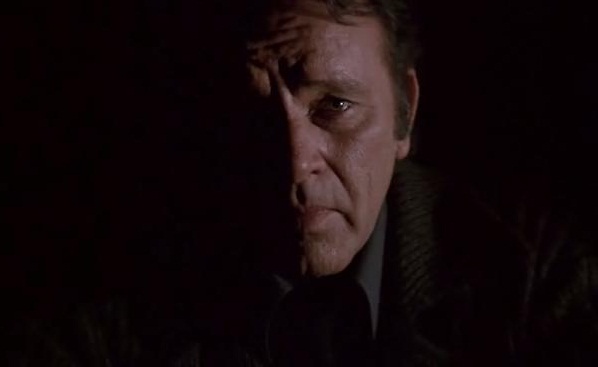
I am in complete sympathy with the actor about not feeling up to par against Richard Burton when it comes to speaking the poetic language in Equus.  If you don’t feel you have the resonant, deep voice that Burton possesses, or the hypnotic charm of Anthony Hopkins’ tenor, feeling inadequate is completely understandable.

Ignoring that aspect of the writing this early in rehearsals isn’t really a problem.  Going for the emotional connection to the material is the primary concern when you first pick up a script.  Getting to know who your character is and why he responds to his circumstances as he does is more important than the language that he uses.

There is plenty of time to give close attention to the nature of the language later in the rehearsal period.

On the other hand, I’m not sure that you should entirely ignore it up front.  My own inclination when I deal with poetic plays is to pay attention to the language for its own sake first, for a single reading.  To say the words out loud, to feel them in my mouth, to hear the sounds mingle, to let the images they create rise up before me.

I don’t read much poetry.  It’s not my thing.  But poetic prose grabs my attention.  There is an element in it that doesn’t exist in non-poetic prose and which cannot be separated from the meaning of the words.  They are entwined.

What is poetic prose?  It’s when a character speaks in a way that people don’t ordinarily.  Newspapers write to an eighth grade education level, and most of us use that same vocabulary in everyday speech.  But poetic language is different.  It uses words and phrases like “embrace”, “straining to jump clean-hoofed”, and “one more dented little face”.  When was the last time you spoke like that?

There is a reason why Burton and Hopkins have played this role.  They are unafraid of poetic language.  They are happy to savor it, to lay it out for your inspection.  They understand its power.  It is subtext on steroids.

Their success lies not so much in their vocal instrument as it is does in their appreciation of the power of language and their willingness to let the words work their magic.  That is something you are capable of doing, as well, no matter what sort of voice you have.

Part of the key to understanding Dysart involves throwing yourself into the language.  You may not reach a full appreciation of it until deep into rehearsals, but you need to deal with its impact on the play well before then.  You can’t separate out the fact without the feel that goes along with it.  Shaffer’s later works are ALL poetic in nature.  It is part of who he is as a playwright.

No, you shouldn’t try to imitate Richard Burton’s way of wrapping his voice around words.  But you do have to find your own way of entering them and letting them wash over your tongue.

Poetry is dense.  It takes a while to uncover its mysteries.  Understanding poetry is work for the subconscious.  You must revisit it, over and over, out loud – not silently, in your head, for poetry is meant to be spoken – in order to let your subconscious infiltrate it and unwrap its meaning.

But apart from that – to refer back to what I wrote last time – Shaffer begins both acts with the same eight words:  “With one particular horse, called Nugget, he embraces.”  It begs the question, “Why?”

Not having worked on the play, I don’t have the answer to that, and in any case, my answer might not be yours.  But it’s a question I would ask myself at the start of rehearsals.  I would revisit it every day until I had the answer.  Playwrights only repeat themselves when it matters.  (The repetition of the chained mouth seems to me much more evident.  I assume it is to you, too.  If not, do let me know.)

To read Equus, Part I: The Three Questions, go here.  To read Equus, Part III:  The First Five Minutes, go here.
Equus, Part I: The Three Questions

equus-1977-07-g

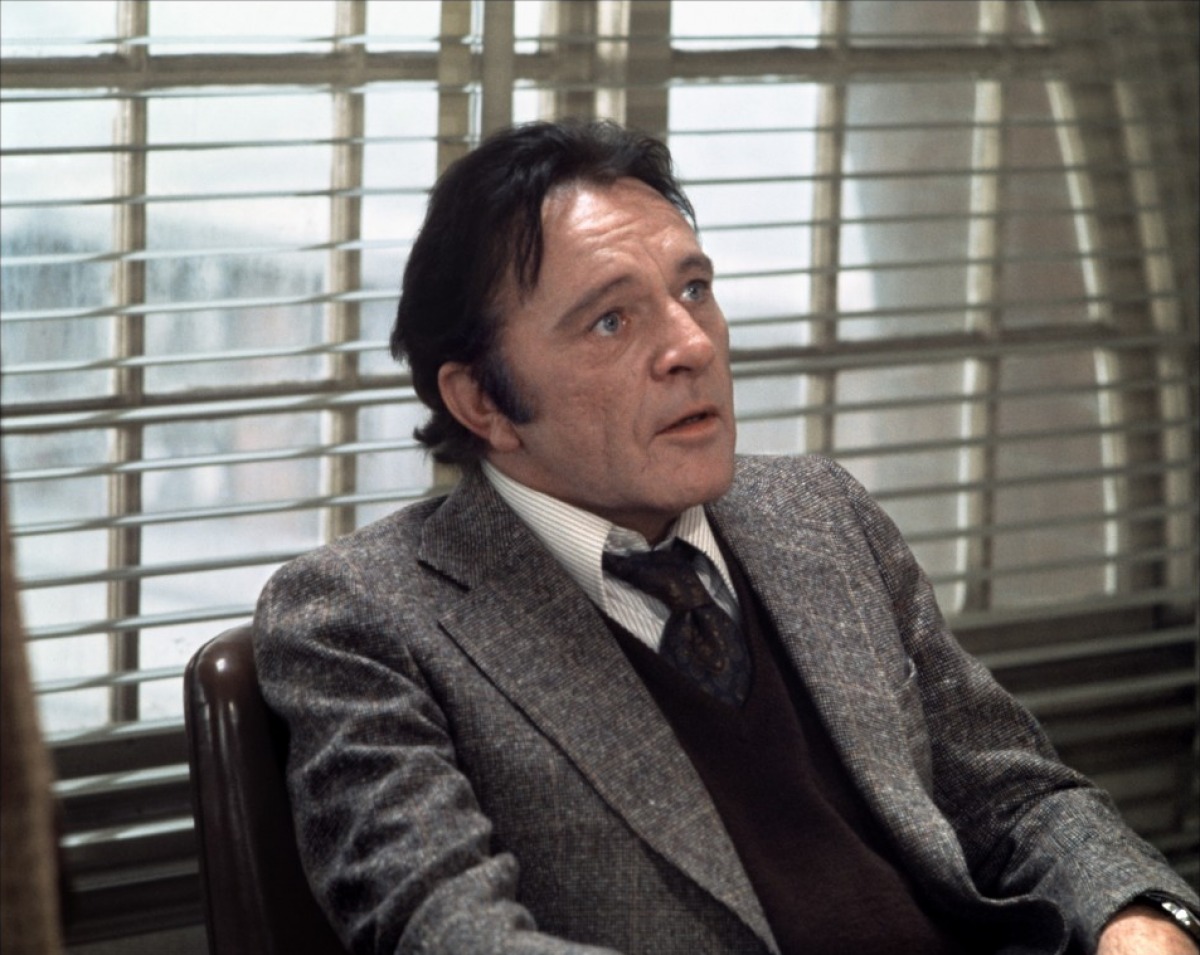
In class, an actor was working with Martin Dysart’s opening monologue in Equus.  He had done a cold reading of the speech the week before, and we had talked about the need to understand what the play is about, who the protagonist is, and why Shaffer has Dysart talking to the audience throughout the play.

When he brought the monologue back the following week, he had clearly done some work on it.  The speech was segmented into three parts, aligned with the divisions marked by the stage directions.  The first part was said in profile, with a certain amount of professorial distance and bemusement.  The second part connected him to the audience, and the third part gradually became more serious and contemplative.

I asked him if he had found the answers to the questions I’d asked the week before.  He had not.  In fact, it seemed that he still hadn’t thoroughly read the script, but was really just focusing on the monologue in isolation.

As for his choices, he told me that he couldn’t compete with Richard Burton and so had to start with himself, a position I affirmed.  We had talked about the fact that Equus is a poetic play in its use of language, but he had decided, at least for the moment (or permanently?  I couldn’t tell which), to ignore the poetry.

He was also concerned with the need to “grab” the audience in the first five minutes of the play, and in service of this goal, to make Dysart a likable character.  I think he had read something about the importance of doing this with any play.  It was certainly governing his performance that night.

Where do I begin?

The first problem is that you can’t work on any part of a play without reading the whole play attentively at least once.   I talk about this in an Actor’s Etiquette post, so I won’t go into the reasons here.  But you just can’t.  Don’t waste your time.

Here are just two of the things you will notice if you read Equus in its entirety, both of which impact this monologue.  The first is that the same sentence opens both acts:  “With one particular horse, called Nugget, he embraces.”

The second is that five sentences into the play comes the line, “I keep seeing that huge head kissing him with its chained mouth.” The last lines of the play are:  “There is now, in my mouth, this sharp chain.  And it never comes out.”

I’ll talk about the opening sentence when I talk about poetry.  But the part about the chained mouth bears directly on the question of what and who is this play about.

Equus is NOT about a boy who blinds horses.  It is about the psychiatrist who treats him realizing that the boy lives with a passion that he, Dysart, does not.  In the opening monologue, we meet a man in crisis.

While he does talk with another character about his life, it is the monologues that reveal the true torment he experiences.  In them, he shares secrets we just don’t share with other people, except perhaps a psychiatrist.  Dysart is psychoanalyzing himself.  The fact that he has no close friend or lover with whom he can share his feelings is part of the point – part of the reason he is in this predicament.

And when he talks about the horse’s head, he is talking about himself.  He admits as much in the second half of the monologue, and the final lines of the play remind us of this sympathy he has with the horse.  This identification has to be present from the beginning of the monologue.  It’s not intellectual curiosity on Dysart’s part that makes him wonder about what the horse feels.  He – and Shaffer – are indirectly examining Dysart’s own internal goings-on.  The horse is merely metaphor.

Understanding the answers to the three questions I raised in the opening paragraph gives you some clear direction as to where to take the monologue.  You’ll find those answers only by reading the play.

I’ll talk about other issues with this monologue in the next two posts.

To read Equus, Part II: Poetic Language, go here.  To read Equus, Part III:  The First Five Minutes, go here.

What Do Arbitrary Choices Look Like?

In class two weeks ago, the actors were busily making arbitrary choices about their characters.

It’s fascinating to watch.  Despite talking about how unproductive this approach is, people instinctively use it.  It’s almost an uncontrollable impulse.  (I’m not criticizing my students for doing this.  We all do it.  Learning how to act is, in part, learning when we’re being arbitrary so that we can stop.  When I point out to my students what they’re doing, they quickly recognize what I’m talking about and why it matters.  Which is why they are such wonderful students!)

Arbitrary choices are the ones we decide on before trying them to see if they work.  “This is what I should do here.”  They don’t spring organically out of what actors call “the work”, but are intellectual choices we impose on our performances.  It’s the “decider” in us looking for certainty.  “There!  Thank goodness, another problem put to bed!”

Deciding upon them in advance can prove fatal.  We become so attached to them that we will give them up only if they prove to be disastrous.  The moment we make the decision, we have closed ourselves off to ANY OTHER possibility, no matter how good it is.  Our subconscious even stops working on the problem.  It’s done!  Solved!

Happy couple embracing and laughingOne actress, following the first read-through of a brand new scene, responded to my question about her gut reaction to the character by saying, “I didn’t really notice, I was busy trying to figure out where I should be laughing.”

Laughter is not something you should plan for unless the dialogue makes it clear that you have to laugh.  Then you have no choice.  Otherwise, laugh if, as the character, you genuinely find something to be funny.  Don’t if you don’t.

I asked her about the times when she did laugh during the scene.  Were they the “right” times?

        Her:  “Well, they were pretty much real laughs.”

        Me:  “No wonder they worked so well!”

Lesson:  Real emotions are very effective on stage.  Laughing was entirely appropriate to her character, so those real laughs worked.  Artificially imposed laughs rarely are believable.

Another actress, who performed a lengthy monologue, opted to sit at one point in the middle of the speech and then sprang up almost immediately, standing or walking for the remainder of it.  We talked about it afterwards.

        Me:  You sat down at one point . . .

        Her:  Yes, and it was a mistake.

        Me:  I’m not so sure it was.  It actually seemed to suit the moment very well.  It was the springing back up that
seemed 
out of place.

I suggested that there was good dramatic support for sitting for a portion of the monologue, but that there were a variety of options in terms of timing the sit and stand.  At which point, she said, “I know!  I should sit on THIS line.”

Maybe.  Maybe not.

It is perfectly okay to say, “Let me try doing this here.”  That’s a very different thing than saying, “I should do this.” Once you’ve tried it, you can determine its effectiveness.  You can then try other alternatives and compare the results.  In her particular situation, there were a variety of choices worth exploring.  The line she selected was the most obvious choice – predictable, even – but that doesn’t automatically make it the best.

When you make intellectual decisions outside of the framework of actually running the scene, you are making arbitrary choices that have nothing to do with the emotional life of your character.  It is an external you are strapping onto your character, whether she likes it or not.

If you find that choice through trying various options during a run-through of the scene, great.  But if you choose it based on your intellectual assessment of the play, it will never work well, no matter how “right” the choice is.  Like line readings, such choices have a foundation of quicksand that will give way at some point.

To read Isn’t the Obvious Choice Sometimes the Right Choice?, go here.

John Cleese on Creativity

Both of the following videos are well worth watching.  After you’ve seen them, read my comments below — just a few things I’d like to highlight about what he says.

http://www.youtube.com/watch?v=zGt3-fxOvug

And then there is the longer 1971 talk:

http://www.youtube.com/watch?v=AU5x1Ea7NjQ

Cleese notes that being creative requires a certain mood:  a willingness to play like a child, exploring ideas not for any immediate practical purpose, but just for enjoyment.  Kids do things for their own sake, without expectations of results.  When you’re playing, nothing is wrong.

Cleese talks about open and closed modes, which is directly related to the concept of trial and error that I have mentioned.  In the open mode, you are deciding what to try.  You go to closed mode to try it, and back to open mode to evaluate its success.  Creativity is a matter of toggling between the two positions, although acting requires that you keep one avenue “open” even while you are trying something in closed mode, and I’ll talk about this in the future.

Space and time, his first two requirements, are essentially about giving yourself permission to play, to be creative without the need to solve problems.  Cleese suggests it takes a half hour to get yourself into open mode for starters, a time frame I concur with.  This half hour is why I suggest that two hour rehearsals are really too short.  Cleese’s audience is made up of businesspeople, and 90 minutes is probably as long as that group will find profitable, but acting is slightly different.  I believe that 2½ hours is the minimum time to maximize the benefit for an actor.  Three is great, if you can manage it, and a ten minute pause in the middle of a 3 to 4 hour rehearsal will not break the spell.  Nor will a lunch break in the middle of a longer stretch.

However, while the entire rehearsal should be about “play” on some level, small segments of it can and should be set aside as “let’s just experiment with this one thing” time, giving the actors the freedom to explore while knowing that the production is still basically on track.  This is a particularly useful approach in community theater, where actors are often results-oriented.

Cleese’s third requirement (also “time”) is what I have referred to as the “subconscious effect” (he calls it the unconscious, but we’re talking about the same thing.)  Creative ideas sometimes need to marinate for a while before they can really germinate.

Cleese uses the word confidence for the fourth requirement, but I use the word courage.  I want a stronger word than confidence to convey the importance of this.  If you are particularly wedded to the idea that there is a Right, then you need courage, not confidence, to break out of that pattern.

To play is to experiment.  To play well, you need to have the courage to fail.  Courage to make mistakes.  A willingness to be open to anything that may happen.  But mostly, as Cleese points out, courage to sit with the discomfort — the absolute anxiety — of uncertainty until you absolutely have to make a decision.

If you can remember that when you’re playing, nothing is wrong, and that you have the ability to evaluate the success or failure of what you’ve tried after the fact, then it is easier to be courageous.  While it feels better to make decisions, if you trust the process and wait until you really have to make decisions to make them (and the more you do this, the later you’ll be able to wait), you’ll find it is worth the wait.  Which will then make it easier to wait the next time.  Once you have experienced the benefit of waiting, you can start to move from courage to confidence.

It’s interesting that Cleese suggests that humor is that fastest way to get into the open mode.  Perhaps this is why I laugh so readily during rehearsals, and try so hard to get my cast to laugh, too.  Laughter is relaxing.  At the very least, don’t take yourself or what you’re doing (even if it’s Medea) too seriously.  It’s not nuclear war.

And lastly, Cleese says this about the Subconscious Effect:  “This is the extraordinary thing about creativity:  If just you keep your mind resting against the subject in a friendly but persistent way, sooner or later you will get a reward from your unconscious.”

It may not come in this rehearsal, or the next.  It may show up in the shower on Friday.  But it will come.  Trust it, and it will come.

To read What is Creativity?, go here.  To read What If I’m Not Creative?, go here.  To read How on Earth Can I Be Creative as an Actor?, go here.

Using Subtext to Underscore a Scene

quarterSometimes the text and the subtext are in perfect alignment, and what you say should be taken at face value.  Sometimes “How are you today?” has no hidden meaning behind it.  It’s just something we say in greeting one another.

But they often aren’t aligned.  Sometimes we say one thing and mean another.  Sometimes we feel one thing but pretend we don’t.  Your job, as an actor, is to figure out when there is something hidden, as well as when there isn’t.

Who among us, in our real lives, says everything we think?  How often are we truly honest about what we feel?  And even if we are, how much of what we say is about what we feel?

Very little.  We talk for other reasons.  To gain information, to persuade, to explain, to think through, to debate, to wonder, to entertain, etc.

A single scene in a play may have multiple beats representing Small Verbs (tactics) you use to pursue the Medium Verb that covers the entire scene.  Occasionally, you’ll get more than one Medium Verb in a lengthy scene.  (Your Big Verb for the entire play will remain consistent throughout, however.)

I said that your subtext is both emotions and needs (verbs).  The needs aren’t the Small Verbs, which are simply how you go about getting what it is you want.  Needs are the bigger verbs, both the Big Verb that governs the entire play, and the Medium Verbs that govern scenes.  Added to those needs are any of the emotions that you may be feeling.  That’s your subtext.

Any time what you say and do is not perfectly matched with what you feel or what you want, you’re dealing with subtext.  If you are in touch with those hidden elements, the audience will sense them.  Your given circumstances provide the subtext at the start of the scene, but new information or events can provoke new but unspoken emotions in you that you didn’t have when the scene began, changing or adding to your subtext.

The subtext will typically cover more just the single lines I used as examples in the last post – it will cover one or more beats.

beg-dogFor instance, if I want you to do me a favor, I may not come right out and ask for it.  I need the favor, but I’m afraid it’s something you won’t want to do, and I feel badly about asking for it.  So perhaps I ask you a few questions first, because I want to figure out if it’s really going to be inconvenient for you to do the favor for me.  Perhaps it means driving out of your way, and I want to be sure you have a car in good working condition, and the time to do it in between picking up the dry cleaning and getting your hair cut.

These aren’t idle questions; they are directly related to the matter of asking you to take care of four 8-year-old girls who are having a tea party as their playdate.  How I ask the questions is going to be different than it would be if I was just curious about what you are doing on Friday.  If you start telling me you’re getting your hair and nails done because of a special event you’re going to that evening, I may start feeling guilty about the fact that I’m going to ask you to do me this favor on what is probably a full day for you.  And when you change the subject, I’m going to have to figure out a way to get back to the topic of just what your schedule looks like, so I can determine whether or not I’m going to ask you to do me the favor or find someone else to do it.

I may offer information about my own scheduling problems – the doctor appointment that suddenly became available on Friday, so I don’t have to wait until next week to find out what this strange lump in my body is.  I may share with you my worry that I have the same cancer that killed my mother.  Now I’m giving you a reason to want to help me when I finally get around to asking you the favor.

In other words, on my side of the conversation, it’s ALL about asking you a favor.  THAT’S the subtext of the whole thing.  I don’t ask the favor until the end of the second page, but those two pages are all about asking you a favor.

But again – don’t make the mistake of trying to play the emotional subtext.  Playing emotions for their own sake doesn’t work, whether you’re dealing with text or subtext.  It’s too heavy-handed and not grounded in real desire.

tea partyThis is where the verbs come into play.  They allow you to play the subtext, which includes your emotional state (an altogether different thing from the emotions that may flicker through you during the scene), with subtlety.  I’m not playing guilt, need, fear, envy.  I don’t have to figure out which line is the line to show my guilt on, which line to show my fear on.  I just understand my circumstances:  I am scared that I have a cancerous tumor, and need to visit the doctor on Friday to calm my fears.  My daughter has been planning the tea party for three weeks, and the mothers of the other girls are counting on having the afternoon free and have already made other plans that take them out of town.  You’ve got your own life and your husband is being honored by the Kiwanis Club tonight, and I feel guilty about asking for valuable time to do something that is bound to be stressful.  But I really need this favor, and I’ve asked three other people, all of whom have turned me down.  I really need my friend’s help.

If I understand my circumstances fully, then all I have to do is concentrate on playing my verb – getting you to do me this favor – and everything else, including my emotional life, is largely going to take care of itself in all the right ways.

To read What is Subtext?, go here.

Actor’s Etiquette: Read the Script

HT_BehaveIt is not sufficient to read the play once and then to work on scenes as if they are separate entities.  Everything in the play informs every other moment in the play.

This happens particularly in scene class, but I’ve seen it happen in regular rehearsals, too.  In class, I assign a scene of two to three pages.  The actor gets the script and reads it.  Now he knows the gist of what happens in the play and has a feel for who are the bad guys and who are the good guys.  He has a visceral response to what sort of person his own character is.  Fine.  That’s enough, right?  Now he’ll just work on the scene.

Sorry, but it isn’t nearly enough.

Working on a single scene requires a lot of the same investigation into the character and his background that working on the entire play demands.  You can’t understand your character in isolation.  You’ve got to know what happened in the scene before the one you’re playing before you can begin to understand how he feels in this scene.  Background information that is revealed in scenes before and after yours may help to explain something that happens in your scene.  A comment made in Act II sheds light on something he said in Act I.

As for rehearsals for a full production, it’s not enough to encounter the play when you are working on it with the rest of the cast.  It’s not enough to read it for the purpose of memorizing your lines.  Plays are littered with clues that help you to understand your character, and at some point I’ll talk a bit about how to find them and put them together.  The point is, you have to look for the clues, and you can’t do that particularly well when you are running a scene or memorizing your lines.  Yes, you’ll discover some things when you do, but it won’t be enough.

When I act, I am actively mining for information about my character throughout the rehearsal process (and throughout performances, for that matter).  By “actively mining”, I mean that I am paying close attention to everything that is said, and everything that I read, to see if I can understand it on a deeper level.  There isn’t a magic number for how often you should read a play, but I probably read the ones in which I have a large part at least 80-100 times.  You don’t have to read it that many times, but I hope it suggests that more than a half dozen times is required to really get the most out of it!


What Is Subtext?

[We interrupt your regularly scheduled programming on Creativity to bring you two posts on Subtext.]

Subtext is what your character isn’t saying.  Not in words, anyway.

ASL_SignerThe playwright provides you with dialogue.  The dialogue is the text. It’s what we are willing to have other people hear.  Sometimes we tell the truth when we talk.  Sometimes we deliberately lie (or fudge the edges). Sometimes we tell what we think is the truth even though it isn’t.  We aren’t ready to face the truth yet, and so we’re lying to ourselves as well as to everyone else.

You don’t have to “play” the text.  The words do that quite nicely without much help from you.  Playing the text is sort of like a fourth grader pointing out where the moon is when he sings about it, and holding his hand over his heart when he sings above love.  It’s unnecessary “sign language”.

What an actor brings to the play is what’s going on INSIDE the character, the stuff he doesn’t say out loud.  The playwright provides clues to that, which are often subtle.  It’s up to you to identify and highlight them for the audience, and to do so not just when those verbal clues arise in the script, but throughout the scene.

In other words, if you get an inkling halfway through a scene that your character is in love with the other person in the scene, you don’t just start giving evidence of that on the line that makes you understand that fact.  You didn’t just start to fall in love when the revealing words come out of your mouth.  You’ve been in love with the other character from the beginning of the scene, in all likelihood.  It is part of the subtext of the scene that will color everything that you say and do.

So how do we find the subtext?

Subtext is both emotions and need: the stuff you carry into the scene and what you’re trying to get out of it.  Your needs are expressed in the verbs you choose.  Your emotions, along with your general nature (your personality and history) help to determine how you go about filling your needs; that is, how you pursue your verbs.

Ask yourself why you say each of your lines.  If you don’t know the answer, read a bit more carefully.  They aren’t just words on the page; they are pieces of information that, put together, create a life. Read them to make sense of the insensible.

But don’t settle for the easy answers to the questions, answers that just rephrase the line you’re working with.

For instance, if an actor has a line that is a question – “What did you mean by that?” – and I ask why he says it, he might tell me, “Because I want to know what she means.”  Well, of course – but WHY does he want to know what she means? Will he be insulted if she means A, or hurt if she means B?  Or is he simply confused by what she’s said – does it seem to him that she is talking about something entirely different than what he thought they were talking about?  And does that worry him?

Look for what we can call the “secondary why”, which has to do with the subtext of the line, and now you are moving closer to understanding what is going on with your character.  Notice that in the examples above, what I am finding is emotional.  I’ve given you an example that is out of context intentionally, so you can see the link to the emotions: insulted, hurt, worried.

Remember, it’s okay to spot the emotion in a scene, as long as you don’t stop there.  Don’t try to play the emotion, but instead just let it inform the scene by influencing how you go about pursuing your verb.  Your emotional state is part of what is called the given circumstances of the scene.  The given circumstances are all the things that have led you to this moment in time (“given”, because the playwright has chosen them).  Understand them and play your verbs, and any new emotions that arise in the scene will take care of themselves.

headacheNow let’s put a question in context and get both the emotions and the verbs.  Let’s say you ask your “husband” in the play, “How are you today?”  Yes, you want to know how he is.  But you have a deeper reason for asking it.  He had a migraine headache last night – you’re hoping it is gone, because you hate to see him in pain.  Or you’re hoping it is gone, because you’re hosting a dinner party tonight, and if he has a headache, it will be a difficult night.

In the first case, you are feeling love and concern for his well-being.  Your verb might be “to take care of him.”  In the second case, you might be worried and just a little overwhelmed.  Your verb might be “to have a successful party.”

Or perhaps you had a fight last night, and you’re testing the waters, to find out if he’s still mad at you.  Or perhaps you want to ask him a favor, to let your parents stay with you for two weeks when they visit next month.  He’s not fond of your father, so you want to make sure he’s in a good mood when you ask him.

In the first case, you might be uncertain and hopeful, and your verb is “to reconcile with him.”  In the second case, you might be feeling anxious and needy, and your verb is “to convince him to let your parents visit.”  (Maybe I have that wrong – maybe you’re uncertain and needy, and anxious and hopeful!)

All of these possibilities are the subtext, the meaning that lies underneath the very simple words, “How are you today?” Read the script over and over again until you find the meaning that is hiding between the lines.

To read Using Subtext to Underscore a Scene, go here.  To read An Example of Why Verbs Make a Difference, go here.

What the Heck Is This Play About?

[This is the first post on the subject of Script Analysis.  It’s a topic I’ll deal with in depth in a month or three, but my current students have need of this right now, so I’m tossing it into the middle of the Creativity series.]

A-Few-Good-MenAs an actor, you have to know this before you can begin to do justice to your role.

Playwrights don’t write plays because the local theater needs a script.  They write because they have something to say that sheds a tiny bit of light – no answers, necessarily, just light – on some aspect of human existence.

You need to figure out why the playwright felt driven to write this particular play.  The answer is going to directly affect the choices you make as an actor.  If you’re going to be a good storyteller – and that’s all an actor really is, a storyteller – then you’d better know what the story you’re telling is about.

The fancy English Lit term for this is “theme.”  I’ve always hated this word.  Never understood it in school, despite asking multiple teachers to explain it.  Whatever words they were using to describe it were too esoteric for me.

I began to get a handle on it during playwriting classes, and finally grasped it fully when I started to direct.  Identifying and articulating the theme and choosing a vision that honors the playwright’s reason for writing the play is the first responsibility of the director.

Why not just wait for the first rehearsal, when the director will share his understanding and vision with you?

First, because it’s lazy.  Understanding the reason for the play in your bones is going to help you produce better work than if you just sign your name to the director’s vision statement.  Yes, you need to understand and subscribe to what he tells you, but you’ll have more luck doing so if you do your own homework.

Second, because not every director is going to share his vision with you, particularly in amateur theater.  Not every amateur director realizes that having a vision and sharing it with his cast is his responsibility.  If he doesn’t, you better find the answer yourself if you hope to turn in a credible performance.

So what’s a “theme?”

It’s what the play is about, not what happens in the play.  What happens in the play is the plot:  Felix Unger gets kicked out by his wife, he moves in with his friend Oscar, they fight and drive each other nuts, but ultimately learn to get along.  (The play in question is Neil Simon’s The Odd Couple, in case you aren’t familiar with it.)

Playwrights use the plot as a means of talking about the issues that matter to them.  Underneath the plot, they are really dealing with high concepts.  Start by going after them.  You can do this by asking yourself, “What is Simon concerned with in this play?  What part of life is he examining?”

Answer:  Loneliness and friendship.  Some other examples?

     King Lear:  Greed, ego, and love.
     Romeo and Juliet:  Love and hate.
     Amadeus:  Talent, desire, envy, and grace.
     A Few Good Men:  Loyalty, honor, justice, and humanity.

You might choose different words to describe these plays, but I hope you get the idea.

If you go no further than identifying the high concepts, you’ve got something valuable to work with.  If you’re in The Odd Couple, you need to look at your role in terms of loneliness and friendship.  What are the moments when loneliness is a part of your existence?  When do you have friendship or are striving to get it?

By looking for the connections between the high concepts and the action or dialogue in the play, you can subtly “underline” them for the audience, which is good storytelling.  Pass everything that happens during the play through the filter of “loneliness” and “friendship”, and the playwright’s message should come through loud and clear.

You can’t possibly do this effectively unless you know what the play is about.

The theme is more than just the high concepts.  The playwright has an opinion about those concepts.  How you interpret the opinion is your vision.  Different people, because they have different personalities and backgrounds, may interpret the playwright’s opinion in slightly or materially different ways.  This is why vision is the director’s choice.  We all have to be on the same page, and the director is the one to choose that page.

So how you string the high concepts together matters.  For The Odd Couple, I might say, “Friendship is the only antidote to loneliness.”

For A Few Good Men, I might say, “When loyalty to corporate bodies harms an individual, it is no longer honorable.”  Or I might say, “Everyone deserves justice, irrespective of rank or prestige.”  Or, “We must never forget that the military is made up of human beings.”  In the first instance, I am emphasizing loyalty and honor.  In the second, justice and equality.  In the third, humanity and compassion.  Whichever alternative I choose determines what I want to most emphasize in my portrayal of whatever character I am playing.  Productions using different visions will, of necessity, have different feels and different impacts.

Which is why the first, most important step in Script Analysis is to know why the playwright wrote the play.  Or at least, why you think he did.

So How Do You Avoid Line Readings?

garden-maze-chatsworthBeing aware of when you are using them and when the reading is showing up organically is helpful.  “Organically” is a highfalutin’ word that I hate on one level, but is the only way I presently know to describe the difference with coming at a role externally, through a line reading, versus internally, through the unprejudiced exploration of a character.  It’s a learned ability, but when you achieve it, it’s very helpful.

Questioning yourself is also useful.  At some point down the road, I’ll talk about how I vet my own performances to make sure I’m not unintentionally stuck in a line reading.  (Yes, I’ve been acting for longer than I’d like to admit, and I still need to monitor myself for this potentiality, and always will.)

But both of those alternatives are advanced stuff.  Where do you start?

For one thing, learn to memorize your lines by rote.  That is, just memorize the words themselves, without consideration for how they should be said.  (At some point, I’ll create a video which will demonstrate this process.)

But you can also avoid them by doing what I’m going to suggest is the real function of and way to handle the first half of the rehearsal period:

Trial and error.

Intentionally say the line differently each time you rehearse the scene (or at least some of the times you rehearse the scene, until you run out of alternatives).  Because you aren’t doing exactly the same thing every time, your brain has nothing yet to memorize.  (I’ve got a post coming up on your subconscious, which reiterates how frequency and repetition become reality, whether you like it or not.  Or you can check this post out, for the introduction of the concept.  Which is really very pertinent and worth reviewing.)

[Also, telling you to “intentionally say the line differently” is perhaps a little glib and apt to be misunderstood, but I don’t want to get bogged down in the details right now.  We’ll explore what “trial and error” really means at some point in the future.]

Your brain only memorizes what is repeated.  It understands frequency.  Nothing else gets through its filter from the outside world.

Your subconscious knows things you don’t realize it knows, and that can be helpful to an actor.  But that’s a different matter.  When it comes to new data – that is, new lines to memorize – your brain relies on the frequency of the input.

Of course, there is a more important reason for using trial and error, and I’ll talk about that shortly.  But this is a nice side benefit of the process!

To read Line Readings and Why They Don’t Work, go here.  To read Where Do Line Readings Come From, Anyway?, go here.

What Questions Should I Ask About My Character?

For the blog readers, I’m skipping ahead a bit, and there are some upcoming posts that will help fill in whatever gaps may be in this post.  For my current students, however, this is a direct follow-up to something we talked about in class tonight:

woman readingYou asked, Davina, how you learn how to ask the sort of questions that I ask each of you after your presentations.  In addition to what I told you in class, there is also the matter of practicing.  I spent much of my childhood reading every play I could get my hands on, acting them out, and trying to figure out what made the characters tick.  This personal effort goes hand in hand with the exposure I suggested is the only real way to learn script analysis.  Do it enough and over time, you’ll slowly get better at it.

But there is a little more to be said.  You don’t have to ask the same kinds of questions for each character you ever play.  This is one reason why the lists of questions that you’ll typically see in script analysis textbooks isn’t particularly useful.

There is a school of thought that you ought to be able to write a comprehensive autobiography for your character. His favorite color, favorite food, number of siblings and relationships with them, what he studied in college, etc.  I know actors who do this faithfully and who seem to get something out of it.  More power to them!

For me, this is tedious work, but I have two bigger objections to it.  First, I probably don’t know the answers to many of these questions until I am deep into rehearsals, at which point writing it down doesn’t matter.  At least, it doesn’t if I correctly understand the purpose of these autobiographies as being to help me to figure out who my character is so I can play her correctly.

The second reason I object to it is that coming up with some of these answers is a waste of time.  They matter only if the answers impact the character in some way during the course of the play.  In most plays, your favorite color or food won’t make any difference.  Your relationship with your brother may only matter in some plays.  What you studied in college or which college you went to may not matter, but whether or not you went to college might.  Whether or not you graduated might.  Or might not, depending on the play.

question-mark1So I asked Anne a lot more questions about Dora’s background than I ask about many characters, because the answers all have an impact on who she is today, how she raised Alan, and how she is choosing to deal with this situation.  It’s difficult to get an accurate picture of her without it or to understand what underlies her scenes, but by answering them all, you can start to paint a clear and cohesive portrait of this woman.

For Jamile and the Dinner with Friends monologue, I focused on how Tom feels about his wife, Beth.  All of the background issues I asked Anne aren’t going to have a lot of impact on Tom’s monologue.

For all of the characters in Agnes of God, I have talked about their relationships with God, religion, and the Catholic Church.  The question of God is also critical for many of the characters in Equus.

So what questions you ask have in part to do with the nature of the play and what it is about.  When you understand that the three characters in Agnes of God are three different representations of Christianity, you start to understand what you need to do with the play.  When you understand that Dinner with Friends is about marriage and friendship, it narrows down what you need to focus on.

As you’ll see in the coming weeks, the questions that I ask about Months on End, A Lesson Before Dying, and Norma and Wanda will be different still, but will be directly related to what the plays are about and what happens to the characters.

So how do you know to ask for details about all the aspects of Dora’s family life both in childhood and in marriage, but that you don’t need to ask for them in Months on End?

This is the tricky part.  Knowing the answer is part of what acting talent is all about.  Being naturally gifted in this department is one of the reasons I had a realistic chance of making it as a professional actress, just as instinctively understanding that drawing is a function of light vs. dark, rather than distinct shapes made up of both, is part of what makes someone a talented artist.  I’ve spent considerable time puzzling over how to help you learn to do what comes so naturally to me.

Which is why I don’t think it can be taught in a formal way, but can only be internalized through repetition and experience.  We all connect the dots in different ways, and no one else can successfully identify how your brain works in this regard.  You open yourself up to the possibilities by gradually eliminating your preconceptions and learning to trust your instincts.  There are ways to actively do those two things; beyond that, you have to just keep doing the work and trust that time will take care of it.  You’re a human being, and human beings have some pretty good instincts about what it means to be human.  It’s just a matter of learning how to interpret those instincts as an actor.

I’ll have more to say about this, including some hints about what to pay attention to, when we get more deeply into script analysis.  But there is so much else to talk about before we get to that point!