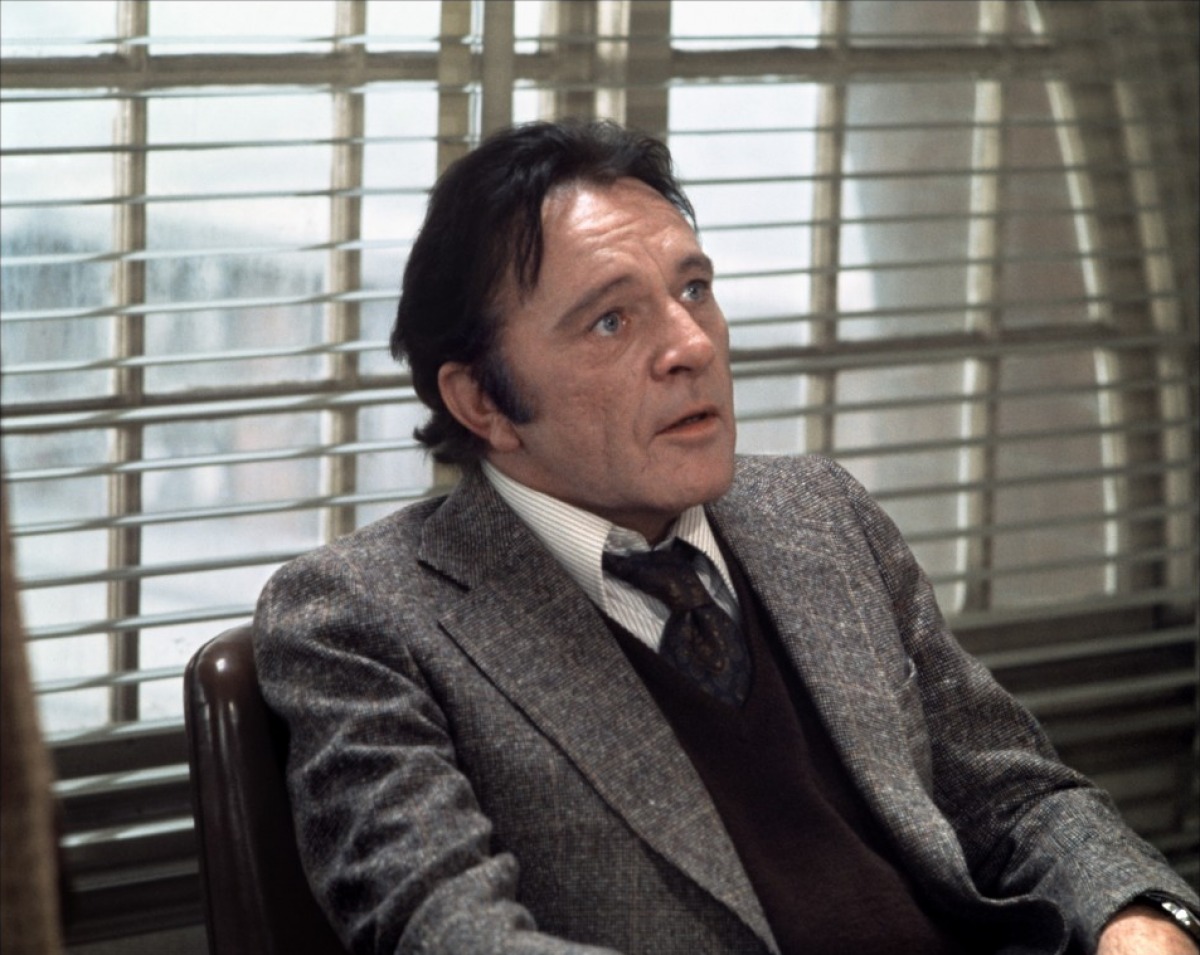
Equus, Part I: The Three Questions

equus-1977-07-g

In class, an actor was working with Martin Dysart’s opening monologue in Equus.  He had done a cold reading of the speech the week before, and we had talked about the need to understand what the play is about, who the protagonist is, and why Shaffer has Dysart talking to the audience throughout the play.

When he brought the monologue back the following week, he had clearly done some work on it.  The speech was segmented into three parts, aligned with the divisions marked by the stage directions.  The first part was said in profile, with a certain amount of professorial distance and bemusement.  The second part connected him to the audience, and the third part gradually became more serious and contemplative.

I asked him if he had found the answers to the questions I’d asked the week before.  He had not.  In fact, it seemed that he still hadn’t thoroughly read the script, but was really just focusing on the monologue in isolation.

As for his choices, he told me that he couldn’t compete with Richard Burton and so had to start with himself, a position I affirmed.  We had talked about the fact that Equus is a poetic play in its use of language, but he had decided, at least for the moment (or permanently?  I couldn’t tell which), to ignore the poetry.

He was also concerned with the need to “grab” the audience in the first five minutes of the play, and in service of this goal, to make Dysart a likable character.  I think he had read something about the importance of doing this with any play.  It was certainly governing his performance that night.

Where do I begin?

The first problem is that you can’t work on any part of a play without reading the whole play attentively at least once.   I talk about this in an Actor’s Etiquette post, so I won’t go into the reasons here.  But you just can’t.  Don’t waste your time.

Here are just two of the things you will notice if you read Equus in its entirety, both of which impact this monologue.  The first is that the same sentence opens both acts:  “With one particular horse, called Nugget, he embraces.”

The second is that five sentences into the play comes the line, “I keep seeing that huge head kissing him with its chained mouth.” The last lines of the play are:  “There is now, in my mouth, this sharp chain.  And it never comes out.”

I’ll talk about the opening sentence when I talk about poetry.  But the part about the chained mouth bears directly on the question of what and who is this play about.

Equus is NOT about a boy who blinds horses.  It is about the psychiatrist who treats him realizing that the boy lives with a passion that he, Dysart, does not.  In the opening monologue, we meet a man in crisis.

While he does talk with another character about his life, it is the monologues that reveal the true torment he experiences.  In them, he shares secrets we just don’t share with other people, except perhaps a psychiatrist.  Dysart is psychoanalyzing himself.  The fact that he has no close friend or lover with whom he can share his feelings is part of the point – part of the reason he is in this predicament.

And when he talks about the horse’s head, he is talking about himself.  He admits as much in the second half of the monologue, and the final lines of the play remind us of this sympathy he has with the horse.  This identification has to be present from the beginning of the monologue.  It’s not intellectual curiosity on Dysart’s part that makes him wonder about what the horse feels.  He – and Shaffer – are indirectly examining Dysart’s own internal goings-on.  The horse is merely metaphor.

Understanding the answers to the three questions I raised in the opening paragraph gives you some clear direction as to where to take the monologue.  You’ll find those answers only by reading the play.

I’ll talk about other issues with this monologue in the next two posts.

To read Equus, Part II: Poetic Language, go here.  To read Equus, Part III:  The First Five Minutes, go here.
Actor’s Etiquette: There’s a Director of This Play, and It Isn’t You

51V3ETWY0FLIt is always very bad form to direct another actor or to otherwise ask another actor to do anything for you.

It doesn’t matter if the director isn’t very good.  Or if he seems to have trouble communicating something and you think you know where the disconnect is.  It’s not your show.  Keep your mouth shut.

You undoubtedly have plenty of work to do on your own role.  That’s where your attention should be.

I once watched an actor who wasn’t hired until halfway through rehearsals start directing his scene partner ON HIS VERY FIRST DAY AT REHEARSALS.  My jaw nearly hit the floor.  The director was gracious and let him speak, and the actor to whom he was speaking was so green that he didn’t realize what a faux pas Mr. Newcomer had made.  I probably would have slapped Mr. N. upside the head.  (His behavior only confirmed my feeling that he was a bit full of himself, and it will probably always color how I view him.)

I’ve also seen an actor ask another to alter the timing of his entrance, which was prescribed by the text, because the way he was doing it (at the director’s instruction) “is throwing me off.”  This was even more egregious because the moment belonged to the entering actor, not Mr. Sensitive (see a future post called “It’s Not Your Scene”).

If you genuinely think you can help the director and feel compelled to do so, do it in private, after rehearsal is over.  This gives the director the opportunity to either listen without you undermining his authority in front of the cast or else tell you to mind your own business without making a scene.

Your job is to simply receive and respond to what you get from the other actor, not to demand what he isn’t giving you because he’s not good/clever/insightful enough to give it to you.  Even if you’re asking for the right thing.

Even if the other actor is upstaging you in the worst way and you have every right to be upset, don’t challenge him on it directly.  Let the director know and let him deal with the problem.  He can handle it better than you can.  You risk making the other actor hate you on some level (theater people are not always mature and professional), and it will make the experience miserable for you both and affect the play.

This doesn’t mean that there isn’t room for you to make suggestions in the moment that you think might be helpful to the production, but they should always be made to the director, not to the other actors.  Phraseology matters, too.  “Could we try . . .?”, “I wonder if it might work if we . . .?”, and “Might it be even better if . . .?” leave open the possibility that you’ve just come up with a terrible idea and give the director the ability to turn it down politely.  Creativity in a play is a group activity, and you are a full player in that.  But you aren’t in charge.

And if you aren’t involved in the scene in question, I don’t care how great the idea you have is.  Keep it to yourself and share it with the director privately, after rehearsal.  It’s not the last time the scene will be worked on; it can wait. Never butt in with your two cents on someone else’s scene unless the director expressly asks for suggestions from the cast as a whole.

In brief:  Don’t make the people you work with look stupid or incompetent.

What Do Arbitrary Choices Look Like?

In class two weeks ago, the actors were busily making arbitrary choices about their characters.

It’s fascinating to watch.  Despite talking about how unproductive this approach is, people instinctively use it.  It’s almost an uncontrollable impulse.  (I’m not criticizing my students for doing this.  We all do it.  Learning how to act is, in part, learning when we’re being arbitrary so that we can stop.  When I point out to my students what they’re doing, they quickly recognize what I’m talking about and why it matters.  Which is why they are such wonderful students!)

Arbitrary choices are the ones we decide on before trying them to see if they work.  “This is what I should do here.”  They don’t spring organically out of what actors call “the work”, but are intellectual choices we impose on our performances.  It’s the “decider” in us looking for certainty.  “There!  Thank goodness, another problem put to bed!”

Deciding upon them in advance can prove fatal.  We become so attached to them that we will give them up only if they prove to be disastrous.  The moment we make the decision, we have closed ourselves off to ANY OTHER possibility, no matter how good it is.  Our subconscious even stops working on the problem.  It’s done!  Solved!

Happy couple embracing and laughingOne actress, following the first read-through of a brand new scene, responded to my question about her gut reaction to the character by saying, “I didn’t really notice, I was busy trying to figure out where I should be laughing.”

Laughter is not something you should plan for unless the dialogue makes it clear that you have to laugh.  Then you have no choice.  Otherwise, laugh if, as the character, you genuinely find something to be funny.  Don’t if you don’t.

I asked her about the times when she did laugh during the scene.  Were they the “right” times?

        Her:  “Well, they were pretty much real laughs.”

        Me:  “No wonder they worked so well!”

Lesson:  Real emotions are very effective on stage.  Laughing was entirely appropriate to her character, so those real laughs worked.  Artificially imposed laughs rarely are believable.

Another actress, who performed a lengthy monologue, opted to sit at one point in the middle of the speech and then sprang up almost immediately, standing or walking for the remainder of it.  We talked about it afterwards.

        Me:  You sat down at one point . . .

        Her:  Yes, and it was a mistake.

        Me:  I’m not so sure it was.  It actually seemed to suit the moment very well.  It was the springing back up that
seemed 
out of place.

I suggested that there was good dramatic support for sitting for a portion of the monologue, but that there were a variety of options in terms of timing the sit and stand.  At which point, she said, “I know!  I should sit on THIS line.”

Maybe.  Maybe not.

It is perfectly okay to say, “Let me try doing this here.”  That’s a very different thing than saying, “I should do this.” Once you’ve tried it, you can determine its effectiveness.  You can then try other alternatives and compare the results.  In her particular situation, there were a variety of choices worth exploring.  The line she selected was the most obvious choice – predictable, even – but that doesn’t automatically make it the best.

When you make intellectual decisions outside of the framework of actually running the scene, you are making arbitrary choices that have nothing to do with the emotional life of your character.  It is an external you are strapping onto your character, whether she likes it or not.

If you find that choice through trying various options during a run-through of the scene, great.  But if you choose it based on your intellectual assessment of the play, it will never work well, no matter how “right” the choice is.  Like line readings, such choices have a foundation of quicksand that will give way at some point.

To read Isn’t the Obvious Choice Sometimes the Right Choice?, go here.

New Workshops for Actors and Directors

I’ve reconfigured the Workshops page (formerly “Seminars”) to include a number of shorter workshops.

The Spacious Acting™ Workshop remains the broad overview of the most important aspects of acting, an intense way of being immersed in what acting really is.  It’s intention is to give you the experience of what you’re driving toward so that you can identify it in the future and work toward it in a more intentional and productive fashion.  Without that experience, you think you’re doing great work when you really aren’t, simply because you have nothing to compare it to.  Once you have that experience, you can move to a whole different plane.

However, it’s not for everyone.  For one thing, it requires three days (or two long ones).  For another, there are topics that can’t be properly covered in it.  So there are some shorter workshops that can improve your work.  Here they are, in brief:

Beats and Verbs: They sound simple, in concept.  They’re tough, in practice.  This workshop gives you a good grounding in them that will help you take ownership of the concepts and apply them in your work.

Connecting the Dots:  Script analysis is apparently one of the trickiest things for untrained actors, and I’ve found they don’t even realize what they’re missing.  If you aren’t naturally gifted in this art, you need someone to show you the way.  Most texts on the subject are too mechanical and don’t help you to understand how to put into practice what you discover about your character.  I do.

For Directors Only:  All actors are different, but they fall into easily identifable groups.  Understanding what group an actor is in tells you what he needs from you to produce his best work.  His learning style, how he processes information, and what makes him most creative is key to getting the best performance you can from him.  The odds are that you’ll have someone from each group in every play you stage.  You need to deal with each of them differently.  In addition, we’ll cover the most useful approaches you can take with actors of varying capabilities, no matter what group they fall into — including the neophyte actor!

Plugging in on Stage:  This is all about receiving from your scene partner and reacting only to what you get.  I don’t see nearly enough of this happening in community theater, even among experienced actors.  This is a completely experiential workshop.  We do it until you get it.

Creative Blocking:  Good blocking that keeps the audience interested, maximizes the fun, and improves the storytelling can be so hard to find.  Yet it’s the simplest way to make dramatic improvements in both the quality of the acting and the audience’s enjoyment of the production as a whole.  I show you how it’s done.  This one’s for both actors and directors.

Pre-Production Essentials for Directors:  Because most community theater directors get promoted from the acting ranks, they don’t always realize that there’s a ton of work that should be done before auditions.  This workshop helps you to understand how to improve your shows by preparing well.

Not all of the workshops’ detailed descriptions are posted yet, but they will be soon.  Keep checking!


John Cleese on Creativity

Both of the following videos are well worth watching.  After you’ve seen them, read my comments below — just a few things I’d like to highlight about what he says.

And then there is the longer 1971 talk:

Cleese notes that being creative requires a certain mood:  a willingness to play like a child, exploring ideas not for any immediate practical purpose, but just for enjoyment.  Kids do things for their own sake, without expectations of results.  When you’re playing, nothing is wrong.

Cleese talks about open and closed modes, which is directly related to the concept of trial and error that I have mentioned.  In the open mode, you are deciding what to try.  You go to closed mode to try it, and back to open mode to evaluate its success.  Creativity is a matter of toggling between the two positions, although acting requires that you keep one avenue “open” even while you are trying something in closed mode, and I’ll talk about this in the future.

Space and time, his first two requirements, are essentially about giving yourself permission to play, to be creative without the need to solve problems.  Cleese suggests it takes a half hour to get yourself into open mode for starters, a time frame I concur with.  This half hour is why I suggest that two hour rehearsals are really too short.  Cleese’s audience is made up of businesspeople, and 90 minutes is probably as long as that group will find profitable, but acting is slightly different.  I believe that 2½ hours is the minimum time to maximize the benefit for an actor.  Three is great, if you can manage it, and a ten minute pause in the middle of a 3 to 4 hour rehearsal will not break the spell.  Nor will a lunch break in the middle of a longer stretch.

However, while the entire rehearsal should be about “play” on some level, small segments of it can and should be set aside as “let’s just experiment with this one thing” time, giving the actors the freedom to explore while knowing that the production is still basically on track.  This is a particularly useful approach in community theater, where actors are often results-oriented.

Cleese’s third requirement (also “time”) is what I have referred to as the “subconscious effect” (he calls it the unconscious, but we’re talking about the same thing.)  Creative ideas sometimes need to marinate for a while before they can really germinate.

Cleese uses the word confidence for the fourth requirement, but I use the word courage.  I want a stronger word than confidence to convey the importance of this.  If you are particularly wedded to the idea that there is a Right, then you need courage, not confidence, to break out of that pattern.

To play is to experiment.  To play well, you need to have the courage to fail.  Courage to make mistakes.  A willingness to be open to anything that may happen.  But mostly, as Cleese points out, courage to sit with the discomfort — the absolute anxiety — of uncertainty until you absolutely have to make a decision.

If you can remember that when you’re playing, nothing is wrong, and that you have the ability to evaluate the success or failure of what you’ve tried after the fact, then it is easier to be courageous.  While it feels better to make decisions, if you trust the process and wait until you really have to make decisions to make them (and the more you do this, the later you’ll be able to wait), you’ll find it is worth the wait.  Which will then make it easier to wait the next time.  Once you have experienced the benefit of waiting, you can start to move from courage to confidence.

It’s interesting that Cleese suggests that humor is that fastest way to get into the open mode.  Perhaps this is why I laugh so readily during rehearsals, and try so hard to get my cast to laugh, too.  Laughter is relaxing.  At the very least, don’t take yourself or what you’re doing (even if it’s Medea) too seriously.  It’s not nuclear war.

And lastly, Cleese says this about the Subconscious Effect:  “This is the extraordinary thing about creativity:  If just you keep your mind resting against the subject in a friendly but persistent way, sooner or later you will get a reward from your unconscious.”

It may not come in this rehearsal, or the next.  It may show up in the shower on Friday.  But it will come.  Trust it, and it will come.

To read What is Creativity?, go here.  To read What If I’m Not Creative?, go here.  To read How on Earth Can I Be Creative as an Actor?, go here.

The Director’s Posts

You may have noticed that I recently created a new category for Directing, which you can find over in the righthand column.  It’s a quick way of identifying the posts that will be most informative to directors.

Don’t get me wrong — most all of the posts are useful to directors.  You work with actors, after all; it’s good to understand what their needs and their process is!  Directing is a lot more than playing traffic cop.

Even if you act yourself, reading them may improve your understanding of what goes on for the actors who work for you and allow you to help them better.  We’re all different, you know, and what works for you as an actor may not be universally true for your cast.  Many actors know how to do what they do, but don’t know how to talk about it. (Meryl Streep famously avoids discussing her process, although I don’t know if that is because she wants to keep her conscious brain out of it as much as possible, or if she just isn’t particularly articulate that way.)

So if you have the leisure and interest, reading some of the posts that aren’t in the Directing category may be very useful to you.  If you don’t have the leisure, the posts I’ve put into the Directing category are the ones that speak on some level to what directors have to know to do their job well.  They are written from the actor’s viewpoint, obviously, but the connection for you as a director is clear, I think.

Sometime later this year, when the well on Actor’s Etiquette topics dries up, I’ll start writing posts specifically aimed at community theater directors.  Most of us graduate to directing for reasons that have little to do with a deep-seated need to communicate artistically through direction.  One of my college friends knew he wanted to become a director, and I was fascinated by this fact.  What was it, I wondered, that he was trying to express that directing filled?  How on earth did he know what to do or where to start?  I had no perspective on life at that young age and would have felt completely at sea as a director.  Mechanically, I could have done a passable job, I suppose, but it would not have been a creative act!

I got thrown into directing, almost literally, when another director bailed out and I was the only person available.  A couple of decades removed from my college years, I discovered that I now DID have something to say to the world, and my playwriting experience had given me a perspective on plays that I hadn’t had when I was simply immersed in creating a character.  I discovered that I had been paying close attention to what my directors had done in all the productions I’d been in, and I not only knew what to do as a result, but I was also pretty darned good at it.

So if you’re like me, and you find yourself directing because your theater needs you, or you’re getting too long in the tooth to get good roles any more, or you simply want to try something new — the Directing posts are there to help you figure out how to do this thing.  And if you’ve got specific questions about the process or problems you are facing before I get to writing the new posts, send me a line and I’ll write a post just for you!


Actor’s Etiquette: Memorize Your Lines

charm-school-for-business-etiquette-6-5-20121I once directed a play with a cast of experienced actors.  At the first rehearsal, I gave them my usual spiel about memorizing lines (you can’t do any real acting until you are off book; the earlier you memorize them, the better your performance will be; I suggest you aim for three weeks before opening; don’t try and go off book until you really are off book, because it’s a waste of everyone’s time and I won’t permit it).

Some directors set “deadlines” for the acts to be memorized, but really – there’s nothing we can do if you miss the deadline, is there?  It’s not like we can send you to bed without supper (not that I think negative reinforcement is a particularly influential approach.)

The actors nodded at me as soon as I began speaking.  As experienced actors, they knew exactly what I was talking about, and three of the actors in this show had a ton of lines each, so they knew what they were facing.

Three weeks before we opened, none of them had come close to memorizing their lines. I hadn’t really focused on this fact.  Yes, I knew they were still carrying scripts around, and yes, they seemed to rely on them more than I thought they should be at that point, but these guys had been around the block more than a few times.  They knew what was required.  They were pros, they’d get it done.

Also, different people handle memorizing differently.  I’ve worked with actors who made me unsure they were ever going to finish memorizing the script, but came in Tech Week solid in their lines and doing some remarkable work.  I hadn’t really worked with two of these actors before.  What did I know about their process?

Three weeks out, it finally occurred to me that I had to bring the obvious to their attention:  “Uh.  You guys might want to think about memorizing your lines.  We open soon.”

I could tell by the expressions on their faces that they hadn’t fully registered the gravity of their situation until I brought it up.  They began to work in earnest on memorizing from that point on, but two of them never really got solid and we had one performance that took a big hit as a result.

As a director, the one thing I DON’T worry about is whether an actor has memorized their lines.  It’s not my butt up on stage, and the one thing the audience won’t blame me for is an actor who forgets his lines.  I have always figured the potential of public embarrassment is sufficient motivation for an actor to hit the books and get his lines down.

I was wrong on this particular point.

I can’t memorize your lines for you.  I also don’t wish to be a nag; it’s an unpleasant role to have to play.  In the future, I’ll remind my casts each week of how far we are from opening and note where I think they are in terms of memorization, but I’m not going to do more than that.  You’re responsible for yourself.

Memorizing your lines is a basic element of being an actor.  Do it early so you are sure to get it done.

How on Earth Can I Be Creative As An Actor?

creativity_or_Art_by_amr_nkim5Dictionary.com calls creativity the ability to transcend the traditional and to create something new.  In other words, don’t settle for the obvious, the stereotypes, the ordinary.  Don’t go for hackneyed line readings or hang on for dear life to the first decent idea that comes down the pike.

But something new?  Really new?  Well heck, if that doesn’t put pressure on you, I don’t know what will!  So let me rephrase that in a way that will put a lot less pressure on you.

Creativity is about making something unique.

Fortunately, since you ARE unique, you are completely capable of creating something unique, as long as you stay true to yourself.  That means avoiding all those obvious choices, because you know what?  They aren’t new, and they aren’t you.  They are copies of what you’ve seen before, in movies and on television, or on Broadway the last time you visited NYC.  They are an imitation of things that impressed you on some level.  But even at their best, they are an imitation of someone else.  They aren’t uniquely “you”.

Let me repeat what John Cleese said in his 1971 presentation on Creativity:  It is NOT a talent.  It is simply a way of operating.  A way of going about things.

Exactly how you go about being creative depends on your own personality type.  Certain types of creativity are easier for each of us, and certain types harder.  If you know what it comfortable for you, you can use it to your advantage, probably without thinking too much about it.  And if you know what isn’t comfortable for you, you can intentionally go after it, because you’ll be inclined to avoid it otherwise.  You expand your own creative potential when you work this way.

The most important thing is to recognize that deep inside you is a completely unique interpretation of any role you might play.  It’s deep inside you.  It’s not the stuff floating on the surface.  What you’ll find there is whatever you’ve most recently absorbed from others, or the stereotypes.  You’ll find the flotsam and jetsam.

We’re looking for sunken treasure ships.

It’s okay to start with the obvious, with the stereotypes.  Use them as warm-up exercises.  Use them to get them out of your system, to understand their limitations.  Just don’t stop there.  Keep looking for the sunken treasure.

Sometimes you can intentionally dive for it.  This is called trial and error.  You keep trying different stuff until you yell, “Eureka!”  Sometimes all you do is open the hatch to the hull of the ship and get out of the way, and trust that the jewels will float to the surface in their own good time.

Avoiding the stereotypes and seeking out the less obvious alternatives is an act of courage, and some people find it easier to do than others.  Trying things you think will fail or at the very least, aren’t sure will succeed is hard.  Isn’t it a waste of valuable rehearsal time?

No.  As Ben Franklin said, “Just because something doesn’t do what you planned it to do doesn’t mean it’s useless.”

Very often, the stuff that falls on its face helps you to find the thing that soars.  Something you would never have found if you hadn’t tried that stupid idea.

To read What Is Creativity?, go here.  To read What If I’m Not Creative?, go here.  To read John Cleese on Creativity, go here.

Using Subtext to Underscore a Scene

quarterSometimes the text and the subtext are in perfect alignment, and what you say should be taken at face value.  Sometimes “How are you today?” has no hidden meaning behind it.  It’s just something we say in greeting one another.

But they often aren’t aligned.  Sometimes we say one thing and mean another.  Sometimes we feel one thing but pretend we don’t.  Your job, as an actor, is to figure out when there is something hidden, as well as when there isn’t.

Who among us, in our real lives, says everything we think?  How often are we truly honest about what we feel?  And even if we are, how much of what we say is about what we feel?

Very little.  We talk for other reasons.  To gain information, to persuade, to explain, to think through, to debate, to wonder, to entertain, etc.

A single scene in a play may have multiple beats representing Small Verbs (tactics) you use to pursue the Medium Verb that covers the entire scene.  Occasionally, you’ll get more than one Medium Verb in a lengthy scene.  (Your Big Verb for the entire play will remain consistent throughout, however.)

I said that your subtext is both emotions and needs (verbs).  The needs aren’t the Small Verbs, which are simply how you go about getting what it is you want.  Needs are the bigger verbs, both the Big Verb that governs the entire play, and the Medium Verbs that govern scenes.  Added to those needs are any of the emotions that you may be feeling.  That’s your subtext.

Any time what you say and do is not perfectly matched with what you feel or what you want, you’re dealing with subtext.  If you are in touch with those hidden elements, the audience will sense them.  Your given circumstances provide the subtext at the start of the scene, but new information or events can provoke new but unspoken emotions in you that you didn’t have when the scene began, changing or adding to your subtext.

The subtext will typically cover more just the single lines I used as examples in the last post – it will cover one or more beats.

beg-dogFor instance, if I want you to do me a favor, I may not come right out and ask for it.  I need the favor, but I’m afraid it’s something you won’t want to do, and I feel badly about asking for it.  So perhaps I ask you a few questions first, because I want to figure out if it’s really going to be inconvenient for you to do the favor for me.  Perhaps it means driving out of your way, and I want to be sure you have a car in good working condition, and the time to do it in between picking up the dry cleaning and getting your hair cut.

These aren’t idle questions; they are directly related to the matter of asking you to take care of four 8-year-old girls who are having a tea party as their playdate.  How I ask the questions is going to be different than it would be if I was just curious about what you are doing on Friday.  If you start telling me you’re getting your hair and nails done because of a special event you’re going to that evening, I may start feeling guilty about the fact that I’m going to ask you to do me this favor on what is probably a full day for you.  And when you change the subject, I’m going to have to figure out a way to get back to the topic of just what your schedule looks like, so I can determine whether or not I’m going to ask you to do me the favor or find someone else to do it.

I may offer information about my own scheduling problems – the doctor appointment that suddenly became available on Friday, so I don’t have to wait until next week to find out what this strange lump in my body is.  I may share with you my worry that I have the same cancer that killed my mother.  Now I’m giving you a reason to want to help me when I finally get around to asking you the favor.

In other words, on my side of the conversation, it’s ALL about asking you a favor.  THAT’S the subtext of the whole thing.  I don’t ask the favor until the end of the second page, but those two pages are all about asking you a favor.

But again – don’t make the mistake of trying to play the emotional subtext.  Playing emotions for their own sake doesn’t work, whether you’re dealing with text or subtext.  It’s too heavy-handed and not grounded in real desire.

tea partyThis is where the verbs come into play.  They allow you to play the subtext, which includes your emotional state (an altogether different thing from the emotions that may flicker through you during the scene), with subtlety.  I’m not playing guilt, need, fear, envy.  I don’t have to figure out which line is the line to show my guilt on, which line to show my fear on.  I just understand my circumstances:  I am scared that I have a cancerous tumor, and need to visit the doctor on Friday to calm my fears.  My daughter has been planning the tea party for three weeks, and the mothers of the other girls are counting on having the afternoon free and have already made other plans that take them out of town.  You’ve got your own life and your husband is being honored by the Kiwanis Club tonight, and I feel guilty about asking for valuable time to do something that is bound to be stressful.  But I really need this favor, and I’ve asked three other people, all of whom have turned me down.  I really need my friend’s help.

If I understand my circumstances fully, then all I have to do is concentrate on playing my verb – getting you to do me this favor – and everything else, including my emotional life, is largely going to take care of itself in all the right ways.

To read What is Subtext?, go here.