Actor’s Etiquette: Cheating, Part 1

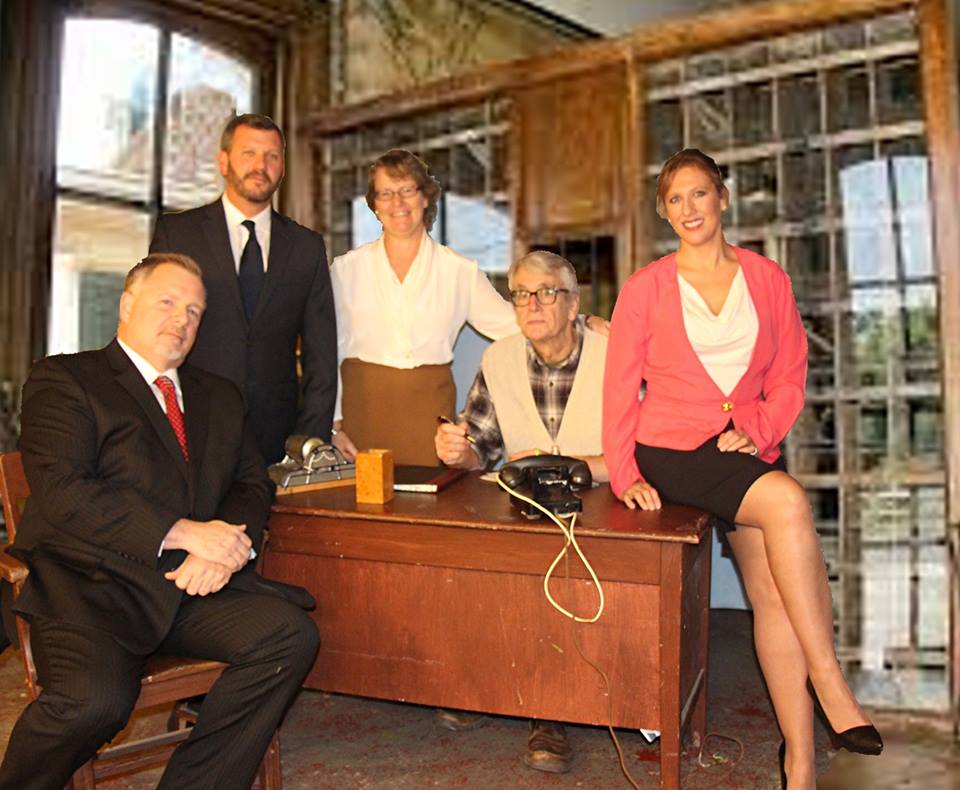
chambers-etiquette“Cheating”, in case you don’t know, is what we call “opening” yourself up, physically, to the audience, even if in real life you’d be facing in a different direction.  For instance, let’s say that two actors are face-to-face downstage center, which means that the fronts of their bodies are perpendicular to the proscenium.  This gives the audience in the center of the theater their profiles.  Anyone sitting on the sides gets a reasonable look at the face of one of the actors, and the back of the head of the other.

For brief moments, this is all right.  If it lasts for more than a few lines, however, it becomes problematic.  The profile view deprives the center of the audience of some emotional impact, which requires a more direct look at the actors’ faces.  The views from the sides of the audience are one-sided – that is, they have a good idea of what one actor is feeling, but can read nothing of the other actor’s feelings except from general body language, since they can’t see his face at all.

Once upon a time (like back in the days of the Greeks and for many centuries afterward), acting was declamatory.  Actors faced the audience fully and spoke.  There was no real pretense at reality as we know it today.

Somewhere along the line – perhaps because of Stanislavsky, or perhaps it began before him – actors began to pull one foot back a little so the front of their bodies were no longer parallel to the proscenium, but they were angled slightly – a bit of acknowledgment that they were talking to someone else on the stage, not to the audience.  These days, 45 degrees is typically the right place to start, and you adjust from there – more “open” (facing the audience more) when you can get away with it, and less “open” (facing another actor more than you do the audience) when the interaction between characters demands it (arguments, etc.)

If you aren’t used to cheating, it feels very unnatural, for the simple reason that it is.  We are accustomed to facing people more directly when we interact with them, and “opening” ourselves up, physically, to the audience for reasons of sightlines is nothing like what we do in real life.  However, it’s a necessary adjustment that adds to the audience’s pleasure and understanding.

The first thing you need to know about cheating is that it looks better from the audience than you think it does.  A few years back, I did a production of Blithe Spirit with an actor who did a lot of musical comedy.  In musical comedy, the cheating is a lot more apparent, because songs are typically directed out to the audience, even if they are being sung to someone else on stage.

When I watched Nick work in scenes I wasn’t in, I studied how he stood and how I felt about it, as an audience member.  He was angled at perhaps 20 degrees, not 45, and from the audience’s perspective, that’s almost as if he is facing them, and yet I never felt like he wasn’t fully involved with his partner.  In other words, it looked perfectly natural and realistic to me.  Why?

There’s two ways to handle this, and only one way works.  The way that doesn’t is to stand as Nick did and turn your head to your partner for the bulk of the scene (both when you’re listening and when you’re talking).  This isn’t much better than if you stood at profile to the audience, or anything between 45 and 90 (or more) degrees.  If the point of cheating is to give the audience a better look at your face, then turning your head defeats the purpose.

What does work?  That’s for the next post!

Script Analysis: Other People’s Money, Part 4

So Bea’s husband dies, and there is nothing to keep Bea and Jorgy apart any longer.  Do they move in together?

“Yes” would be the obvious, predictable answer.  So let’s examine the possibility of “No.”  (Did you notice how many times I used the word “perhaps” in the last post?  I’m not making any decisions; I am merely floating possibilities – and believe me, I am also considering all possibilities that are diametrically opposed to the ones I am presenting here.)

piggy_bankAt the moment, I am inclined to say, “No.”  I wonder if part of Kate’s anger is because she feels that Jorgy has taken advantage of Bea and also that Bea has let him.  Kate says, “He loses this company, he walks away with millions.  You walk away with memories.”  This says to me that Jorgy and Bea have not married; Kate does not feel that Jorgy has offered Bea any sort of financial protection, and certainly a marriage would provide that.  She clearly doesn’t know about the $1 million trust fund Jorgy has set up for Bea, which while a nice security blanket, is still but a fraction of the $30 million he reaps at the end of the play.

Even if they didn’t marry, living together would probably imply, to Kate, that Bea would be taken care of by Jorgy, if only in a bequest from his will.  Without that, and without assurances from Bea that she has seen the will or has a trust fund, Kate has every reason to believe that Jorgy has been shtupping her mother for decades and that Bea has nothing to show for it but “memories”.

Okay, so I’ve got a textual reason for believing that they aren’t living together; now let’s try to understand the motivation behind it.

Let’s say Bea’s husband died 3 to 5 years ago.  Kate’s feelings are still very raw on the subject, and while there are people who can hold such grudges for many years, let’s say that Kate’s are still pretty fresh.  So let’s say 3 years.

home-victorianJorgy and Bea were in love for 34 years before they were both single and could do something about it.  Yes, it’s romantic to want the happy ending for them, and they undoubtedly talked about it after the funeral.  But perhaps Bea didn’t want to give up her house, and neither did Jorgy.  He’s a man of strong opinions and probably not overly fond of change.  At 65, maybe he was accustomed to his house and didn’t want to leave it, and Bea didn’t want to live in Fay’s house.  Or maybe she just didn’t want to leave her own, which has so many memories for her.  They’d had 34 years to get accustomed to living apart; maybe they decided that beginning a physical relationship didn’t mean they had to share the same bed every night.

I’m not committed to this explanation, but I’m leaning toward it, and here’s why:

If I (Bea) have no safety net, then offering Garfinkle my million dollar trust fund becomes a greater sacrifice.  Remember when I talked about raising the stakes for your character?

If we are living together, then I might have reason to believe that Jorgy will take care of me even if I give away the money.  Without that, I may not be sure of what he will do.  I might THINK he will replace it, but I don’t know.  That bit of uncertainty increases my stakes.

But whether we are living together or not, Jorgy might see what I do as a betrayal and reject me entirely.  If that’s the case, then we could be living together.  If he rejects me on principle, then I am without a home (if I moved into his) as well as without him, and no nest egg for my retirement.

Of course, the trust fund would have been set up while my husband was still alive, Jorgy’s way of taking care of me when he had no other way to do so.  So he certainly might replace it after the sting of buying Garfinkle out passes.  But he is a man of inflexible principle – I might very well be uncertain of what his reaction would be, and so in offering Garfinkle the million dollars to save 1,000 jobs, I am risking not just the money and the security it offers, but my relationship with Jorgy as well.

Them’s high stakes!

Where does this leave me in terms of our living together?  Apparently it doesn’t matter, from a stakes point of view, whether we are living together or not, because the stakes are as high as they can be either way.  I am left with the textual reason related to Kate’s understanding of our relationship, which is pretty compelling, although it is more meaningful to her.  Nevertheless, I think it does impact one speech I make to her, so I think I’ll stick with the idea that we live apart, but spend most, if not all, of our nights together, sometimes in his house, sometimes in mine.  I can’t see me giving up my home – “home” is too important to me – but I can’t see Jorgy wanting to change old habits, either.

Did you notice that somewhere in this post, I stopped talking about Bea in the third person and began speaking of her in the first person?  As I think I mentioned in the posts about talking about your character in the first person, I am inclined to speak about her as “Bea” when I am being analytical – that’s an intellectual exercise for me, and I look at her from the outside.  Once I start to get close to the emotional life of the character, however, I automatically flip into first person speak.  It’s sort of like trying on a character’s feelings, so see how they sit with me, but more than that, it’s about taking ownership of those feelings.  Bea isn’t someone “out there” – she has to live inside of me if she is to breathe.

Script Analysis: Other People’s Money, Part 2

QuestionsSo what clues does the script provide to answer the question, “Are Jorgy and Bea living together?”

They’ve known each other for 37 years.  He was 31 when they met.  She is 5-6 years younger than he is, so she was mid-20s at their meeting.

Bea married at 19, so she was married the day she walked into the office and met “the most beautiful, scared young man I had ever seen”.  Jorgy tells a story about his deceased wife, and given the times, it is likely that he was also married when he met Bea.  It also seems clear that they remained in their marriages until their spouses died.  Jorgy’s wife died 13 years ago, at which time, says Bea’s daughter, Kate, “you almost moved in.”

Those are four very loaded words.  They hide more than they reveal, which is the mark of good writing.  The playwright provides no definitive answers to the nature of Jorgy and Bea’s relationship, which leaves it up to the actors to choose their own “answers”.  However, it is almost more important to ask questions than it is to “decide” anything.  Decisions can be so limiting, and people are rarely so one-dimensional as the characters decisions we are inclined to make.  Asking questions allows our subconscious to do clever things with the input.

So what questions should we be asking?

When Jorgy’s wife, Fay, died, who brought up the idea of Bea moving in, Jorgy or Bea?  What was that conversation like?  How soon did it happen after the funeral?

Bea talks about living a life full of “rumors and gossip and sideways glances”; how much of her relationship with Jorgy was guessed at, and how much was actually known by others in the town?  When Kate says Bea almost moved in with Jorgy, how does she know that?  Kate was out of college at the time and probably no longer living in Rhode Island; did Bea discuss it with her on the phone?  Did Kate’s father tell her about it?  Or did she just hear the rumors?

As for the rumors, how did they start?  What did Bea and Jorgy do that made the rumors start?  How did they fuel them over the years?  And why were they simply rumors, gossip, and sideways glances?  Because there is nothing in the dialogue that indicates that there was anything more than that – that Bea and Jorgy were enjoying a little afternoon delight in a hotel in a neighboring town, or going off on weekends together, or that Bea was spending the night at Jorgy’s after Fay died but before Bea’s husband did.

Which raises another question:  Bea and Jorgy love each other – they frankly acknowledge that.  But was that love ever consummated, and if it was, when?  In their early days together?  A decade later, when both were still married?  Perhaps not until after Fay died?  Or after Bea’s husband died?  Or perhaps never at all?

Next time, I’ll walk you through where these questions lead me.

Script Analysis: Other People’s Money, Part 1

opmI am currently rehearsing Other People’s Money, playing Bea Sullivan, the lawyer’s mother.  Bea is a small, but very good, role – it allows an actress to go to a number of different places.  Even when I was younger and coveting the role of the attorney, I appreciated that Bea has some very good moments.  I generally choose my parts pretty carefully, and one of the reasons I choose to do a role is when there are two or three lines I just need to say, or moments I want to be part of.  I’ll sign on to do two months of work and another of performance just for that sum total of 60 seconds.  Crazy, right?

Anyway, Bea is one of those roles.

In this instance, the size of the role is a real benefit for the blog, because it will allow me to comprehensively talk about a character without taking 20 posts to do it.  (I think.  If you’ve read much of this blog, you’ll know that I seem to have a lot more to say than I thought I did when I started it.)

I’m not going to try to put much structure to this, but to talk about things more or less as they occur to me, in the rather circular way in which my mind works when I work on a character.

If you aren’t familiar with the play, I suggest reading it.  It’s a well-constructed piece, with five interesting characters.  All could be played two-dimensionally, and you could get away with it.  And if you don’t have a lot of technique, that’s probably what you’d do with them; their layers aren’t particularly obvious.  Dig a little, however, and you’ll find characters rife with inner conflict and contradictions.

Besides, you’ll get more out of these posts if you do read it!

If you don’t know the play, here’s a quick synopsis.  Jorgy is chairman of a wire & cable business in Rhode Island – he’s run the place for decades.  A Wall Street investor, Garfinkle, thinks the stock is undervalued and starts buying it, with the ultimate goal of selling the parts and making a bundle, while shutting down the core wire & cable business, putting 1200 people out of work.  Other People’s Money is about what happens in this “war”.

Jorgy is in love with Bea, his assistant/secretary for 37 years.  When they met, they were both married, and they remained married until their spouses’ respective deaths.  Nevertheless, they were in love for most (all?) of those years, and others took note of the fact.  Bea’s daughter, now a successful attorney for Morgan, Stanley, is deeply resentful of their relationship.

One of the reasons that Other People’s Money is a good play is that it gives you sufficient information about the characters to tantalize you and make you want to know more without weighing the play down with clumsy exposition.  You know enough about them to make the play work, but the playwright, Jerry Sterner, doesn’t satisfy every curiosity – he leaves room for the audience to fill in the gaps as they like.  Different people will likely answer the questions the play raises differently – always the sign of good writing.

So at our first read-through, the actor playing Jorgy, my love interest, asked me this question:  “Are we living together?”

Interesting question, and one I hadn’t considered.  In the many times I’ve read the play over the years, I’ve assumed the answer was “yes”.  But, of course, I wasn’t doing the play and so didn’t need to really think about it.  I glibly answered, “Oh yes, I think so,” but as usually happens when I come out with a glib response to just about anything, I went home and thought about it.  Why did I respond that way, and was it justified?

What happened next is too long to finish in this post, so I’ll write another.  In the meantime, get a copy of the script and read . . .  (It was made into a movie, but how much of the movie contains the meat of the story about Bea, I don’t remember.  But I suspect the answer is, “Not much.”)

Macbeth and Love

macbeth

David Mead as Macbeth

Love may not be the first thing you think about when you think of Macbeth.  Pride, ambition, and murder probably are.  And yet, the first thing you should look for in any play – even a grand and gory tragedy like Macbeth – is love.  Love is the driving force of mankind, and no one wants to see a play that doesn’t have it.

As an actor, you must always look for the love.

I’ve just come from seeing the American Shakespeare Center’s production of Macbeth, with James Keegan in the title role and Sarah Fallon as his wife.  (No, this isn’t a photo from that production, but one my friend David Mead was in several years ago.  I don’t know the name of the actress who played Lady Macbeth.)

Now, I am an unabashed fan of the ASC in general – I’ve never had more fun at a theater than when I see their shows – and one of the things I love about their acting is their passion onstage.  Every one of the ASC actors is fully committed to the moment, from start to finish, and goes at it full tilt.

Here is a portion of director Jim Warren’s program notes for Macbeth – notes he sent to the cast before rehearsals began:

“Underneath is all….running through it all….has to be….love.

  • If our production is not filled with big love, the story/tragedy doesn’t work.
  • If Macbeth is just an evil s.o.b., a) it doesn’t match the words and b) who cares about his thoughts/feelings/guilt/journey?
  • If Mr. and Mrs. Macbeth don’t love each other truly/madly/deeply, who cares about the ride that rips them apart?
    • I want Macbeth to be as thoughtful/introspective/intelligent as Hamlet, but also a warrior who is part Henry V, part Titus, part Richard III, part Wolverine, and part Captain America.
    • I want Mr./Mrs. Macbeth to be in an awesome/sexy marriage of equals.
    • I want Macbeth’s heart to break when he gets the news that his Soul Mate/love-of-his-life is dead.
  • If Banquo and Macbeth DON’T love each other like the war-scarred, blood brothers they are in the text, who cares about the descent into jealousy/doubt/murder?
  • I want Duncan to be a great king that [sic] everybody loves, including/especially Macbeth.
  • But I also want a deserving Malcolm rather than a nerdy weakling that we all think would make a horrible king.

I want three-dimensional characters that [sic] allow us to care about them.”

Warren concludes his notes with this:

“We can be great at playing the darkness, creating the supernatural, and grossing out the audience, but if we’re not great at finding the love, telling the story, and giving the audience characters to care about, then nothing else matters.”

If you don’t find the love, then nothing else matters.  No one cares.

Look at the words Warren uses:  big, truly, madly, deeply, rips, warrior, awesome, sexy, Soul Mate, love-of-his-life, blood brothers.  There is nothing indecisive about his directions to the actors.  He is as committed to what he sees in the play as his actors are in the performance of it.

And notice, please, that there is love between all the characters, not just between two people who are sleeping together.  There are different kinds of love, and you must always search for how you love the other characters in the play, and make that love as strong as possible.

Telephone Booths, Cat’s Paws, and Wanderlust, Part 2

cat pawCat’s Feet is what happens when a director tells someone with Telephone Booth Syndrome to “move around, use the stage”.

Have you ever seen a cat knead?  If you have, imagine an actor doing the same thing with his feet.

Kneading doesn’t require that you leave the telephone booth.  Because actual movement is involved, actors think they are doing what the director asked.  They honestly don’t realize that they haven’t really relocated their body but instead are wearing a hole in the carpet.

They may be rotating left to right, and both feet may be moving, but they haven’t actually taken a full step in any direction.  It’s more like a quarter step.  Keep encouraging them to move, and you might get them to use 6 square feet of space (3 feet wide, 2 feet deep).  But that’s about it.

It’s as if there is a leash that keeps pulling them back to their original position every time they stray too far from “home base”.

Eventually, they realize that physical movement means horizontal, not vertical, movement.  They may even come to understand that the stage is their oyster, and they are welcome – no, encouraged – to use every bit of it.

This is when they become Wanderers.

Wanderers move, alright.  They may cover the entire stage (although typically, they wear a path in the carpet from point A to point B.)  But usually, they move slowly in one direction and then reverse when they reach the “end point”.

The important thing to understand about Wanderers is that there is no connection between their emotional life and their movement.  They are walking because the director told them, “this is your scene, use the whole stage.”

Name one person you know who wanders aimlessly while they are talking and who doesn’t have a distinct psychiatric disorder.  I doubt that you can.

There is ALWAYS a purpose to our movement which results in a distinct start, movement with purpose, and a distinct end.  Wanderers tend to blur these divisions.  They stay in motion for the sake of staying in motion, not because they have any practical or emotion need to be in motion.

Let’s say that I’m playing a scene where my character is very angry at someone and has a lengthy speech where I rail at my scene partner.  “Work the room,” says my director.  “Use the whole stage.”  Given these instructions, I’ve seen actors slowly and deliberately, often without relating back to their scene partner in any meaningful way, traverse the set in a way that is counter to the deep emotions they are feeling.  Sometimes they are in constant motion, but any stops along the way rarely have any connection to what is going on in the text.

To the audience, they look like they’re wandering.  Because, in fact, they are.

Stage movement is essentially punctuation to the script.  It needs to buttress the emotional arc of the characters.  It therefore needs some intentionality and to be chosen carefully.

More on this in a future post . . .


Telephone Booths, Cat’s Paws, and Wanderlust, Part I

telephone boothThere are three bad onstage habits that actors are inclined to have, with regard to movement:  Telephone Booth Syndrome, Cat’s Feet, and Wanderlust.

“Habits” is perhaps too hard-hitting a word.  Actors aren’t aware they are doing any of these things until it’s brought to their attention.  These seem to just be natural behaviors that many, and perhaps most, actors are inclined to exhibit until they learn how to NOT do them.

If they are such bad choices on stage, then why do actors do them?  Don’t know for sure, but I’ve got some hypotheses:  Fear.  The inability to pay attention to too many concurrent activities (talking, listening, emoting, moving).  Fear.  A conviction that saying one’s lines is the primary, overriding concern.  Fear.

Whatever the cause, I find that when I bring it to an actor’s attention, he will usually understand why it isn’t the best choice available to him and why it doesn’t reflect real life.  However, the ease with which he can learn to overcome it and use movement effectively varies from person to person.  Nevertheless, I believe that everyone can, because after all, it IS something we do quite naturally in real life.

Funny how difficult it seems to be to do on stage what we do so naturally the rest of the time, huh?

So what are these three habits, in brief?

The first is Telephone Booth Syndrome.  For those of you too young to remember them, telephone booths were narrow, four-walled spaces designed for privacy for making a phone call from a public phone.  (Yes, once upon a time we didn’t care to conduct personal business while walking down the street!)  Even with one shoulder against a wall, it was impossible to fully extend one’s other arm.

Actors with Telephone Booth Syndrome act if they are similarly restricted.  They are inclined to remain rooted to one spot (trapped in the confines of the booth), and the idea of using gestures which would violate the dimensions of their invisible booth is unthinkable.  Their upper arms tend to remain in contact with their torso, while the lower arm does all the necessary pointing.

For these actors, holding their arms out to the side, parallel to the ground, in a gesture that is inclusive, encompassing the world and all its possibilities, is nearly impossible.  It’s fascinating to me that while these actors will take direction and move from Point A to Point B when the director asks them to, asking them to exercise the freedom to fling their arms wide as a reflection of a line that says something about “the whole wide world” causes them to panic.

They try to oblige, but their elbows are still distinctly bent.  They THINK they’re responding to the direction, but they aren’t, and it’s massively uncomfortable for some of them to go to full extension.

These are also they actors who usually need to be given all of their blocking by the director, because they are either uncomfortable creating their own or else don’t know how to, and they will perform the direction to the letter.  Their emotions don’t drive their movement, it’s only the director’s wishes that does

But imagine, if you will, five actors standing on stage, each in their own little telephone booth.  How dynamic or interesting is that to watch?

Telephone Booth Syndrome is perfectly understandable, because it is our “personal space”.  By personal space, I mean the area around us that we prefer other people to not enter.  You know the stranger you just met at a party who gets uncomfortably close to you, invading your personal space?  Well, it seems that not only do we not like others to invade our personal space, we don’t really want to leave our space ourselves (at least, not when we’re on stage)!

But the rules are different on stage!  Knocking down the personal space walls is essential.  Actors need to feel the freedom to let their emotions run amuck.

Next up:  Cat’s Paws and Wanderlust

When You Forget Your Lines

embarrassment-2It happens to everyone at some point.  No matter how well you know your lines, there will come a moment where you become unglued and can’t remember a thing about what is supposed to happen next.  It will come in a spot you’ve never had trouble with in rehearsals or any performance.

So what do you do when the inevitable arrives?

Don’t panic.

I know, that sounds ridiculous.  How can you not panic?  The world is about to come to an end!  You will be exposed as a fraud or worse, a fool!   You will be the laughingstock of the county for years to come.

Believe me, it’s not that bad.  But also believe this:  If you don’t panic, the odds are that at least half the time, the audience will not have any idea that anyone has dropped a line.  And the other half of the time, they will happily watch you deal with the moment professionally, relax when it is clear that you are back on track, and praise you afterwards for how well you handled that moment.

So okay, you’ve managed not to panic, or to at least limit that moment to a split second.  Now what?

Move.  Anywhere.

Physical motion on stage does not necessarily have to be attached to the spoken word.  So moving does three things for you in this situation.  One is that it distracts the audience.  They assume that your motion is planned and is part of the play, so they are still hanging in with you, blissfully unaware that the train has jumped the rails and life as we know it is about to end.

The second benefit is that because you have created an activity (scrounging around in your purse or pocket for a piece of gum or a pen, looking for the earring you lost this morning, digging through the couch for change for the parking meter), you have bought yourself time to think about what your line must be, or what the next line you can remember is.  And yes, it is entirely possible to create meaningless, occasional dialogue to add to your activity while still using the other part of your brain to search for the words you’ve forgotten.

The last benefit is that it immediately tells your fellow actors that you’re in trouble.  They can now start figuring out what they can do to save the moment; can they paraphrase your line or otherwise give you a hint that will jog your memory, or can they just skip to the next beat without leaving out any essential information?

Bad Dates HeadshotYears ago I did a one-woman show, and it DID NOT OCCUR TO ME that I might forget my lines and that there would be no one on stage to save me until the moment it actually happened.  In the two second pause that ensued, I held my focus and scoured my brain for enlightenment, but none was forthcoming.  Fortunately, the scene had plenty of physical activity in it, and so I just did more of what I’d been doing (trying on shoes and dresses) while talking to myself about how I looked in a way that was perfectly in character.  And miracle of miracles, manna from heaven arrived after 20 to 30 seconds, and we were off to the races again and the audience was none the wiser.

That was, by far, the longest “gap” I’ve ever personally experienced in terms of forgetting a line.  Since I had no one to help save me, it dragged on longer than such gaps ordinarily do.  But because I kept moving and kept talking, I don’t think anyone in the audience realized anything had gone wrong.

I’ve seen actors who’ve forgotten their lines swivel their heads to the wings and look beseechingly at the stage manager for the words that have left them.  This is probably the worst thing you can do.  It not only lets the audience know that you’ve forgotten your lines in a way that is very jarring, it also means that you’ve got no intention of trying to fix the problem yourself.  To an audience, that is both unprofessional and disrespectful, and they judge it harshly.  They will sympathize and forgive if they see you muddle through a dropped line, but they are very critical of an actor who has given up the ghost.

The better you know both your character and the rest of the play (the other characters, the plot line, etc.), the easier it is to improvise believable “filler”, and having some experience with improvisation as a form of theater can make handling such moments much easier.  You may find, however, that you just aren’t very good at thinking on your feet and improvising your way out of such calamities.  It’s not everyone’s cup of tea, and as long as there is one actor on stage who can handle such moments, you can probably rely on them to bail you out.

But what if it’s a two person scene, and it’s your scene partner who suddenly goes up in her lines?  Or the nature of the scene is that it is very difficult for the other actor to save you?  (I’ve been in such scenes.)  If you’re nervous about your own ability to cover the dropped line, then prepare some possible ways to cover such moments by preplanning things you can do and say to cover such moments.  Hopefully you’ll never need them, but if you do, you’ll be glad you did!

Not Business As Usual

21724617Plays are always about dramatic moments.  The most dramatic moments possible.

I’ve said this in a variety of ways in other posts, but it bears repeating again and again.

The most dramatic moments possible.

One person’s life only contains a few stories dramatic enough to make a play out of them.  Stories where there is so much at stake for me, where what I want is so difficult to get that it seems that I’ll never achieve it, and where the experience changes who I am in some important and fundamental way.

These three elements are the foundation of most traditional drama.  Not only does it require dramatic import of this magnitude to make the evening interesting enough that we’ll leave the couch and go the theater, but it feeds the thing that makes theater meaningful in the first place.  That is, it teaches us something about the human experience that we can learn in no other way.

Without that, I’d rather stay home and wash the dogs.

Not everyone’s coming-of-age story is dramatically interesting.  Not every love affair is a boy meets girls/boy loses girl/boy gets girl story that keeps us riveted and hoping for happily ever after.  Since most of us resist learning Life’s Big Lessons, most disputes we have in our lifetime will not leave us changed people.

To find your own dramatic stories (if you are in the first half of your life, you might need to look for the dramatic story of someone you are very close to), look for the experiences that have irrevocably changed who you are and how you view the world or your own situation.  If you really changed on some deep level, it is likely that there was considerable struggle, both internal and external, that led to that change.  And if there was struggle, it undoubtedly meant there was a lot at stake for you in it.

If you can find such a story in your life or in a close relative or friend’s life, then you are closer to understanding what makes for more dramatic choices as an actor.

molehillDespite these dramatic essentials, however, most actors I work with will underplay what is going on in a scene.  “Most” for the simple reason that most actors are “under-actors”, not “over-actors”.  Under-actors can make molehills out of mountains with very little effort.  Sort of like boiling a chicken until all of the flavor is out of the meat and into the broth, and then serving the breast for dinner and tossing the soup.

(Over-actors make the Appalachians into Mt. Everest.  That’s not good, either, but it’s a different problem.)

Why do we do this?

Perhaps because we don’t like to feel our feelings.  Downplaying them is the easiest way to avoid them.  If we do it regularly in real life (“Oh, that’s all right.”  “Bothered?  I’m not bothered.  Really.”  “It doesn’t matter.”), then we’re apt to do it on stage as well.

Darn!  We’re back to the old feeling our feelings problem!

Yup, it’ll keep coming up until you overcome it.  Our Ego, which is the thing busily avoiding our feelings, will find every trick in the book to avoid them.  We have to catch it in the act and remove its disguise.

So when you look at your character’s emotions, ask yourself if you’ve chosen a really strong emotion or not.  If you look at her needs, ask if the need is overwhelming.  Depending on who your character is, there may or may not be an earthshaking change in her by the end of the play, but if there is, you can work backwards to get to the emotions and the needs in the same way that you did when looking at the most dramatic story of your own life.

If you haven’t chosen the most dramatic reasons available to you given the context of the play as written by the playwright, then you are shortchanging both your own acting and the audience.  So keep going back to the drawing board until you are sure you can’t improve the dramatic elements any more.

I’ll talk more about this when I write some posts on Storytelling and “What Would Lucy Do?”

The Triumverate of No-Nos: Unbelievability

bme_group1“I don’t believe it” is what I say to actors when they aren’t properly connected to the material, their character, or the moment in which they find themselves.  Much like the models in the photo above.

It’s a catchall phrase I use to describe everything that doesn’t fall into any other category.  Yes, you aren’t believable when you anticipate what you’re going to get from your scene partner, but I’m talking about a different sort of believability.

When I use this phrase, it just means that the moment to which I refer isn’t anything I am mistaking for real life.  It is artificial on some level.

I typically use this phrase to refer to a single speech or line that isn’t working.  If an entire scene is unbelievable, that’s another matter.  Then it’s time to revisit the given circumstances, the verbs, the character’s motivation, or some other large scale problem.  No, in my parlance, “I don’t believe it” generally means that the actor has just withdrawn from the reality of the scene for a moment or two.

Usually he’s being superficial, relying on externals and line readings rather than connecting to what is going on inside of his character.

Even good actors are susceptible to this.  We dig our way into our characters and get to those real moments over time.  We are inclined to focus on the more difficult moments and let the easier ones slide, and sometimes we forget to go back and work on them.  It takes a lot of energy to stay focused and connected to the material without abatement, so it’s easy to take a moment to “rest” and coast for a line or two.

I regularly vet my own work for such moments, listening to myself in rehearsals.  “Does that really sound believable?  How can I make it even more natural?”  (A topic for another day.)

I use the phrase “I don’t believe it” when I direct, because I find it generally does the trick.  I’m simply giving the actor feedback on how it looks from the audience.  It is up to him to figure out why what he’s doing isn’t working.  My comment sends him back to the drawing board, and the modifications he makes usually pull him further into the material.  Maybe he makes it work in the first attempt, maybe he needs a few tries to get it to a stage where it IS believable, but a good, intelligent actor can figure it out on his own, once I’ve alerted him to the problem.

Surprisingly, even new actors respond very well to this approach.

The intention behind this comment is critical, however.  If you’re a director who wants to employ this technique, please pay close attention to what follows!

“I don’t believe it” isn’t a criticism – that is, it isn’t a negative.  I am not ridiculing what he’s doing in any way.  On the contrary – I deliver it as a really supportive, respectful comment.  It’s nothing personal; it’s factual.  It just means “you aren’t there yet, keep trying.”

When I say it to an actor, the implication is that he can certainly get to his destination, he just hasn’t arrived yet.  Sometimes an actor will respond, telling me what it is that he is trying to do, and I may say, “I think those are good choices.  They just aren’t coming through in what you’re doing, that’s all.”

If an actor continues to have trouble, I will try to tell him why it isn’t believable.  Depending on the actor, I may do this with the initial comment.  I’ve worked with actors for whom the simple identification of “this moment works, this one doesn’t” is sufficient.  But less trained actors may need to know why it isn’t working.  “I don’t believe it, because I don’t think you’ve really heard what she said.”  Etc.

It’s not just about saying the lines.  If it’s not believable, it doesn’t work.

believable