The Triumverate of No-Nos: Telegraphing

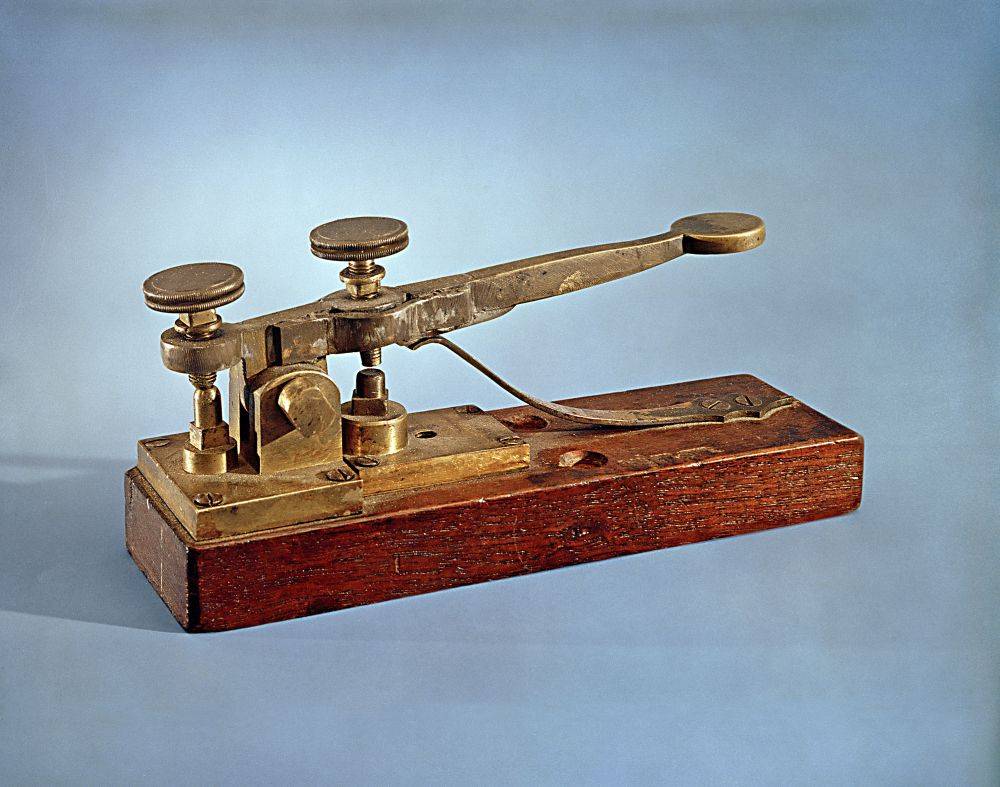
morse_telegraph_keyTelegraphing is when we know what you’re doing or feeling before it is appropriate for us to know.  We know what’s coming next, it’s because you’ve sent out a signal ahead of time.  It’s a form of anticipation, but rather than anticipating your scene partner’s next line, you’re anticipating the play itself.  You’ve jumped into the next beat or one even further down the line.   You aren’t building toward anything naturally, because you’ve already arrived.

It’s when you and your boyfriend are having an argument, and you know that the scene is going to end with the two of you breaking up.  Instead of fighting to save the relationship, which is the action of the scene, you let the climax – when he storms out of the apartment – inform everything that comes before.  You’ve either stopped fighting for the relationship long before the end actually comes or else the nature of your fight is colored by the fact that you know the relationship is doomed to failure.

Not only does this eliminate the dramatic interest of the scene, but you’re cheating your character.  Your character doesn’t know the break-up is coming until the moment it actually happens.  Even if it seems to her that it’s moving in that direction, that the argument is escalating in a way that it hasn’t before, that things are being said that are hard to take back, the moment he says he’s leaving and not coming back should still hit you like a ton of bricks.  Reality, no matter how predictable, is nonetheless shocking in its event.

Spending a week at the bedside of someone who is dying doesn’t take away from the impact of the moment of his death.

When we say that we need to play the scene “moment by moment”, this is what we’re talking about.  It’s all about “staying in the moment”, but the phrase “moment by moment” reminds us to not get ahead of ourselves, to let the story unfold in a way that surprises not just the audience, but the characters we play as well.

If you’re human, you know just how unpredictable life is.  “If you want to make God laugh, tell him your plans.”  How many times have you rehearsed a difficult moment in your life – confronting someone who has been creating a problem for you – only to find that all the things you planned to say get thrown out when the person you’re talking to throws you a curve?

Perhaps what you should do is give some consideration to how your character thinks the scene is going to play out, and compare that expectation with the reality.  Where do differences exist?  If you can spot the differences, you can discover when your character is surprised or has to take another approach to get what she wants (new beat, new tactic, new verb).

Actor’s Etiquette: Working With Directors, Part II

OLYMPUS DIGITAL CAMERAI have a good friend who did a lot of acting for many years before deciding he wanted to branch out into directing as well.  We became friends when he cast me in his first directorial effort, Murder at the Howard Johnson’s.  MHJ is a very funny, physical comedy.  All three actors in the play had considerable experience and Charlie, being new to directing, gave us a good bit of latitude.  It was a very collegial environment, and as he felt his way through the complexities of directing (it’s harder than you think), he was very open to our ideas.  There was a lot of “group think” — real ensemble work — and the final product was something of which I remain very proud.  (The photo in this post is from that production.)

Several years passed, and we met up on stage again for Blithe Spirit.  Charlie had two other productions under his director’s belt, and had considerably more confidence in what he was doing.  But he had also reached the stage where he thought the director needed to control everything in the experience.  He came to rehearsals with distinct and largely immutable ideas about what needed to happen and when.  There was little room for flexibility in the blocking he had created.  Gone was the collegial atmosphere; instead, the cast was busy trying to give him what he wanted, sometimes sacrificing what we felt was true to our character in the process.

Another couple of years, another show:  the ambitious Woman in Mind.  Shortly after Blithe Spirit, Charlie had read and taken to heart Marshall W. Mason’s book on directing, Creating Life on Stage:  A Director’s Approach to Working with Actors.  Gone was the autocratic director; in his place was a director concerned with giving space and assistance to his actors to create more organically-driven characters.

Charlie and I still disagree about whether or not the stage directions in a script are sacrosanct, and have agreed to disagree on this particular point.  Despite this, while Blithe Spirit was a difficult experience for me, given my own approach to acting, Woman in Mind was very rewarding.

Charlie’s trajectory as a director is not unusual.  That middle stage is probably unavoidable.  As with most things in life, it’s difficult to know where “balance” is until you go too far and find yourself out of balance.  A director with self-awareness and a desire to improve will move out of the middle phase, but I’m sure there are others who remain stuck in that position.

So what are you, as an actor, to do when you find yourself working with a director who is in this middle stage, who perceives his role as The Decider, and tells you what to do when?

First, understand that he is learning his job just as you are.  You go through stages as an actor where you aren’t working to your full potential, because you’re still learning your craft, so cut him the slack you’d like yourself.  He is doing the best he can, and doesn’t yet see that controlling everything doesn’t produce the best result.

Don’t challenge his authority too directly.  Control is very important to him; honor that while expressing your own opinions and needs.

Genuinely try to make what he asks work.  Only ask to do something differently if you can’t.  If you do this, he’ll both see your efforts and feel your pain.

Be clear about why something isn’t working for you without making the director sound stupid or wrong.

Don’t demand — instead, ask permission to change something.  “May I . . .?”  “Would it be a problem if . . .?”  “It would really help me if . . .”  “I’m struggling with . . . do you have any suggestions?”

In other words, you can’t change the director’s approach.  You’ve got to figure out how to work within it to produce the best result with the least stress.  Accept that you can’t work in precisely the way you might like to, but negotiate courteously for the things you really need to be comfortable.

There is No Such Thing as a Transition on Stage

transition-managementMany actors interpret the idea of “receiving” from another actor to mean that they actually have to “process” the information or emotion that they get before the can respond, or react, to it.  This misinterpretation has led to the development of the actor’s “transition”.  As in, “Can you pause just slightly before you say that last line, because it will be easier for me to make the transition?”

This is bogus.  People don’t make “transitions” from one emotion to another.  Actors shouldn’t either.

This is a good time to go back and re-read my post on “Why It is (Ultimately) Easier to Act Verbs than Emotions.”  But let me carry the comments in that post just a little bit further.

If you touch a pan that has just come out of the oven, you won’t need to “transition” before you yelp in pain.  If you get a phone call that tells you that your immediate family was just killed in a ten car pileup on the freeway, you won’t need to process anything before you begin to wail.  The winner of a beauty pageant doesn’t wait to hear her full name called before she looks astonished at her good fortune, she just hears “Miss Ari . . .” and she knows they mean her.

So the heavy-handed transitions that we sometimes see on stage, when the actor moves from happy to shocked to fury in the five seconds following the delivery of bad news, are never believable to an audience because they seem like what they are:  unnatural delayed reactions.

An actor who claims he needs a transition has plotted his emotions (“I’m happy to this line, then I get surprised when she says this, which makes me angry.”)  He isn’t connected to his own emotional life overlaid by the character’s life story and situation.  He’s playing externals.  And when you play externals, charting the “transition” from “happy” to “angry” takes more than the split second it takes in real life.  It takes a few seconds, because we’re not reacting to the events of the scene, nor are we reacting to what we are getting emotionally from the other characters.  We are painting by numbers.

These are the same actors who like to throw in a few extra words in a challenging moment, because those words give them the time they need to make their “transition.”

But if you play the verbs – that is, if you just try to get what you want, and if someone throws a roadblock in your way that makes you have to change how you’re trying to get what you want, and that roadblock gets you angry or frustrated because you think you’re being perfectly reasonable, or you have a brilliant new approach you’re sure will work that makes you proud or delighted, or you have to laugh at how ridiculous your “opponent” is being – well, that “transition” will happen naturally.  You won’t have to pre-plan it or force it.  It will just show up on its own, and it will be better than anything you could possibly have planned in advance.

If you are struggling with a moment in a scene, and it feels laborious to move from one emotion to another, so you temporarily forget this post and say to your director, “Gosh, I am having such a hard time making this transition!” – there is really only one cause and one solution.

The thing that is causing your difficulty is that you aren’t connected to your character and what he really wants – you’re floating on the surface, like oil on water.  In other words, you’re faking it on some level.  Stop faking it, get yourself in touch with what is really going on for you emotionally in this scene and go after what you want, and the transition will become effortless.

Why are you faking it?  Either because you haven’t yet learned how to connect yourself to your emotional life, or because whatever is going on with your character, emotionally speaking, is something that is making you very uncomfortable.  You’d rather not dig into it.  But digging is the only way to give the audience a moment worth watching.

Actor’s Etiquette: Deliberate Practice

10648110-got-etiquette-shirtDeliberate Practice, done in solitude, creates elite performers, says research psychologist Anders Ericsson.  What does that mean to an actor, who mostly performs with at least one other person on stage?  How can we, as actors, use Deliberate Practice outside of the classroom?

The fact that athletes in team sports also often spend unusual amounts of time in solitary practice caught my attention, because it’s the most comparable situation to an actor’s.  Yes, a violinist in an orchestra is working on a “team”, but he can practice his part in solitude more effectively than an actor can.  How what he does blends with the rest of the orchestra is secondary to what he does alone.

In football, wide receivers are dependent on their quarterbacks to throw them the ball, but that doesn’t mean that they can only get better by working with their QB.  Jerry Rice’s off-season workouts are legendary; Cris Carter last caught a ball in the NFL in 2002, but he’s caught thousands of them off of automatic throwing machines, and can still catch them one-handed (either hand).  Both Rice and Carter did an extraordinary amount of Deliberate Practice.  Which is one reason why they are in the Hall of Fame.

Monologue work is an obvious choice.  They are incredibly difficult to do well, as I’ll discuss in some distant future.  We do not ordinarily talk to ourselves in the way characters talk to themselves.  When we talk to ourselves, we mumble, or half of it is verbal and half in our heads.  None of which is interesting to watch on stage.

Monologues delivered to the audience are also tough, because they tend to become speeches.  We don’t speak to audiences the way we speak to best friends, and yet that is often exactly what is required.  Learning how to achieve this sort of natural behavior in a very unnatural circumstance is difficult and takes a lot of practice.

If you can learn to do it, however, you’ll find there is a lot of transference to your group acting skills.  The one clue I’ll give you is that the primary question I ask myself as an actor these days is, “Did I just sound like a human being?”  Often, in monologues directed to the audience, there are particular lines that just sound unnatural, and I have to work hard to overcome that.

You can see why casting directors like monologues.  They separate the men from the boys, as it were.

Monologues can only do so much, however.  There are a lot more of them available now than there was when I was growing up.  In fact, I don’t think I did much in the way of monologues until I was a teenager looking to audition.  So what was my form of Deliberate Practice, growing up?

I’ve read a lot of plays.  I mean, A LOT of plays.  Wanting to act is something I was born with, and once I discovered that there were plays out there, I got my hands on every script I could find, largely through libraries when I was in school.  Once I branched out into community theater, I discovered that there were playscripts I could borrow from friends or perhaps find in used bookstores.  Once I had more discretionary  income, I started buying scripts.

I didn’t just read them.  I read them over and over.  I identified characters in them (not always female) that appealed to me, and analyzed them, tried to figure out what made them tick, practiced their lines, tried to make them sound as natural as possible, while still being interesting.  I spent as much time with them as many actors do with their characters in rehearsal.  Enough time that I could see the links between the line in the third act and something that happened in the first.

I read old plays and new plays, classics and predictable modern comedies.  I read bad plays and good plays.  I learned why the good ones were good and the bad ones bad.  I figured out what playwrights had done to give me good material, and what was missing when they hadn’t.  I thought about how I could help disguise their lack, and how I could dig further into the complex characters so that I could show all of their complexity.  I worked to go beyond the obvious and find original ways to present my characters while staying true to them.  I learned how to read the text and let it speak to me without laying my trite perceptions on it.

I played hundreds of characters in my bedroom.  My first readings were about showing off and enjoying whatever attracted me to the character.  But I got pretty serious after that, working on the character as if I was actually going to play it, and doing all the work I still do in rehearsals.

Over and over again.

My sense is that many of my students, even the more ones, often don’t read a lot of plays, much less do the rest of what I’ve just described.  That’s unfortunate, because I think studying scripts is a huge part of actor’s form of Deliberate Practice.  Yes, I was born with a certain instinctive ability to sense what is going on with a character, but the work that I’ve described has most definitely helped me to become the actor I am today.

As with anything you want to do well – there are no shortcuts to putting in the time.

Acting as Storytelling: It’s About Competition

scoreboardSome people thrive on competition.  I know golfers who don’t want to play until they have a bet with another golfer.  The dollar amount of the bet is irrelevant, but there has to be some money on the line.

Me, I play against myself and the golf course.  I don’t enjoy competition for its own sake.  I don’t mind winning, but I don’t hate losing, either.  For me, it’s the process I enjoy, not the final outcome.

The characters we play on stage have to care about competition.  This isn’t a game for them; it’s their lives.  Whether a character wins or loses the job, the girl, the trial, his life (literally), it matters deeply.  This means that wins should be celebrated and losses mourned.

If you’ve been told you’re in the final three for the job you interviewed for, that’s a win!  If you get a “Thanks anyway, good luck with your career” letter, it’s a loss.

If she agrees to go out with you, that’s a win!  If he tells you that he’s dating her, it’s a loss.

If your attorney catches a prosecution witness in a lie, that’s a win!  If a witness testifying against you seems highly credible, that’s a loss.

These probably seem self-evident to you.  I hope you respond appropriately when they happen to your character, although I’m guessing you could throw yourself into it a little bit more (it’s the stakes problem, which I’ll talk about a little more some other time).  But do you also celebrate the little wins and losses that are scattered throughout the play?

The little digs you make at your rival for the girl’s affections that get under his skin?  His offhand references to things he knows about her that seem to convey an intimacy you don’t share with her?  The unexpected compliment from a co-worker?  Your mother’s subtle criticism of your cleaning habits?  The rich woman’s condescension when she hands you her credit card?  The young mother’s gratitude when you help her gather her dropped groceries?

Our lives – and our characters’ lives – are filled with tiny moments of grace and pain, and we feel the joys and disappointments related to them in the brief moments that they happen.  Sometimes they linger, but often they are as fleeting as a sparrow.

However, because plays are about dramatic moments in our lives when we are desperately trying to get our heart’s desire, any wins and losses, no matter how tiny, matter.  If they impact our ability to get what we want, they matter.  A lot.  This means that your character has to register them on some level.

Sometimes those will be big moments of exaltation or pain.  Sometimes they will be smaller ones we try to subdue for some reason.  Sometimes they will just be pinpricks that spur us on to keep pursuing what we want.  But we need to feel them, because – guess what? – they drive what happens in the next moment.  They influence what we do next.

I don’t want to bore you with the repetition, but this is one of the Big Keys of acting:  Everything we do is in response to something that happens.  Because the script is written for us, it’s easy to get complacent and just say the lines.  To really make your performance believable, however, you must make clear connections between what you are doing and what is happening to you, and one of the ways of doing this is by keeping track of the score – points you win, and points scored against you.  It not only heightens the drama, it also makes the experience more fun for the audience, because they’ll keep score, too.

Registering your wins and losses doesn’t mean exaggerated response a la Marcel Marceau (for those of you too young to remember him, he was a mime, and you can see him in the video below.)  If you decide, “This is where I should be surprised” or “When he says this, it angers me”, your reaction is apt to be too big.  It’s like hitting your audience with a hammer when a slight tap will do.  (Like mime, physical comedy often uses exaggerated responses, but most other actIng that you’ll do needs to be more realistic.)  Instead, leave yourself open to receive what your scene partner sends you in that moment and let it land on you and provoke a reaction without preplanning it.  That creates a moment so alive that you sweep the audience into your world!:


Actor’s Etiquette: How Do I Get Better?

But I want to be great!  Shouldn’t director help me get there?

Let me circle back through the last two posts and revisit the issue of young (or old, or anywhere in between) actors learning their craft.

You don’t learn it on the job.  All right, you do, because if you are paying attention and working hard, every bit of practice you get is going to help you to be better than you were yesterday.  (Entirely possible to practice and not get better, as we’ve talked about and which I’ll touch on more down the road when I talk about overactors and underactors.)

But the rehearsal hall isn’t the primary place you will learn your craft.  I’ve written about this in the past, but it bears repeating.

A craft, according to Merriam-Webster, is something requiring special skill.  Now, craft originally referred to making something with your hands, like woodworkers, silversmiths, and potters.  Think of any artisan – it takes a lot of practice to get good at that skill.  Bricklayers make it look like the easiest thing in the world, but if you’ve ever tried to build a wall yourself, you’ll realize that theirs is an ease borne of laying (and relaying) thousands of bricks.

Move into the arts, and you will see similar repetition.  Painters don’t just have a vision they want to commit to canvas or paper – they need to learn how to use the brush, which one to use when, how to mix the colors, etc.  A violinist has to learn how to bow, how to pick, how to find the right place to hold the strings (violins have no frets), etc.  Watercolorists throw out a lot of paper while they learn to blend washes, and musicians play a lot of scales in practice, not just concertos with the orchestra.

In other words, they have a myriad of skills they must acquire in service of creating the final product.

The fact that we are human beings and know how to walk and talk doesn’t mean that we automatically know how to act on stage, although I think some people imagine it does.  Acting is a craft, too, and requires special attention simply because the most obvious “skills” it uses are walking and talking.

I’m reading Susan Cain’s book, Quiet:  The Power of Introverts in a World That Can’t Stop Talking, and she talks about Anders Ericsson, a research psychologist who studies “how . . . extraordinary achievers get to be so great at what they do.”  Solo violinists, grandmaster chess players, elite athletes – they all spend unusual amounts of time in solitary practice.

“In many fields, Ericsson told me, it’s only when you’re alone that you can engage in Deliberate Practice, which he has identified as the key to exceptional achievement.  When you practice deliberately, you identify the tasks or knowledge that are just out of your reach, strive to upgrade your performance, monitor your progress, and revise accordingly.  Practice sessions that fall short of this standard are not only less useful – they’re counterproductive.  They reinforce existing cognitive mechanisms instead of improving them.”  [Quiet, p. 81.)

So what is Deliberate Practice for actors?

It’s not going to rehearsal.  In rehearsal, you are only focusing on getting this character in this play right – you aren’t identifying what you aren’t good at and trying to get better at it in a global sense.

Because acting is largely a group activity, we use technique and scene classes as a means of working on our skills and developing a craft, and I strongly recommend them to you, in whatever form you can find them.  Even working on scenes with a fellow actor with an eye to developing your skills is going to help, if classes are not available in your area.

So what is Deliberate Practice for an actor, done in solitude?  Stay tuned . . .

Acting as Storytelling: Picking Your Fights

Sword Fight Sir Toby and AntoniaStorytelling, for an actor, is the intentional choice of how you present what you are doing in order to maximize its dramatic effect.  This is the first of don’t know how many parts.  I’ll write about specific ways to think in terms of story presentation when it seems appropriate.

If drama is conflict and conflict is a fight, you need to understand what kind of battle you’re in.  Is it a boxing match or a chess match?  A swordfight or arm wrestling?  Ping pong or tennis?

The nature of each of these battles is going to be slightly different.  Ping pong is very quick; tennis is slower and involves more slight of hand.  Arm wrestling is continuous energy trying to force your will on your opponent and resisting his; a chess game allows you to reconsider your strategy at any point.  A swordfight can be a swashbuckling Three Musketeers’ event, or it can be Olympic fencing, where a touch in the right spot wins you a point.

The kind of battle you’re fighting determines the sort of strategies you can use.  In tennis, for instance, you can slice the ball at the last minute, so your opponent doesn’t see it coming.  You can lob it over his head.  You can gently drop the ball just over the net or smash it down on your opponent’s side of the court so that it jumps so high it is impossible for him to touch it.

Can you see how you might use this analogy in a play?  Let’s say you’re playing a scene where you have discovered something about your “enemy”, but he doesn’t know you know it until the end of the scene.  You might choose a drop shot as your way of delivering the “Oh, and by the way, I know this about you” line, or you might play it as an overhead smash exit line.

tennisIf the smash seems to be the obvious choice, that’s exactly why you should still try the drop shot.  When the unexpected happens on stage and it works, you have some exciting theater going on.  Don’t assume that you know what works until you’ve tried it.

Who’s getting the points in the battle you are waging in a scene?  Or in the entire play, for that matter?  The score matters in theater, as much as it does in sports.  The audience doesn’t have a scoreboard to follow, but that doesn’t mean you aren’t scoring points, or being scored against.

You’ve got to be aware of when you are attacking and when you are retreating.  When you feel stymied or trapped, and when you feel sure you are about to win.  When you’ve scored points and when points are scored against you.

Why do you need to know this?  Well, I think I’ll save that for next time . . .

Actor’s Etiquette: Getting What You Want

etiquette-logo1The real question, Milo, isn’t “why don’t directors give you more”, but rather, “what can you do to get what you need from a director?”  The only way to change the director’s behavior is to change your own.  (By the way, this is true of absolutely every relationship you will ever have throughout your life.  A problem you have is never someone else’s to solve; it is always your responsibility.)

Your question, “How was that?” is a close-ended question.  Close-ended questions are those which can be answered by a single word:  “yes”, “no”, “perfect.”

(Incidentally, you weren’t necessarily “perfect”, but it’s a great way of saying, “I have what I need,” while stroking an actor’s ego.  All actors, no matter how emotionally secure they are, like to be stroked.)

So if you want a different response, you have to rephrase the question.

“Did I make you believe that I haven’t eaten in two days?”  “I was trying to gradually build to ‘this’ moment, to keep escalating my panic.  Did that come across?  Were there any drops in the build in tension that I need to address?  And did I end high enough, or do I need to be even more stressed?”  “How did I make you feel in that scene?”

[I know, “panic” and “stressed” are adverbs, and I haven’t said a word about my motivation and how to play the verbs in this imaginary scene!  Breaking all my own rules!  I’ll explain why in another post.]

The first two questions can be answered in one word and so are essentially closed questions, but asked in context, they indicate an awareness of what you are trying to do.  That alone encourages a director to answer more thoughtfully, and gives him something very specific to respond to.

Generalized questions are tough to answer, because as a director, I don’t really know what it is that you’re curious about.  Were you trying something in particular, and you want to know if it worked?  Without knowing what you’re striving for, I can’t tell you if you succeeded or not.  Are you asking me if you understand the character properly?  Is there a part of the scene you’re uncomfortable with, and you’re wondering if I noticed?  Maybe you can’t put your finger on why it’s a problem for you, and you’re hoping I’ll spot it and let you know what it is?

Trying to read anyone else’s mind is a waste of time.  I’ve spent years trying to do it and have come to the conclusion that I will always fail.  Human beings are too complex.  So as a director, I expect you’re going to show up and do your job, and if you need something from me, you’ll ask me for it in a very specific way.

(Okay, that’s not true for me, personally, but I’m talking about directors in general.  I work with amateurs.  I can clearly see their process and where it isn’t working, and I can help them over the humps.  Directing, for me, is a forum to teach them to be better actors.  In the professional world you aspire to, however, that is not how directors work.  It is expected that you know your craft.  More on that in my next post.)

Even if the specific questions above can be answered in one word, the director will elaborate if he thinks there is room for improvement.  The way you have posed the question tells him what you understand about your own process and shows your willingness to work on it.  He can tell you the moments in which he was unaware of your hunger (or you can probe to find out which they were.)  He can identify the moments when his belief was suspended.

Still, identifying the moments that aren’t working isn’t the same as pulling a great performance out of you.  If you don’t know how to improve the moment, now is the chance to ask the director for help.  “I’m having difficulty with this part of the scene.  It doesn’t feel to me like it’s working as well as it could.  Would you agree?  Can you help me find a way to make it more effective?”

This is what I mean when I talk about the actor’s responsibility in Working with the Director.  Asking your director for some generalized help and putting the responsibility on him to make you good isn’t going to get you far.  Help your director help you by being clear about what you are trying to do and having specific questions to ask.

But as I indicated above, Milo, I have a little more to say . . .

Why Conflict is Always a Fight

tug-o-war1If you have enough at stake, it’s always going to be a fight.  (If you don’t have enough at stake, you don’t have a play worth performing.)

“Fight” is the operative word.

Conflict is not verbal debate.  It is emotional tug of war.  It is you trying to get what you want in any given moment, what will make you happy.  Sometimes you get it, and sometimes you don’t.  Sometimes you think you’re getting it, only to have the other side give a big yank, tumbling you to the ground.

The person you are in conflict with may simply not want to give you what you want.  Your boss may not want to give you a raise; your distant father may withhold the love you desperately need.

Or the conflict may revolve around conflicting desires, like whether to cremate mom or bury her at sea.  You may want us to move across country so you can accept a transfer, I may want us to stay here so I can care for my aging parents.

Or the conflict may revolve around us wanting the same thing:  that last piece of cake; the Ming vase; the same man.

It’s important that you identify what it is that you are fighting for so that you can go to war for it.  And as in all wars (the play as a whole), there are battles (scenes).  You don’t have to win all the battles to win the war.  You just have to win the last battle.  So sometimes you’re pushing forward and occupying enemy territory.  And sometimes you’re retreating.

It is the swing from “Now I have the upperhand” to “Oops, I didn’t see that coming, what the heck am I gonna do now?” that makes plays and movies thrilling to watch.  If you do nothing but win in every circumstance that you encounter, we’ll lose interest.  However, if you face challenges and we aren’t sure how you’ll overcome them, we’ll pay attention.  It’s Boy Meets Girl, Boy Gets Girl, Boy Loses Girl that we want to see.  If the course of true love runs smooth, then who cares?

Think of The Odyssey.  Yes, Odysseus overcomes every challenge and difficulty that comes his way and finally reaches home again, but each time a challenge arises, we’re not at all sure what’s going to happen or how he’ll succeed this time.

Good storytelling bounces back and forth between success and failure for its protagonist.  If a play is a “war”, there are battles and retreats; skirmishes and bloodbaths; reconnoitering and entrenchments; strategy sessions and re-evaluations.  The flux between these elements builds and releases tensions.  Quiet scenes allow the audience to rest and recover between dramatic moments.

The playwright is responsible for creating storytelling that fluctuates in terms of “where the power is” – that is, who is winning and who is losing at any given moment.  But it is your job, as the actor in the play, to recognize the fluxes and to honor and highlight them appropriately.


Actor’s Etiquette: The Young Actor’s Dilemma

cw_EtiquettePoster_v04_PrintReadyOne of my readers, Milo, made the following comment the other day:

“As a young actor, I find that directors seem afraid to give me specific direction.  So when I ask, how was that… I get a lot of ‘oh, great. You were perfect.’ . . . I don’t think I am that perfect.  So, I’d like more direction rather than less.  I’m working hard to be a pro and to grow as an actor, so directors, please pull some of that greatness out of me.”

Milo, I sympathize, and some of the answer you’re looking for is in my Actor’s Etiquette post on Working with the Director.  But let me take that further.

I’d like to start by addressing your particular situation, which is that you are a young actor.

Do the directors who don’t give you direction give the direction you would like to adult actors?  If they don’t, then perhaps they don’t know how to give direction.  Directors can be very successful despite this shortcoming, because they know how to cast well, and they have a vision.  Those two things can make up for not knowing how to communicate with actors.

When I direct, I am very actor-centric because I began life as an actor and can be articulate about the process.  Not every director works this way.

If they DO give detailed feedback to adults and it is merely your age that is holding them back, there’s a couple of possibilities.  Perhaps you were as good as you needed to be in that moment, and any improvements you could make aren’t worth the director’s time, since he has bigger fish to fry.  I know, that doesn’t help you to grow, but the director isn’t there to help you grow, the director is there to put a show or a film together.  (See the Actor’s Etiquette post, The Director’s Job.)

But perhaps he’s not sure how much better he can help you be.  Let me give you a golf analogy.  Most kids shouldn’t start taking private golf lessons until they are 8 years old (group lessons aimed at younger kids is another matter).  Younger than that, they have trouble focusing in a way that allows me to help them.  They also have some physical coordination issues that hold them back.

Even if they are 8, there are things I typically can’t ask of them.  There is a physical move in the golf swing that most 8-year-olds are challenged by, while a 10-year-old will be receptive to trying to copy that move.  I’ve got a 9-year-old student with whom I can discuss the golf swing and on-course strategy in a way I don’t with many adults, but he’s an exception.

The nature of a golf lesson allows me to chat with my student in a way that lets me understand his receptivity and abilities.  That sort of conversation isn’t de rigueur with directors, however, and a director who doesn’t work regularly with young actors may not know what they can comprehend and what they can’t, or know how to say it in a way that’s meaningful to the actor’s age.

How I talk to an 8-year-old golfer is different from how I speak with a 14-year-old golfer, and both are different than how I speak with an adult.  Ditto with actors of different ages.  And just as the 8-year-old golfer is baffled by certain concepts, so can the 8-year-old actor be (Milo, you’re older than that, I think, but you get my point).

Because of this, kids are often cast because they have a bunch of raw talent and are well-suited to a role.  This means they can turn in a respectable performance without a lot of direction.  So you should be flattered that your directors think enough of you to have cast you.

I know that’s unsatisfying as an answer.  I’ve got one more post to write on this topic, and I think you will find it more helpful.  But that’s for next week, I’m afraid. . .