The Validity of Other Perspectives (or, You Mean There Actually ARE Other Perspectives?)

I hope you’ll bear with me through the next few posts, because this issue of there being a “right” way to play a role is critical to how you use the first half of your rehearsals.  So it’s worth the time.

Human beings are pre-disposed to thinking that there is a RIGHT.  By definition, the fact that this (whatever “this” may be) is RIGHT, no matter how limited it is, makes anything outside of its limited scope WRONG.

If you’re very young (and perhaps even if you aren’t), you’ll have to take me on faith when I tell you that there is a lot less surety in the world about what is RIGHT and what is WRONG than you probably think there is.  (In twenty years, you’ll probably understand what I’m talking about.  At least, I hope you will.)

Despite the fact that I have an large number of reasons to believe in this uncertainty as being a natural and okay part of existence, I nevertheless fall into the trap of thinking that this, that, or the other thing is RIGHT on a regular basis.  The only thing I have learned, apparently, is to recognize the fall shortly after the fact, so that I can get myself standing again.

Fortunately, rehearsal time allows you the opportunity to backtrack to where you went awry.  To acknowledge that what you were so certain was RIGHT turns out to be largely WRONG, and that you’d better replace it with something else.  Even if you aren’t quite sure yet what to replace it with.  (This is the trial and error that is part of the first half of rehearsals.  Ah, I haven’t gone that far astray, after all!)

You may remember the Kansas example from the post on first-person acting.  I’d like to explain it a little differently now.

SONY DSCImagine all of humanity as occupying a place near the center of a pie.  Carve that pie into a number of slices that corresponds to whatever personality type schema that you’d like to use.  If you use the Enneagram, you’ve got nine slices.  If you use Myers-Briggs, you’ve got 16 slices.

However you slice it, each pie slice represents a general life perspective.  I’m not talking about politics or religion.  It is entirely possible to have completely different politics while occupying the same life perspective space.  (Again, trust me on this one, because I certainly don’t have the space to make the argument.  Go study one of these typing systems in some depth, and you’ll understand what I mean.)

For instance, my Myers Briggs personality type is, among other things, convinced that absolutely everything can be improved.  That colors everything I do.  It’s one of the things that makes me a good teacher; I’m convinced that if I keep trying different ways, I can successfully communicate anything to you.  It’s one of the things that makes me curious and a lifelong student.  In addition, being intensely aware of my own flaws and convinced that everything can be improved, I am the first object of my “I can build a better mousetrap” perspective.  I am my ultimate work-in-progress.

However, not everyone shares this perspective.  Some people just don’t quite see that improving things matters one way or the other.  They aren’t opposed to it; they just don’t see the point in spending the energy on it.  Others take great exception to my perspective.  For them, everything is perfectly fine just the way it is.  And a fourth group of people have a different take, one which says, “I am what I am, and as flawed as I am, I’m never going to change.  Deal with it.”

I hope you’ve noticed that because we’re all standing near the center of the pie, we’re all looking in different directions.  Because we’re looking toward the crust, where our slice is two or three inches wide, we think we’ve got a broad perspective.

The fact that the pie has a circumference of over 28 inches completely eludes us.  As far as we are concerned, our two inches IS the world.  We also assume that everyone else sees the same two inches.  So if they disagree with the party line associated with our slice, they are being purposefully intransigent.  When we’re feeling kindly about them, we’ll just call them stupid.  Or ignorant.

For the most part, these perspectives aren’t things we have a lot of choice about, although once we recognize the limitations of our own perspective, we can start to see why other people’s perspectives make sense to them.  And these different perspectives actually have a very useful function in the world.  I’m a great planner and teacher, but I have no patience for what I see as the tedium of scientific experimentation.  Fortunately, there are personality types who live on other slices of pie who are into science and like their change to come slowly.

The point is that we are inclined to assume, for some peculiar reason, that our slice is RIGHT, and everyone else’s – and remember, everyone else’s constitutes the majority of that dang pie – is WRONG.

But it all depends on where you stand on the pie.  Wherever you are, you think, is RIGHT.  Wherever anyone else is is WRONG.  But they’re standing looking toward their piece of the pie crust, thinking that they are absolutely RIGHT, and you are absolutely WRONG.

So who is RIGHT, and who is WRONG?

To read About Those Stage Directions, go here.  To read The Half Dozen Rights, go here.  To read How Do I Know What the Right Acting Choices Are, go here.  To read Line Readings and Why They Don’t Work, go here.
What’s in a Name? Part II

Just as you need to pay attention to the title of the play, you need to look at the character’s names as well.  Most names have “meanings” that can be found in a book of baby names (these lists are also available on line now.)  For instance, “Thomas” will always be associated with the “Doubting Thomas” of the New Testament.  A playwright may not be referencing this connection if he names a character “Thomas”, but then again, he might.  It’s worth examining the meaning of your character’s name, just to be sure you aren’t missing anything.

Amadeus.  As I talked about last time, Amadeus translates, literally, to “He Loves God.”  As crude as Mozart can be, he must also have moments where his love of and communion with God are clear.

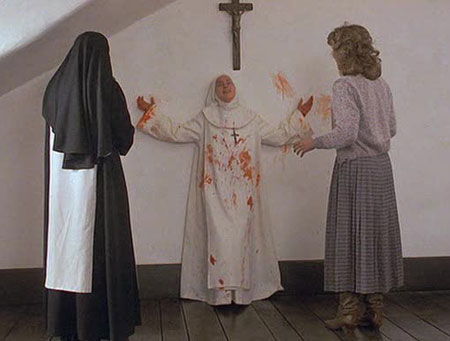
AgnesOfGod-BIGAgnes of God.  St. Agnes chose martyrdom at the age of 14 to giving up her virginity.  There are obvious correlations between her story and the Agnes in Peilmeier’s play.  But for those who don’t know anything about St. Agnes, the appellation “of God” helps to make Agnes’ purity clear to the audience.  If you play Agnes, you need to make purity part of her character; if you play one of the other characters in the play, you need to be aware of Agnes’ purity.  The names of the other two characters, Martha and Miriam Ruth, have Old and New Testament connections worth exploring:  Martha and Mary (a derivative of Miriam) are sisters in the New Testament, and Miriam appears in Exodus while the Book of Ruth is the only book named after a woman.

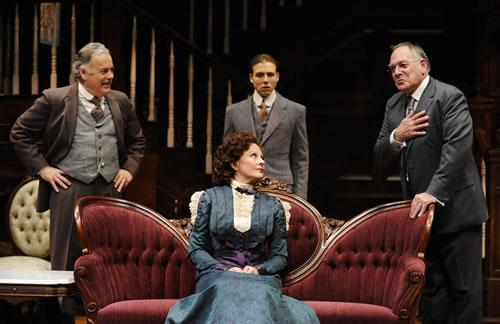
Doubt.  St. Aloysius is the Catholic patron saint of youth.  For Sister Aloysius to take his name, it says something about what matters to her and how she conducts her life.

The Little Foxes.  Regina is Latin for “Queen.”  Hellman’s choice of this name for her leading character probably speaks to both her bearing and her self-image.

Bright_Ideas_pestoBright Ideas.  Eric Coble’s black comedy is based on Shakespeare’s Macbeth.  Not only should you read Macbeth to understand all the references and correlations, the character’s names in Bright Ideas gives you clues as to who serves what function.  The leads, however, are not named after Lord and Lady Macbeth; their names reference other historical characters, and provide additional meaning to those roles.

Enchanted April.  Three of the characters in this play have names that may give some indication of their character’s nature:  Rose, Mrs. Graves, and Michael Wilding.  This naming convention is often used in comedies written prior to 1900, such as Sheridan’s The School for Scandal (e.g., Lady Sneerwell and Lord Backbite).Frankie & Johnny

Frankie and Johnny in the Clair du Lune.  “Frankie and Johnny” is an old ballad.  The correlation between the story of the ballad and the characters in Terrence McNally’s play may not be readily evident, but it is too famous a song for the choice of their names to be merely coincidence.  You need to figure out what McNally is telling you about the characters and their relationship.

No Man’s Land.  All of the characters in Pinter’s play are named after cricket players.  The obvious question is, “Why?”

Distant Fires.  Kevin Heelan’s play has three black men (Raymond, Foos, and Thomas) and three white men (Angel, Beauty, and General).  The first obvious question is, “What sort of name is Foos?”  Check the Urban Dictionary, there’s a variety of reasons why Heelan might have chosen this name for this particular character.  The second obvious question is, “Why are all the white men known by nicknames, and why do those nicknames reflect such definitive, one-dimensional concepts?”

The Wisdom of Eve.  No one names a character “Eve” by accident!  It’s up to you to figure out what the playwright is trying to tell you by referencing the couple from the Garden of Eden.

To read Part I, go here.

What’s In a Name? Part I

[I am traveling and seem to have left the rest of the series of posts I’m writing on rehearsing at home!  So I’m going to post on some unrelated topics until I get back home to the drive that has them.]

Sometimes a play’s title describes what happens in the play, but holds no mystery beyond that.  Many of Harold Pinter’s plays are named after an event, character, or place in the play (The Birthday Party; The Caretaker; The Room).  The Philadelphia Story is about journalists trying to write an article about a wedding that is taking place in Philadelphia.  The Gin Game is a play about two people in a senior citizens’ home who play gin rummy together.  Dial M for Murder is a clever reference to the letters on a telephone’s keypad, and follows a long tradition of using wordplay when naming murder mysteries, but has little deeper meaning.

But sometimes the title reflects the playwright’s theme or thoughts about the play or a character.  Let’s look at some play titles to see how this can work and why it matters to you as an actor:

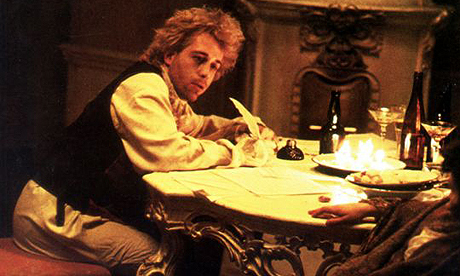
Amadeus276Amadeus.  This play is about Wolfgang Amadeus Mozart and another composer of his era, Antonio Salieri.  Salieri is the protagonist, but the play is named after Mozart, a choice which reflects the plotline.  But Peter Shaffer doesn’t call the play “Mozart”.  Instead, he uses the composer’s middle name.  It’s worth asking, “Why?”  If you look at the Latin meaning of the name, “He loves God”, you probably have your answer.  But don’t stop there.  Why does Shaffer want to draw your attention to this, and how should the production as a whole reflect this knowledge?  If you are playing either Mozart or Salieri, how does this focus affect your performance?

lauraThe Glass Menagerie.  One of the characters in Tennessee Williams’ play has a collection of glass figurines, all of which are animals.  But is this the only reason for the title?  Laura is not the main character of the play; why should it be named after her collection?  Perhaps it refers to her family, or to humanity in general.  The unicorn clearly is symbolic; whom does it represent?  And why does Williams choose for the animals to be made of glass rather than wood?  Is the fragility or transparency of glass important?  Are all of the characters fragile, in some way – not just Laura?  If you decide this is what Williams intended, it will undoubtedly change how you play your character.  If you don’t observe this about the title, your Amanda or Jim may be a hardier person than if you do.

Bell, Book and Candle.  The title of this romantic comedy about witches refers to a method of excommunication for one who has committed a particularly grievous sin.  Those last three words need to inform how the leading character feels about her actions as well as the loss of magical powers.

Betrayal.  Harold Pinter’s play about an affair that reveals itself in reverse chronological order is obviously about betrayal.  An adulterous wife has an affair with her husband’s best friend, after all!  But the title reminds us to not get lost in the details of the romance, and to remember that it is, first and foremost, about how we betray those we care about.  At some point in the rehearsal process, you should look at each scene in this light, so that you keep this element front and center.

foxesThe Little Foxes.  In naming this play, Lillian Hellman references a biblical passage from Song of Solomon, which reads, “Take us the foxes, the little foxes, that spoil the vines:  for our vines have tender grapes.”  Perhaps she uses the adjective “little” to make the reference clearer, or perhaps she is saying something about her characters by using it.  The Hubbard family is obviously devious and greedy, but exploring this quote in its fullest (what or who are the vines and the grapes?) and letting it inform your character’s actions will enrich the production.

Rabbit Hole.  Lewis Carroll’s book, “Alice, Through the Looking Glass” turned “rabbit hole” into a metaphor for adventure into the unknown.  Understanding its use in that book gives you food for thought when performing this play.  Does just one person go down the rabbit hole, or do several people make that journey?  What is falling into the hole like for your character?  What can you, as an actor, do to give the audience a sense of that particular experience?

Master Harold and the Boys.  On the surface, the title of Athol Fugard’s play is simply naming the characters, but it does much more.  It presages the end of the play, warning you in advance that no matter what transpires between Hally and Sam, the young boy is the “master” and the adult males are, in this society, merely “boys”.  As an actor, you want that relationship to be an undercurrent throughout the play.

crucibleThe Crucible.  A crucible is a container which has a higher melting point than whatever is inside it.  Think of steel or glass being melted before being re-formed into something else.  John Proctor clearly is in a crucible, but perhaps most of the other characters in the play are as well.  If you are in Arthur Miller’s extraordinary play, what is your character’s melting point?  Are you transformed into something better or worse than what you were originally?  And how do you feel about that transformation?

To read Part II, go here.

Acting Beats, Part III

This is sort of cheating, because it isn’t actually a new post, to speak of.  Well, I may have a new post on the subject later this week, once I’ve had a chance to mull things over a bit.  But this post is mostly just a detour sign.

I happened to check the blog’s stats this morning, to see which posts have been visited the most.  And the two posts on Acting Beats are right up there.  Not a surprise.  I know a lot of actors either don’t really know what the term means, although they’ve heard it used, because I have actors who aren’t new to acting ask me what it means.  But even if you at least sort of understand the meaning of “Beat” in the context of acting, I think a lot of people are confused as to why we even care where a beat starts and ends, or what it covers.  And so beats become an English Lit discussion more than being a practical tool that you can use to improve your performance.

So I’ve tried, in some small way, to cover this issue in the various posts on both beats and verbs.  And my verb posts have gotten a bit of attention, too, but since actors don’t throw around the word “verb” quite as much as they do the word “beat” (although perhaps they should), I’m not sure that everyone realizes the two are connected.  And so people who want to read about Acting Beats find Parts I and II, but don’t necessarily find what is really Part III:  my post on “Why Playing Verbs is (Ultimately) Easier than Acting Emotions.”

So if you haven’t read that post yet — which assigns verbs to the example used in Part II, and has a few other things to say about the matter as well — you can read it by clicking here.

Researching the Role: The Playwright’s Opinion

Writers, quite frankly, don’t know everything about their works.  They know more than you do, at least at the outset, and perhaps even on closing night.  But they don’t know everything.  This means that it is possible that even if they know more in general about their own play, you might know something specific that they have somehow missed.

typingHow can they possibly miss anything about something they have given birth to?  Because there are moments for every writer when his experience is that he is channeling his characters, when they speak without being asked to, when they do unexpected things.  When this happens, you have as good a shot at understanding what is going on for them as the playwright does; more, perhaps, because you haven’t started with the preconceived notions that he may have when he sat down at his desk to write.

Since characters have multiple layers and motivations, everything the playwright thinks about a character may be true, but what you think may also be true.  And sometimes it is entirely possible that the playwright thinks he wrote one thing when in fact he wrote another.  I recently spoke with a novelist about one of his character’s motivation in a particular scene.  His explanation took me entirely by surprise, as I interpreted the events very differently.  His explanation may have been what was in his head when he wrote, but that doesn’t mean it’s what he put down on paper.  If he had, I probably would have received that message on some level.

However, give the playwright credit (at least initially) for knowing what she was trying to do and keep an open mind about her opinions.  Sometimes a playwright will include notes about the play in the playscript, either before or after the script itself.  Don’t ignore these pages simply because there is no dialogue on them.  Make sure you’ve looked at every page in the script so that you’re sure you’ve read whatever the playwright wants to share with you, and do this in the first week of rehearsal.

A week or two into rehearsal, do a little research about the play and previous productions.  Don’t get obsessive about it, but if the playwright has been interviewed by anyone regarding the play, read his responses and give them consideration.  Girl-at-ComputerCheck out reviews of major productions and see if that cast was taken to task for not doing something or praised for being wise enough to do something else.  Yours is a different production; you don’t need to imitate what was successful elsewhere.  But sometimes a review will highlight what is particularly challenging in a play, and it’s a nice reminder of what you need to pay attention to.  All plays have inadvertent “traps”, I’m convinced, and if you don’t know what the “trap” of your play is, you’re apt to fall into it.  If the trap isn’t obvious to you or your director, a reviewer or a playwright may be able to point it out to you.

What do I mean by “trap”?  Well, that’s a topic for another day . . .

See Researching the Role here.

Researching the Role

Not everything in a script is going to be self-evident or otherwise within your knowledge base.  This means you have to do some research.

I am surprised by how many actors don’t do the research necessary for their roles!  They will go into opening night not understanding a word, a line, or a reference.  You need to understand the words and the world of the play, as well as what makes your character who she is.  And that means research.

libraryFortunately, the internet makes this work a lot easier than it used to be.  If you identify at the beginning of rehearsals what you aren’t sure about, you can answer most of your questions in short order, which will help guide how you use your rehearsal time.

So what sort of things should you look into when doing your research?

Word definitions.  This may sound obvious, but I see too many actors saying lines that they do NOT understand and making no attempt to learn what they mean.  If you can’t define a word in ten words or less, look it up.  Don’t assume you know what the word means because of the context in which it’s used.  Look it up so you’re sure you have an accurate understanding.

Sayings.  Sometimes you’ll come across a phrase or imagery that seems peculiar.  These are often common sayings, but being common doesn’t mean that everyone knows them, so don’t feel inadequate if you don’t.  If you do an internet search, you’ll probably find some etymology for it.  If nothing else, ask the rest of the cast.  Sometimes I’ve just been particularly dense about a line, while my fellow actors know exactly what it means and are happy to enlighten me.

Double entendres.  Sometimes words or phrases have two meanings (and the second one isn’t necessarily risqué!)  If a word or phrase can be interpreted two ways, it probably isn’t an accident that it’s in the play.  Consider what insight the second meaning might give you about the play or your character.

Names.  Sometimes the playwright chooses a name that, because of its meaning or its association with a fictional or historical character, sheds some light on the nature or experiences of the character you are playing.  It’s your job to make that connection, because if it exists, someone in the audience will, and they’ll know if something is missing from your characterization.

Place and Time.  If a play takes place in a city, state, or country you haven’t been in, you need to learn something about that locale.  If it happens in an era not your own, you need to learn what the social rules where then, and to understand what the politics and current events of that time were.  Don’t assume that your own experience translates to places and times you don’t know.  Any references to real-life places, people, or events should be explored as well.

Foreign Words.  Occasionally foreign languages appear in a script.  Sometimes the translation is provided, but sometimes it isn’t.  Be sure you know what the words mean and how to pronounce them correctly (or incorrectly, if that’s appropriate to your role).

Occupations and Illnesses.  Don’t assume that because your character is a teacher or a doctor that you know what that means to him.  The odds are that someone has blogged or written a book about his on-the-job experiences.  Teaching at a prestigious boarding school is different from working at an inner city school.  Working in the Emergency Room is different from being a Sports Orthopedic for the NFL.  Unless you share your character’s career, learning something about it will help you to understand both what attracted him to that field and what his daily experiences are like.  The same thing goes for illnesses.  Was your character once an anorexic?  Read up on both the disease and recovery.  Playing the lead in “Whose Life is It, Anyway?”  Study both the right-to-die arguments and what it is like to be a quadriplegic.

Historical Accuracy and Context.  If the play deals with a real historical events or real historical characters in fictional events, you need to do a LOT of research.  The more you read about the life of your character or the circumstances of the play, the better your performance is apt to be.  Believe me, the playwright has done extensive research, but it is impossible for her to include all the background information that informs her choices as a playwright into the text itself.  So crack the books!

Adaptations.  It should probably go without saying that if you are doing a play that is adapted from a book or has sprung on some level from a poem, you should read the source material.  It SHOULD go without saying.  But I’ll say it anyway.

See The Playwright’s Opinion here.

Big Verbs vs. Little Verbs

Big Verbs encompass the whole play and reflect your character’s overall goal, objective, or motivation.  (These are three different terms for the same thing.)  Big Verbs are about what your character wants that he thinks will make him happy.  In a well-written play, it is the thing that he wants most in the world; it is, at that particular moment in time, the single thing he thinks will make him happiest.

Semi-Big Verbs encompass large chunks of the play, such as an act or a scene, and are typically the strategy that your character employs to get what he wants.

Little Verbs cover the individual beats of the play and are the tactics that your character uses to achieve his goal.  They are strategy in action.

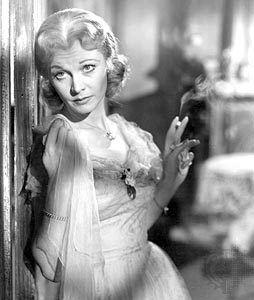
blanche duboisLet’s look at Blanche DuBois in A Streetcar Named Desire:  Blanche has lost her job and home and has fled to New Orleans to find sanctuary with her sister.  Her Big Verb, her want, is to find basic security – a roof over her head and food to eat.  Her Semi-Big Verbs are her strategies for getting that:  to charm her brother-in-law into letting her stay; to get her sister to align herself with Blanche’s cause; and to marry Mitch.  These are broad stroke strategies she has to achieve her goal of finding a home.

How she goes about impressing Stanley, co-opting Stella, and marrying Mitch are the Little Verbs, the tactics she uses.  For instance, with Mitch, she flirts, she flatters him, she seduces him, she evades him, she lies to him, she begs him, etc.  Each time she meets with resistance, she changes tactics.  She may change tactics because she is trying to approach him from a variety of angles.  But each Little Verb is what drives each of the smaller beats of the play, all in service of getting Mitch to marry her, which will achieve her goal of finding a home.

If you can put yourself into Blanche’s shoes and believe, for the space of the play, that have lost your job and your home through shameful circumstances, you won’t have to think too much about what you feel in these scenes.  All you have to do is fight like hell to find a way to get a roof over your head.  If Mitch seems like both manna from heaven and your last chance, and you do your best to get him to the altar, the emotions will take care of themselves just fine!

As for Dora in Equus, “to justify slapping Alan” is her Semi-Big Verb for the scene, and all the other verbs for each beat are Little Verbs.  Dora is in conflict with the doctor, who saw her slap Alan and whom she thinks blames her for Alan’s plight, but she is also in conflict with herself.  Her inner guilt makes her swing between attacking the doctor when she doesn’t want to admit her complicity and acknowledging that same complicity in moments when she can no longer deny it.  Inner conflict is a very powerful force on stage.  So the “roadblocks” she runs into that make her change tactics are both what she receives from the doctor while she is speaking (a raised eyebrow, or a stoic refusal to be taken in by her explanations) as well as her own fear of acknowledging that she may have contributed to Alan’s crime by how she raised him.

See Playing the Verbs Part II here.  See Playing the Verbs Part III here.  See Why Playing the Emotions Doesn’t Work here.  See Why Playing the Verbs is (Ultimately) Easier than Acting Emotions here.  See Choosing Verbs here.  See How to Learn to Play the Verbs here.

The Hardest Part of Acting

As with most complicated activities, acting can be distilled into a few simple concepts.  If we could only fulfill these simple requirements, 90% of the job would be done.  Well, 80%, anyway.

The easiest thing to do is to play the verbs.  It’s very challenging in the beginning, but far and away is the easiest thing to learn.  Once you get the hang of it, it’s very freeing and very easy.

The next easiest thing to do is to allow emotions to flow through you without constraint and without censoring them.  It’s about a willingness to leave the door open to whatever emotions may arise in the course of a play, to give them freedom to exist fully, and to allow them to dissipate naturally.  And to let them be no matter how personally uncomfortable they may be.  It’s an art learned over time.  (More on this in another post.)

But the third concept, hands down, is the toughest to do:  to react ONLY to what you receive from your acting partners.

Reacting means giving up complete control of what comes out of you, and to let it be guided strictly by what you receive from whomever is in the scene with you.

No one wants to do this.  We ALL want to control our own destiny.  We want to actively create our performance.  We have all sorts of ideas about what we should be doing when.

Throw them out.  All of them.  (Well, not all.  But for our purposes right now, yes, toss them all.)

Portrait of the young woman blindfoldYour job is to listen to your scene partner as if you’ve never heard these lines before, as if you know NOTHING about what happens in the play.  Stop looking at the play as if you are an English student  writing a paper on it.  Pretend you know nothing about the other characters’ motives or what happens later in the play.  Let yourself be surprised by whatever they do, and react to what you get.

It’s a difficult task, but not impossible.  As with all new activities, it won’t happen overnight.  Be grateful, initially, if it happens a few times during a scene.  That’s a huge accomplishment, it really is!  As you practice it, you’ll find it happens more and more frequently.  And you’ll gradually learn how to put yourself into a state of mind that makes it easier and gives you the best shot at doing it throughout a scene.  When you’re in “the zone”, listening and reacting mostly takes care of itself.

But initially, you need a third party – a teacher or a director – to help you identify when you are reacting to what you are getting from your scene partner as opposed to when you are controlling the scene.  Actors are often convinced they are listening and reacting when, in fact, they aren’t.  They don’t realize the extent to which they are anticipating the next moment until I point it out.  The first time they look puzzled, but do the scene again.  The second time they give a guilty giggle, as they recognize what I’m talking about.  The third time out, they start to see just how hard this is to do, and I see the “Oh my God, this is really hard!” flicker through their eyes.

It is.  Just not impossible.

See Act Without Expectation here.  See The Open Door Reading here.

Choosing Verbs

Choosing verbs can be challenging.  We tend to go for nouns, not verbs.  We’ll throw the verb “to be” in there so that it seems like a verb, but it’s actually a passive verb serving the noun.  We move from “I want happiness” to “I want to be happy”, but it’s really just a noun in disguise.  Your acting is better served, instead, by choosing active verbs.

Let’s take a common motivation in plays:  “I want love” or “I want you to love me”.  Passively stated, right?  loveI want this thing called love to come to me.  But remember, acting is about action.  It’s about characters actively pursuing what they want.  So we have to state this desire to be loved in a more active way.  Here are some examples:

Child’s love:  If a parent is withholding their love, we will typically turn cartwheels to get it.  “I want to prove myself worthy of your love.”  “I want to make you finally tell me that you love me.”  “I want to show you that I am lovable.”

Romantic love:  “I want to win your heart.”  “I want to fix our marriage.”  “I want to make you stop having an affair and love me instead.”

Parental love:  “I want to make my son proud of me.”  “I want to protect you.”  “I want to give my child all the things I never had.”

Notice that for some of these, I have used the verb “to make”.  Instead of saying “I want my son to be proud of me”, I say “I want to make my son be proud of me.”  The former puts the focus on the son’s feelings; the latter puts it on what I will do to make my son proud of me.  Perhaps I will stand up for what I believe at great personal cost because to do so will make my son proud of me.  Perhaps I will work hard to achieve something in order to win my son’s admiration.  But it isn’t about my son feeling proud of me; it’s about what I do to create that feeling in him.

If asking yourself what you want leaves you feeling baffled, try thinking in terms of “why am I saying this?”  None of us talk just to talk.  Even those who seem to do so have a reason – silence is scary because it means dealing with your feelings is a common one.  So what you want to figure out is “what is your character hoping to achieve by saying what he does?”

Sometimes you’ll find several beats within a scene that seem to have the same verb.  If so, it’s a good idea to try to find synonyms so that each beat has a different verb, giving it a slightly different tone.  Often, choosing verbs that allow you to escalate is useful.  For instance, you might go from Explain to Persuade to Convince to SellFlirt to Tempt to SeduceAsk to Barter to Offer to Buy to Beg.  Inquire to Probe to Push for an Answer to Demand.

The verbs that may jump to mind first will probably be ordinary ones, like explain or understand or ask.  If you can change them to more specific verbs (like Probe, instead of Ask), your acting will become more powerful and interesting.

See Playing the Verbs Part II here.  See Playing the Verbs Part III here.  See Why Playing the Emotions Doesn’t Work here.  See Why Playing the Verbs is (Ultimately) Easier than Acting Emotions here.  See Big Verbs vs. Little Verbs here.  See How to Learn to Play the Verbs here.

Why Playing Verbs is (Ultimately) Easier Than Acting Emotions

When you choose what you want, which is always expressed as a verb (“I want to . . .”), you’ll find there are Big Verbs and Little Verbs.  The Big Verbs govern what your character wants in the entire play, or in an act, or in a scene.  The Little Verbs govern what your character wants in a single Beat.

Let’s go back to Dora’s monologue in Equus.  I’m going to choose “To justify my actions with regard to Alan to the doctor and to myself” as the Big Verb for the monologue (and the scene from which it comes).  As for the Little Verbs for each of the beats I identified in a previous post, they are in boldface below and precede the dialogue in the beat:

(To establish why you don’t understand my situation)  Look, Doctor:  you don’t have to live with this.  Alan is one patient to you:  one out of many.  He’s my son.  /  (To explain what this is doing to us)  I lie awake every night thinking about it.  Frank lies there beside me.  I can hear him.  Neither of us sleeps all night. /  (To complain about your unfair attack)  You come to us and say, who forbids television?  Who does what behind whose back? – as if we’re criminals.  /  (To defend myself)  Let me tell you something.  We’re not criminals.  We’ve done nothing wrong.  We loved Alan.  We gave him the best love we could.  /  (To concede we aren’t perfect)  All right, we quarrel sometimes – all parents quarrel – we always make it up.  /  (To defend my husband)  My husband is a good man.  He’s an upright man, religion or no religion.  He cares for his home, for the world, and for his boy.  Alan had love and care and treats, and as much fun as any boy in the world.  /  (To demonstrate that I am not a stupid woman)  I know about loveless homes:  I was a teacher.  Our home wasn’t loveless.  I know about privacy too – not invading a child’s privacy.  /  (To concede that my husband may have contributed in some small way)  All right, Frank may be at fault there – he digs into him too much – but nothing in excess.  He’s not a bully. . . /   (To blame Alan)  No, doctor.  Whatever’s happened has happened because of Alan.  Alan is himself.  Every soul is itself.  If you added up everything we ever did to him, from his first day on earth to this, you wouldn’t find why he did this terrible thing – because that’s him; not just all of our things added up.  /  (To make you understand)  Do you understand what I’m saying?  I want you to understand, because I lie awake and awake thinking it out, and I want you to know that I deny it absolutely what he’s doing now, staring at me, attacking me for what he’s done, for what he is! /  (To blame the real culprit – the Devil – and thereby back off of blaming my son)  You’ve got your words, and I’ve got mine.  You call it a complex, I suppose.  But if you knew God, Doctor, you would know about the Devil.  You’d know the Devil isn’t made by what mummy says and daddy says.  The Devil’s there.  It’s an old-fashioned word, but a true thing . . . /  (To apologize)  I’ll go.  What I did in there was inexcusable.  I only know he was my little Alan, and then the Devil came.

Why is this more helpful than playing emotions?  Certainly there is some anger in this piece, but if you choose to play the anger, you’ll be inclined to be angry throughout the monologue.  Once you look at the individual beats and their verbs, however, you can see why anger doesn’t work well throughout.  Just think of these beats in terms of aggressive/defensive, and you’ll find they seesaw between these two positions.  The aggressive verbs?  Establish, complain, demonstrate, blame.  The defensive verbs?  Explain, concede, make you understand, apologize.

The verb “defend” can be either aggressive or defensive, depending on how you choose to play it.

Once you understand that Dora uses a variety of aggressive and defensive tactics to justify slapping her son, it is easier to see how the emotions she feels throughout the speech are in constant motion, conflicting with and contradicting each other.  This inner torment can be fascinating to watch.  We never know what to expect from Dora.  We like her one moment, pity her the next, hate her in the third, sympathize in the fourth.  The whirlwind of emotions that pass through her keep our attention, keep us thinking about this extraordinary story Shaffer has presented us with, trying to sort out the moral and ethical questions it raises, to figure out who’s the “bad” guy.

seesawThe seesawing happens so quickly and often that even if we could accurately identify an emotion per beat (and “anger” doesn’t work for all of the aggressive verbs), it isn’t a practical approach.  To make a conscious switch from one emotion to another takes too long and is unbelievable to watch.  It’s your conscious brain making the switch, not your subconscious; in real life, it is always the subconscious which is in charge of your emotions, and your subconscious makes all such switches in an instant.

Try to make the switch with your conscious brain, and the audience will see the wheels turning in your head.  That’s all it takes for them to stop believing in you.

If you stop worrying about whether you are using the right emotion (should I be angry? Irritated? Defensive?) and simply try to accomplish your verb, the right emotion will come along all by itself.  (Assuming, that is, that you’ve left the door to your emotions open.)

Let’s take the first beat to see how this works:  “To establish why you don’t understand my situation.”  Or maybe I decide to rephrase that, to replace “establish” with “explain”.  Or to use “To put you in your place.”  Feel free to try on different phrases, like you’re trying on different shoes, until you find a phrase that really resonates for you and feels “right”.

Whichever phrase you end up with, I can imagine any number of emotions that might come up as a result, and they are the adjectives and adverbs we are inclined to act.  Angry.  Resentful.  Frustrated.  Hurt.  Exasperated.  Sarcastic.  Superior.  I can also imagine two or more of these co-existing during the beat, depending on exactly what verb I choose.  But the magical thing about playing the verb is that I don’t have to pay much attention to the emotions or figure out which is the “right” one.  “Explain” and “establish” are going to bring up slightly different emotions without me having to pre-plan anything.  “Putting you in your place” will naturally bring up a very different set.

Playing verbs is infinitely easier to do than playing emotions and adjectives.  I don’t have to choose the “right” sort of anger (and anger, as with all emotions, comes in a wide variety of shapes and sizes.)  All I have to do is try to explain something.  Or defend my position.  Or concede a point.  Or blame someone else.  Which is very simple and straightforward.

See Playing the Verbs Part II here.  See Playing the Verbs Part III here.  See Why Playing the Emotions Doesn’t Work here.  See Choosing Verbs here.  See Big Verbs vs. Little Verbs here.  See How to Learn to Play the Verbs here.