What Are Play Rehearsals For? Part II

At last!  Back to our definition of “rehearse”:

          To prepare for the public performance of a play by practicing the performance

If “public” is one of the reasons for our misunderstanding, what’s the other one?

I thought I ought to be sure I understand what “practice” means.  So I looked that up, too.  And I found this:

          To do something again and again in order to become better at it.

And here, I think, is the rest of the problem.  Our common understanding of the word “practice” is, indeed, to “do something over and over again.”

PianistThere are activities in which this is both true and useful.  If you play the piano, you practice over and over to be sure you are hitting the right keys at the right time.  Once you can do that, you can start thinking about artistic interpretation, but first you have to repeat and repeat the fingering.

If you play a sport, you repeat the motions in that sport over and over so that you can fine tune how you throw a ball or swing a bat.  You rehearse the moves in a double play, so that in an actual game, you can execute it flawlessly.

In fact, any physical activity requires repetition – that is, “practice”, as defined above – to get better at it.  In these examples, the physical motion is so integral to the final activity – playing a sonata or a baseball game – that you have to learn the motions through repetition if you’re going to be any good at producing the final product.

In other words, in these activities, you spend the first half of “rehearsals” practicing technique, and the second half being creative.

So far, so good.  I would argue that we should use precisely that same format in preparing a play for performance:  first half is devoted to technique, the second half to being creative.

Notice the change I made there.  I didn’t say “practicing technique”; I merely said “technique”.

There are certainly physical elements to acting, and I’ve written before about the need to “practice” them early and often, just as you do “Moonlight Sonata” and the double play.  Still, the core of acting is emotional, not physical, and to “practice” the emotional through repetition is to take the soul out of it.  It can’t help but become superficial when approached this way.Storyteller

If you doubt me, think about the stories you tell about yourself.  Your “go-to” stories, the ones that are sure to entertain anyone.  You’ve told them so many times that you know just how to tell them to make them a “good story.”  But you also have distanced yourself from the events of the story so much that it is almost as if it happened to someone else.  You are no longer the person it happened to; you’re the story “reader”, as it were.

Also, in these examples, there are certain restrictions to what you do.  If you are a batter, there is only one way for you to swing the bat and be successful regularly.  It may be different from how everyone else bats, but it is your way of doing it well.  Once you discover what your personal mechanics need to be, you practice them over and over, and that makes you a .300 hitter.

If you are playing a sonata, the musical score gives you notes (like the words of a script), and it also gives you rests; that is, it tells you how long notes should last and how long your pauses should be and where they should come.  If you are a jazz musician, you are welcome to disregard these things and put your own spin on it, but if you are a classical musician, you’ve got less wiggle room.  And in any case, a jazz musician needs to know the restrictions of the original work before he can riff on it successfully; riffing is second half work!

What you are given to work with in these other circumstances is slightly different than what you are given as an actor.  You are given words, but as you’ll see in future posts, you’ve got a lot more flexibility with them than you do with Beethoven.

So if we don’t want to “practice” in the way Merriam-Webster defines it, what do we do with the first half of rehearsals?  “Technique” is not a verb, so it doesn’t tell you very much.

No, “technique” is simply the tools you use.  (“Ah, at last, she’s getting back to the original topic!”  Give me enough time, and I’ll always complete the circle.)

The first phase of rehearsals, for an actor, is for playing.  For exploring.  For daring.  For making mistakes.

“Making mistakes!?  I’m going to be standing in front of an audience in 6 weeks, and you’re telling me to make mistakes in rehearsal?  You’ve got to be crazy!”

Crazy like a fox.  I’ll explain why next time.

To read Part I, go here.  To read Part III, go here.  To read A Word About Staying in the Moment, go here.

Learning the Blocking, Part II

Okay, this time I’ll really answer the question of how you go about learning your blocking:

First, you have to write it down.  Clearly.  In pencil, because it may change.  You’ve got to develop a “shorthand” that is easy for you to remember.  A script doesn’t give you enough space to write full sentences, and you can’t be reading a full sentence about your movement while you’re saying your lines.  Using an “X” for cross, as well as the usual directionals (“DR” for downstage right, etc.) are obvious choices, but you may need to invent abbreviations for set pieces or kinds of movements (jump, run, stand, etc.)  I’ve sometimes drawn a floor plan on the stage and used numbers to indicate locations I am to be on certain lines, and noted those numbers on the lines in question.  I’ve also used arrows.marked script

How you note your movements is up to you.  The point is that they should be legible (no scribbling you can’t decipher later); clear in intent; and complete.  You may need to stop the rehearsal’s forward progress to make notes in your script.  This is perfectly all right; it saves everyone time later, so no one objects to the stop-and-go nature of blocking rehearsals.  Just make sure that you get everything written down, because I promise you, you won’t remember the things you don’t write down.

Here comes the really important part:

When you get home from rehearsal, walk through your movements in your living room.  Don’t worry about your lines.  Just make sure you know the movements.  Notice what the line is that you’re moving on, but jump from one movement to the next.  Skip all of the dialogue that happens while you’re stationary.

Don’t just read your notes.  Physically move through the pattern.  Twice.

If you are very active in a scene, you might want to break the scene into smaller pieces; pieces that allow you to remember a number of consecutive movements, so that the second time through goes fairly smoothly.

If you can, get to your next rehearsal a few minutes early, and walk through your blocking again in the rehearsal space.  In all likelihood, you’re blocking a different part of the play and won’t be running the scenes from the previous night, but you want to revisit the blocking while it is still fresh in your mind.  If you can’t get to rehearsal early, stay for a few minutes at the end.

If you don’t do these little walk-throughs, then by the time you rehearse the scene again, you’ll have forgotten much of your blocking.  But if you DO do them, you’ll gain comfort with your movements early in rehearsals, which will free you up to do the more important (and fun) work on your character!

To read Blocking the Play, go here.  To read Part I, go here.

Learning the Blocking, Part I

How do you learn your blocking?  The same way you learn your lines:  by practicing it over and over.

I am surprised by how many people rely strictly on rehearsal time to learn their blocking.  If your blocking is fairly simple and you make clear notes in your script, this is a perfectly do-able approach.  However, if the blocking is at all complicated or there is simply a good deal of it, it is difficult to get it down quickly if you go about it this way.  And you do want to learn your blocking quickly, because until you have it down, you can’t do much else.

How quickly do you need to learn it?  Let’s say we block the first scene on Monday night.  The next time we run that scene, there are apt to be some moments when an actor is confused about where he is supposed to be, or someone has come up with a better alternative than what was done on Monday.  So the second night we work on the scene, we sort out all of these moments, and we should end that night with a clean run.  And that should be the end to 95% of blocking confusion, and by blocking confusion, I mean the actor who says, “Oops, I was supposed to have crossed to the door four lines ago!” as he dashes to the correct place, or the actor who is surprised to find that he’s supposed to be somewhere other than he is.

actor scriptThis DOESN’T mean that once blocking is completed, it can’t change.  It can.  As you get into rehearsals, you may realize that you can change the blocking to make something funnier or otherwise more effective.  Once you get familiar with the lines, you may realize that the timing is incorrect and the blocking needs to be changed to accommodate this new reality.  As you learn more about your character, you have little epiphanies about what your character will do that you couldn’t have back in the first week of rehearsal when you blocked the show.  To not change the blocking for any of these reasons would be silly, and you should definitely do so.

So yes, that means you have to unlearn what you learned to begin with and replace it with something else.  The nature of the beast, I’m afraid.  The point is that you need to quickly memorize your blocking be doing whatever you’re supposed to be doing at whatever point in the rehearsal process you are.  If you don’t, then your rehearsals stop being about making discoveries about your character and are just about figuring out where you’re supposed to move when.  Just as rehearsals when you haven’t fully memorized your lines but you insist on running the scene without your script are just about you trying to remember your lines.  It’s a waste of everyone’s time and disrespectful of those you are working with.

To read Blocking the Play, go here.  To read Part II, go here.

Blocking the Play

[This is a purely introductory piece on blocking — I have much more useful stuff to say about it down the road.  But I’ve got to start somewhere, and I’m still traveling, so this and the next two posts will fill in the gap until I can get back to my Rehearsing series.]

How you go about this depends at least in part on your director.table reading

There are directors who like to sit around a table with the script, working on relationships and script analysis, until the actors have their lines memorized.  Only then will he allow them on the set.

There are directors who like to begin with blocking, perhaps preceding blocking with a single read-through.

The directors who begin with blocking may come into rehearsals having pre-blocked the entire show, and will tell you where to stand and when to move.

Or they may let you make your own decisions about blocking and suggest changes either in their role as traffic cop or because they think they have a better or more interesting choice they’d like to try.  But first, they want to see where your instincts take you.

blockingIn this last group, there are directors who, once they’ve settled on something that works, will stick with it for the rest of the rehearsal period.  And then there are directors like me, who will continue to tweak the blocking as rehearsals unfold and we learn more about the characters and the play.

And then there is yet another group of directors, who will allow the actors to wander as they will for a few weeks and then put some structure to it.  The wandering is all part of the exploration of the play, and if you explore efficiently, you will have a pretty good sense of what works at the end of this initial period.  But this approach is best used with experienced actors who are all very comfortable with creating their own blocking.

How long blocking takes depends in part on how physical the play is, and of course two different productions of the same play may end up being very different in this regard.  Farces or very episodic plays (The 39 Steps, A Christmas Carol) take the longest time to block.  In a community theater rehearsal of a blocking heavy play, eight to ten pages may be as far as you can go in one night.

A word about the movement in the stage directions of a script:  Sometimes the movements are the playwright’s vision; sometimes they are from the original production.  Either way, you should view them as suggestions and not mandates, especially if your set is configured differently than either the original production’s set or the one the playwright had in his mind’s eye when he was writing (and who knows WHAT that looked like!)  Your job as an actor is to find and use movements that are organic to your own interpretation of the character and the play.  Honor the dialogue given to you by the playwright both in terms of your characterization and your physicality, and the result will be “right” – whatever THAT means!

The only exception to this is when the playwright describes movements that are essential to the plot and not revealed clearly through the dialogue (such as in Frederick Knott’s Wait Until Dark).

To read Learning the Blocking Part I, go here.  To read Part II, go here.

What’s in a Name? Part II

Just as you need to pay attention to the title of the play, you need to look at the character’s names as well.  Most names have “meanings” that can be found in a book of baby names (these lists are also available on line now.)  For instance, “Thomas” will always be associated with the “Doubting Thomas” of the New Testament.  A playwright may not be referencing this connection if he names a character “Thomas”, but then again, he might.  It’s worth examining the meaning of your character’s name, just to be sure you aren’t missing anything.

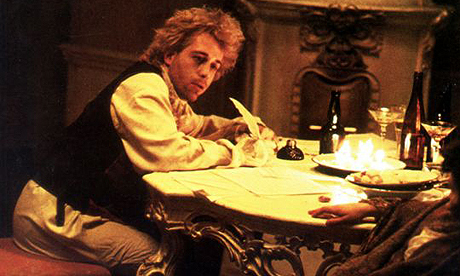
Amadeus.  As I talked about last time, Amadeus translates, literally, to “He Loves God.”  As crude as Mozart can be, he must also have moments where his love of and communion with God are clear.

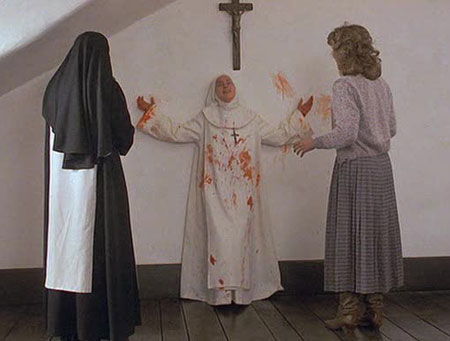
AgnesOfGod-BIGAgnes of God.  St. Agnes chose martyrdom at the age of 14 to giving up her virginity.  There are obvious correlations between her story and the Agnes in Peilmeier’s play.  But for those who don’t know anything about St. Agnes, the appellation “of God” helps to make Agnes’ purity clear to the audience.  If you play Agnes, you need to make purity part of her character; if you play one of the other characters in the play, you need to be aware of Agnes’ purity.  The names of the other two characters, Martha and Miriam Ruth, have Old and New Testament connections worth exploring:  Martha and Mary (a derivative of Miriam) are sisters in the New Testament, and Miriam appears in Exodus while the Book of Ruth is the only book named after a woman.

Doubt.  St. Aloysius is the Catholic patron saint of youth.  For Sister Aloysius to take his name, it says something about what matters to her and how she conducts her life.

The Little Foxes.  Regina is Latin for “Queen.”  Hellman’s choice of this name for her leading character probably speaks to both her bearing and her self-image.

Bright_Ideas_pestoBright Ideas.  Eric Coble’s black comedy is based on Shakespeare’s Macbeth.  Not only should you read Macbeth to understand all the references and correlations, the character’s names in Bright Ideas gives you clues as to who serves what function.  The leads, however, are not named after Lord and Lady Macbeth; their names reference other historical characters, and provide additional meaning to those roles.

Enchanted April.  Three of the characters in this play have names that may give some indication of their character’s nature:  Rose, Mrs. Graves, and Michael Wilding.  This naming convention is often used in comedies written prior to 1900, such as Sheridan’s The School for Scandal (e.g., Lady Sneerwell and Lord Backbite).Frankie & Johnny

Frankie and Johnny in the Clair du Lune.  “Frankie and Johnny” is an old ballad.  The correlation between the story of the ballad and the characters in Terrence McNally’s play may not be readily evident, but it is too famous a song for the choice of their names to be merely coincidence.  You need to figure out what McNally is telling you about the characters and their relationship.

No Man’s Land.  All of the characters in Pinter’s play are named after cricket players.  The obvious question is, “Why?”

Distant Fires.  Kevin Heelan’s play has three black men (Raymond, Foos, and Thomas) and three white men (Angel, Beauty, and General).  The first obvious question is, “What sort of name is Foos?”  Check the Urban Dictionary, there’s a variety of reasons why Heelan might have chosen this name for this particular character.  The second obvious question is, “Why are all the white men known by nicknames, and why do those nicknames reflect such definitive, one-dimensional concepts?”

The Wisdom of Eve.  No one names a character “Eve” by accident!  It’s up to you to figure out what the playwright is trying to tell you by referencing the couple from the Garden of Eden.

To read Part I, go here.

What’s In a Name? Part I

[I am traveling and seem to have left the rest of the series of posts I’m writing on rehearsing at home!  So I’m going to post on some unrelated topics until I get back home to the drive that has them.]

Sometimes a play’s title describes what happens in the play, but holds no mystery beyond that.  Many of Harold Pinter’s plays are named after an event, character, or place in the play (The Birthday Party; The Caretaker; The Room).  The Philadelphia Story is about journalists trying to write an article about a wedding that is taking place in Philadelphia.  The Gin Game is a play about two people in a senior citizens’ home who play gin rummy together.  Dial M for Murder is a clever reference to the letters on a telephone’s keypad, and follows a long tradition of using wordplay when naming murder mysteries, but has little deeper meaning.

But sometimes the title reflects the playwright’s theme or thoughts about the play or a character.  Let’s look at some play titles to see how this can work and why it matters to you as an actor:

Amadeus276Amadeus.  This play is about Wolfgang Amadeus Mozart and another composer of his era, Antonio Salieri.  Salieri is the protagonist, but the play is named after Mozart, a choice which reflects the plotline.  But Peter Shaffer doesn’t call the play “Mozart”.  Instead, he uses the composer’s middle name.  It’s worth asking, “Why?”  If you look at the Latin meaning of the name, “He loves God”, you probably have your answer.  But don’t stop there.  Why does Shaffer want to draw your attention to this, and how should the production as a whole reflect this knowledge?  If you are playing either Mozart or Salieri, how does this focus affect your performance?

lauraThe Glass Menagerie.  One of the characters in Tennessee Williams’ play has a collection of glass figurines, all of which are animals.  But is this the only reason for the title?  Laura is not the main character of the play; why should it be named after her collection?  Perhaps it refers to her family, or to humanity in general.  The unicorn clearly is symbolic; whom does it represent?  And why does Williams choose for the animals to be made of glass rather than wood?  Is the fragility or transparency of glass important?  Are all of the characters fragile, in some way – not just Laura?  If you decide this is what Williams intended, it will undoubtedly change how you play your character.  If you don’t observe this about the title, your Amanda or Jim may be a hardier person than if you do.

Bell, Book and Candle.  The title of this romantic comedy about witches refers to a method of excommunication for one who has committed a particularly grievous sin.  Those last three words need to inform how the leading character feels about her actions as well as the loss of magical powers.

Betrayal.  Harold Pinter’s play about an affair that reveals itself in reverse chronological order is obviously about betrayal.  An adulterous wife has an affair with her husband’s best friend, after all!  But the title reminds us to not get lost in the details of the romance, and to remember that it is, first and foremost, about how we betray those we care about.  At some point in the rehearsal process, you should look at each scene in this light, so that you keep this element front and center.

foxesThe Little Foxes.  In naming this play, Lillian Hellman references a biblical passage from Song of Solomon, which reads, “Take us the foxes, the little foxes, that spoil the vines:  for our vines have tender grapes.”  Perhaps she uses the adjective “little” to make the reference clearer, or perhaps she is saying something about her characters by using it.  The Hubbard family is obviously devious and greedy, but exploring this quote in its fullest (what or who are the vines and the grapes?) and letting it inform your character’s actions will enrich the production.

Rabbit Hole.  Lewis Carroll’s book, “Alice, Through the Looking Glass” turned “rabbit hole” into a metaphor for adventure into the unknown.  Understanding its use in that book gives you food for thought when performing this play.  Does just one person go down the rabbit hole, or do several people make that journey?  What is falling into the hole like for your character?  What can you, as an actor, do to give the audience a sense of that particular experience?

Master Harold and the Boys.  On the surface, the title of Athol Fugard’s play is simply naming the characters, but it does much more.  It presages the end of the play, warning you in advance that no matter what transpires between Hally and Sam, the young boy is the “master” and the adult males are, in this society, merely “boys”.  As an actor, you want that relationship to be an undercurrent throughout the play.

crucibleThe Crucible.  A crucible is a container which has a higher melting point than whatever is inside it.  Think of steel or glass being melted before being re-formed into something else.  John Proctor clearly is in a crucible, but perhaps most of the other characters in the play are as well.  If you are in Arthur Miller’s extraordinary play, what is your character’s melting point?  Are you transformed into something better or worse than what you were originally?  And how do you feel about that transformation?

To read Part II, go here.

What Are Play Rehearsals For? Part I

One of the greatest myths of acting is one I didn’t include in my earlier post on the topic (which you can read here), and it ties directly into this issue of using the tools:

          Rehearsals are for perfecting a performance to be given in the future.

I thought I’d check out the definition of “rehearse”, just to be accurate.  On the Merriam-Webster website, I found this:

          To prepare for the public performance of a play by practicing the performance

Part of the problem, I think, lies in the word “public.”  It is natural to be concerned about whether or not we’re going to give a performance that people will enjoy.  We want them to applaud, to tell us how wonderful we are.  We certainly don’t want to give a bad performance!

But because you know this public presentation is 6 to 8 weeks away, it is easy and far too tempting to imagine, in our mind’s eye, the performance we want to give and to strive to give it.  To disregard anything that doesn’t match this very premature vision of our character.  Without realizing it, we’re focused on externals, not our character’s soul.  We’re concerned with “looking good” opening night.

21747730We become very “me” focused.  What do I have to say, how should I sound, how should I move, what should I be feeling, how should I respond, etc.   It’s very easy, you know, to prepare a performance without much regard for the other actors in the play:  “Well, if they do their thing, and I do my thing, it should all be all right, shouldn’t it?”

No.  Because your “things” are inextricably interconnected, and can’t exist without each other.  And yet I see a lot of performances where if you lifted one actor out of the production and dropped a completely different one down in his place, at least some of the other performances wouldn’t change at all, and the others probably wouldn’t change much.

Which is never going to get you great theater.

Again, this goes back to the “staying in the moment” issue; lots of people sincerely believe they are reacting to what they are getting from their scene partners, and yet they aren’t.  I can prove it to them in a scene class in short order, but I’d never get them to admit it outside of that.  “Reacting” (I’m still searching for a better word) is incredibly difficult.  Like “staying in the moment”, it’s hard to be sure you’re doing it unless someone catches you in the act of doing it and says, “There!  That’s it!  That was completely in response to what you got from her [the other actor in the scene].”

Without a teacher to keep us honest, we’re all sure that we’re doing it right.  “Oh, yes, you’re raising interesting and valid points, but it doesn’t apply to me, personally.  I’m already doing it.”

So if I tell you that you are probably focused on your end product – that is, the performance – you may find it as difficult to believe as if I tell you that because you aren’t staying in the moment, you aren’t reacting to what you are getting from your scene partner, you’re merely executing a pre-planned agenda (and perhaps an exceedingly well-planned one, at that!)  The difference is that I can easily prove last point; convincing you that you aren’t really exploring and discovering a character, but that you are merely collecting things that fit into your early design is much more difficult.

So I won’t try.

Instead, I’ll just explain what I sincerely believe goes on with all actors in the early stages of their careers and which becomes, for many of them, a way of life that lasts to the end of their careers.  (I do not exempt myself from this group; it’s because I’ve been there, done that, that I think I know what’s going on.)  And I’ll offer you another approach.

You’ve got nothing to lose by trying what I suggest.  If you already know how to do it, you haven’t lost anything.  You’ve gotten a bit more practice at it, and in all likelihood, you’ll understand it a little bit better than you did before.  If you don’t already know how to do it, hopefully you’ll learn something out of the experience.  Or at least plant some seeds that will bear fruit in the future.

The truth is that you wouldn’t be visiting my blog if you didn’t know your acting can improve.  If you didn’t sense that you are falling short of your potential.  Acknowledging that is a very brave act.  So be brave for just a little longer and trust that I may be on to something here and give it a shot.  Because if you ARE falling short of your potential, I guarantee you that staying in the moment, not reacting to your scene partner, and using your rehearsals ineffectively are the reasons why.

To read Staying in the Moment, go here.  To read Part II, go here.  To read Part III, go here.
A Word About “Staying in the Moment” Onstage

Writing about acting is challenging.  It is difficult to be precise enough to be sure you’re receiving what I’m trying to communicate.  In trying to write the final posts on the topic of “How to Use the Tools”, I keep finding things that I think you need to understand first if I can hope for you to really “get” what I mean about the tools.  So please forgive me if I take another detour for a few posts.

What I really want to talk about is rehearsals, but I think what I have to say might have a little more clarity if I first talk a little bit more about the concept of “staying in the moment.”

I think both of these concepts are easily misunderstood, albeit for slightly different reasons.  Shifting your perspective from what you are “sure of” is necessary if you’re going to improve as an actor, but it’s a very difficult shift.  And here’s why.

child“Staying in the moment”, whether it be as an actor or an athlete or anything else you may do, is very difficult.  Heck, it’s supremely difficult to do just as a human being.  People spend years studying Buddhism, in part, to learn to do just that.  It’s a lifetime journey, and it’s still difficult to do it consistently at the end of it.  But it is what produces quality work (or a quality life) of any kind.

Why is it so difficult to do something that came so naturally to us as very young children?  Well, that’s a topic for someone else’s blog, and a lengthy one at that.  Let’s just accept that after a certain, far-too-young age, it uniformly is.  We may think we are in the “Now”, but we’re usually in the Past, or the Future, or both, occasionally flickering through the Present, but never for very long.

I know many people who tell me they’ve tried to meditate, but they just can’t seem to do it, to “stop thinking”.  Well, those thoughts all belong to the Past or the Future, not the Present.  A clear indication that you can’t possibly live in the Now very much.  In fact, it’s been suggested that we spend 95% of our time OUT of the Now!

Because we aren’t very good at staying in the moment in our real lives, most of us don’t possess the natural ability to do so on stage, either.  A few lucky ones do, right from the beginning.  They are exceptionally gifted, although I will wager that over time, they will start thinking a little too much and will have to learn how to be in the moment all the time.  But because they are gifted, they will be able to learn this fairly quickly.

A slightly larger portion of the population can stay in the moment sporadically despite having no training.  I’m in that group.  When I was younger, I gave performances when I was in the moment, and performances when I wasn’t.  And while I knew which performances were more successful, I had no idea why, and I certainly had no control over when it happened.  Sometimes I got lucky, and sometimes I felt like I was in a paper bag, trying to push my way out.

I learned how to control it one night in scene class.  I had done the scene the week before, and I had nailed it.  My scene partner hadn’t, though, and so we worked on it for another week.  And this time I was awful.  I was trying so hard to recapture my brilliance of the previous week (my first mistake) and was failing miserably.  It wasn’t a terrible performance, in the grand scheme of things, but it utterly lacked the spontaneity and charm of the previous week.  Afterward, my teacher explained to me what had happened, and I suddenly got it.  I had the ability to put two performances of the same scene side-by-side, and to compare what was going on internally in each.  I suddenly not only understood the difference between a perfectly serviceable but uninspired performance and a great one, I also knew what caused each and how to actively pursue the great one.

But most of the population who acts for fun or profit does not, at least initially, have the ability to stay in the moment, and your ability to learn how to do this on your own is limited.  The odds are very good that you need at least a little assistance in this regard.

ChairWhy?  Because we have dualistic brains.  We know what we know because we can compare and contrast it with other things.  A chair is not only a chair because it is like other chairs, it is a chair because it is not a table.  Because it is not a teddy bear.  Or a paper clip.

So it’s difficult to know what “staying in the moment” is like if you can’t compare it to “not staying in the moment”.  If you’ve never had someone do you the favor my acting teacher did for me that day, and say (effectively, although in much kinder terms), “What you did last week was fantastic, but this week was crap,” you may only be able to have a general sense of what “staying in the moment” might mean.  But not a real understanding.

I think I’ve told you that I have occasion, now and then, to chat with fellow actors about acting, and if the phrase “staying in the moment” comes up, they will nod sagely, as if they not only know precisely what it means, they practice it conscientiously every time they are on stage.  And I know they sincerely believe this, but I’ve also seen their work, and so I also know that they manage to dance through the moment periodically, but to never stay there for any period of time.

Not their fault.  They really think they’re working correctly, and until they decide that there might be a better “them” yet to discover, they won’t learn what “staying in the moment” really means.  Because it doesn’t mean concentrating only on what is happening on stage, without regard for your shopping list or the fact that you forgot to pick up your dry cleaning this afternoon.

“Concentrating” and “staying in the moment” are not the same thing.  It is perfectly possible to fully concentrate and still be completely focused on yourself and your own performance.  It is perfectly possible to look your scene partner in the eye without wavering and still be completely focused on yourself and your own performance.  And when you are focused on yourself and your own performance, it is nearly impossible to stay in the moment.

To read What Are Rehearsals For? Part I, go here.  To read Part II, go here.  To read Part III, go here.

Directors Use Adjectives, Actors Use Verbs

(A slight detour from the tools’ posts, which are still a work-in-progress…)

HELLO in eight different languagesLet’s say you’re still making this transition, trying to learn how to avoid thinking in terms of angry, innocent, deceitful.  You’ve studied the script, you’ve marked your beats, you’ve found your verbs, and by God, you really are trying to play them for all they’re worth!

Then you’re at rehearsal one night, and the director says to you, “You used to be angrier in this scene.”  Or, “Could you be a little more confused when she asks you that?”  Or, “I think the scene would work better if you were more excited when she comes home.”

It’s almost like offering an alcoholic a cocktail, only with much less serious repercussions.  But there’s a strong temptation to comply.  You want to please your director, and he must know better than you do, that’s why he’s in charge!  You may not even realize that he’s putting you back on Adjective Road, so eager are you to “get it right.”

But there is something worth noting:  your director has a different job to do than you do, and adjectives/adverbs are part of the language he is apt to speak.  He may not even be aware of this adjective/verb thing.  He’s going to continue to use adjectives, and you know what?  That’s just fine.

Because you can translate them into verbs.Translate Computer Key In Blue Showing Online Translator

Why does he use adjectives and adverbs if they aren’t part of a good actor’s language?  Because he’s not an actor.  Because it’s a quick way to communicate what he wants; verbs take longer to find.  Because even though it’s live theater, his view is almost cinematic, and so he is dealing on some level with images, sounds, emotions.  Large brush strokes.  And because he naively thinks that he is getting to the heart of the matter and being helpful.

So if he asks you for anger, or confusion, or excitement, he’s not really telling you how to do your job.  He’s just telling you what he wants to experience viscerally.  He may not even know what he means, exactly; but he’ll know it when he sees it from you.

It’s not his job to learn an actor’s verbs; it’s your job to translate his instructions into terms that are meaningful for you.

So maybe “angry” becomes, “I want to make you accept me as I am!”  Maybe “confused” becomes, “I want to understand how this happened.”  Maybe “excited” becomes, “I want to get married tomorrow, not next week!”

You may need to take a minute in rehearsal to make this translation, which goes something like this:

“Angry?  Angry.  Why would I be angry in this part of the scene?  What is it that I want that I’m not getting, and why does not getting it upset me so?  How can I raise my stakes in this scene, so that not getting what I want really pisses me off?”

When you have a verb you can actively play that will help you produce anger, you can move forward with the rehearsal.  But if you allow yourself to revert to using adjectives just to please your director now, that choice will have a negative impact on your performance, and that won’t please your director later.  You’re just postponing that difficult discussion for another day down the road, when he realizes that you aren’t making the progress with the scene that he had hoped for.  And believe me, he’s not going to realize that he hamstrung you back at the rehearsal where he asked you to play angry.

Take the time you need to make the translation and then to consider how this adjustment might affect the scene.  Then play the scene again, with the adjustment.

I’ve never met a director who objects when an actor asks for a minute or two to make an adjustment.  Don’t feel that you can’t ask for time.  In the long run, you are helping the production and saving it time.  Trust that.

To read Big Verbs vs. Little Verbs, go here.  To read Why Playing Verbs is (Ultimately) Easier Than Acting Emotions, go here.

Good Process = Great Performances

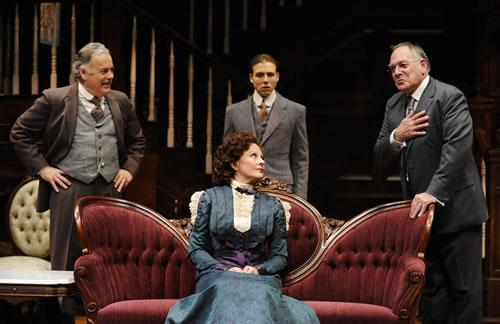
"for colored girls who have considered suicide when the rainbow is enuf" (From Page to Stage)

“for colored girls who have considered suicide when the rainbow is enuf” (From Page to Stage)

I direct community theater plays.  I’ve worked with actors with natural talent and actors with little natural talent, with lots of experience or none at all.  Actors with different learning styles and ways of processing information.  Of these, perhaps three gave indications through how they worked that they knew something about what they were doing.  Everyone else was flying by the seat of their pants.

My directing style reflects the fact that I am a teacher by nature.  A few moments in rehearsal are clearly instructive, but mostly, I introduce technique without specifically saying, “Okay, this is something you want to use in every play you do.”  I hope that my actors will realize the benefits of what they are doing and carry some small portion of that experience forward into other plays.  I am sowing seeds, as it were.

"When Men Are Scarce" (Caribbean Community Theatre)

“When Men Are Scarce” (Caribbean Community Theatre)

I ask my actors to work in ways that use the tools without actually identifying them as tools.  I help them to work in healthy, organic, productive ways that they’ve never used before.  I help them to work in the way well-trained actors do, and every time they veer off course, I push them back on.

I don’t do the work; they do.  I just make sure they are working correctly.  Good process = great results.

My rehearsals are hard work.  I have high expectations and encourage them to strive for greatness.  And to a man (and woman), they do.

"A Christmas Carol" (From Page to Stage)

“A Christmas Carol” (From Page to Stage)

It’s a different way of working, and it’s uncomfortable for them.  I run scenes as much as I can, but less than most community theater directors do.  I work the beats.  I work moments.  I dig for motivations.  I demand great physicality.  As you’ll see when I talk about blocking, I keep my actors moving.

Actors have so much to learn in the course of my rehearsals that when they think about opening night, I can see the panic in their eyes.  After five weeks, they have no confidence that this thing is going to come together in time.  Everything still seems like a haphazard work-in-progress.  They can’t make many conscious decisions, because I keep changing things just enough that they are always a little off-balance.  “Where’s the run-throughs that are my security blanket?!?”

Once we start with run-throughs every night, I still have this annoying habit of stopping mid-scene and addressing issues that I deem too critical to wait for notes.  Over the next couple of weeks, the interruptions become fewer, and the notes start addressing tiny details instead of major issues.  As we approach tech week, we are fine-tuning at a level the actors have never done before.  And now, the actors are beginning to think that we just might pull this off.

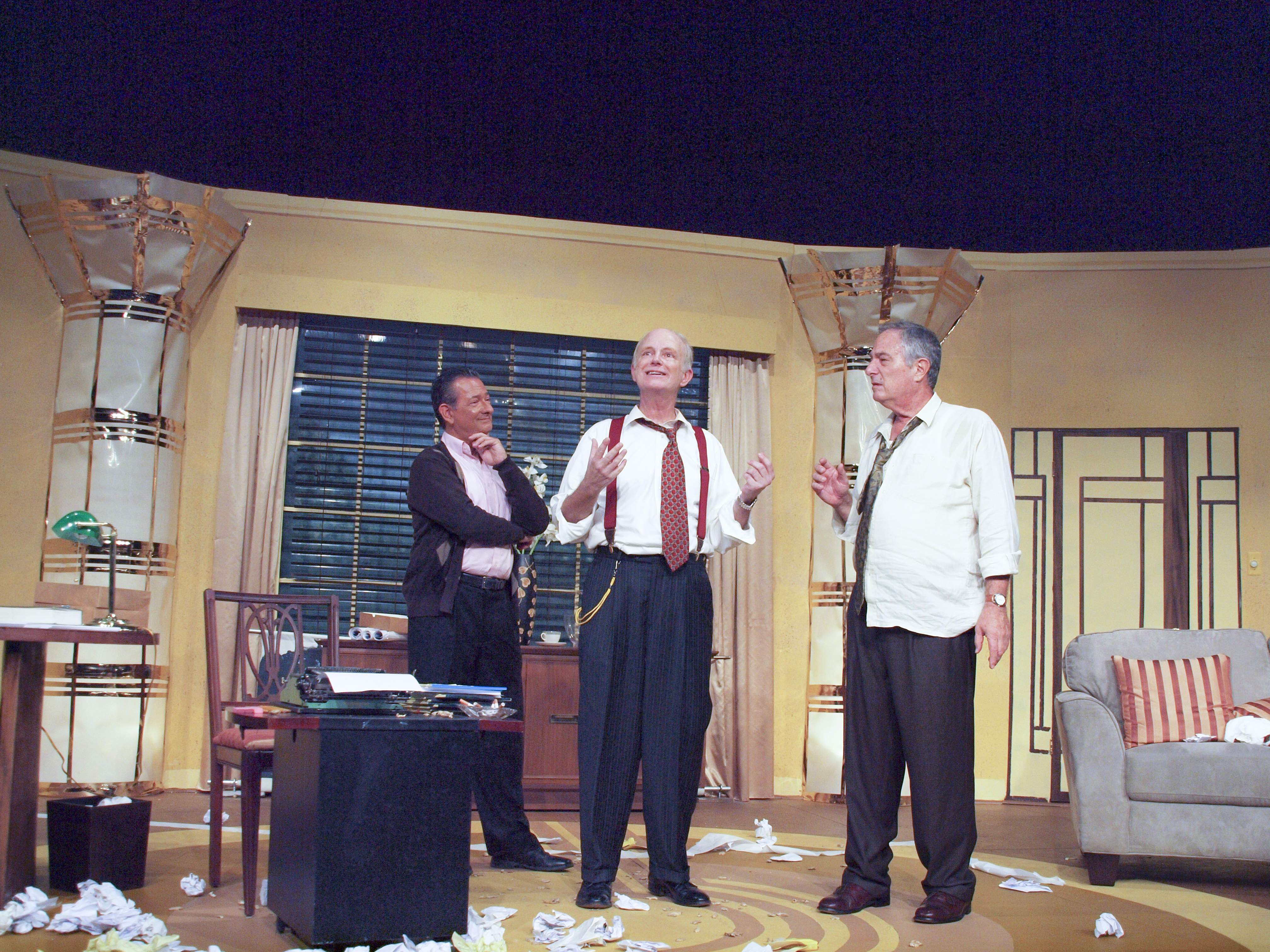
"Moonlight and Magnolias" (Caribbean Community Theatre)

“Moonlight and Magnolias” (Caribbean Community Theatre)

And two nights before we open, they kill it.  They absolutely kill it.  And they know it.  They have brought this play to a place they never dreamt of.  They have each gone well beyond what they thought they were capable of.

It happens every time.  No matter who is in the cast, or how little experience they have.  Good process = great performances.  And you can do it without me there to guide you.  I promise.

To read Trusting Your Subconscious, go here.  To read The Subconscious Effect, go here.