When You Forget Your Lines

embarrassment-2It happens to everyone at some point.  No matter how well you know your lines, there will come a moment where you become unglued and can’t remember a thing about what is supposed to happen next.  It will come in a spot you’ve never had trouble with in rehearsals or any performance.

So what do you do when the inevitable arrives?

Don’t panic.

I know, that sounds ridiculous.  How can you not panic?  The world is about to come to an end!  You will be exposed as a fraud or worse, a fool!   You will be the laughingstock of the county for years to come.

Believe me, it’s not that bad.  But also believe this:  If you don’t panic, the odds are that at least half the time, the audience will not have any idea that anyone has dropped a line.  And the other half of the time, they will happily watch you deal with the moment professionally, relax when it is clear that you are back on track, and praise you afterwards for how well you handled that moment.

So okay, you’ve managed not to panic, or to at least limit that moment to a split second.  Now what?

Move.  Anywhere.

Physical motion on stage does not necessarily have to be attached to the spoken word.  So moving does three things for you in this situation.  One is that it distracts the audience.  They assume that your motion is planned and is part of the play, so they are still hanging in with you, blissfully unaware that the train has jumped the rails and life as we know it is about to end.

The second benefit is that because you have created an activity (scrounging around in your purse or pocket for a piece of gum or a pen, looking for the earring you lost this morning, digging through the couch for change for the parking meter), you have bought yourself time to think about what your line must be, or what the next line you can remember is.  And yes, it is entirely possible to create meaningless, occasional dialogue to add to your activity while still using the other part of your brain to search for the words you’ve forgotten.

The last benefit is that it immediately tells your fellow actors that you’re in trouble.  They can now start figuring out what they can do to save the moment; can they paraphrase your line or otherwise give you a hint that will jog your memory, or can they just skip to the next beat without leaving out any essential information?

Bad Dates HeadshotYears ago I did a one-woman show, and it DID NOT OCCUR TO ME that I might forget my lines and that there would be no one on stage to save me until the moment it actually happened.  In the two second pause that ensued, I held my focus and scoured my brain for enlightenment, but none was forthcoming.  Fortunately, the scene had plenty of physical activity in it, and so I just did more of what I’d been doing (trying on shoes and dresses) while talking to myself about how I looked in a way that was perfectly in character.  And miracle of miracles, manna from heaven arrived after 20 to 30 seconds, and we were off to the races again and the audience was none the wiser.

That was, by far, the longest “gap” I’ve ever personally experienced in terms of forgetting a line.  Since I had no one to help save me, it dragged on longer than such gaps ordinarily do.  But because I kept moving and kept talking, I don’t think anyone in the audience realized anything had gone wrong.

I’ve seen actors who’ve forgotten their lines swivel their heads to the wings and look beseechingly at the stage manager for the words that have left them.  This is probably the worst thing you can do.  It not only lets the audience know that you’ve forgotten your lines in a way that is very jarring, it also means that you’ve got no intention of trying to fix the problem yourself.  To an audience, that is both unprofessional and disrespectful, and they judge it harshly.  They will sympathize and forgive if they see you muddle through a dropped line, but they are very critical of an actor who has given up the ghost.

The better you know both your character and the rest of the play (the other characters, the plot line, etc.), the easier it is to improvise believable “filler”, and having some experience with improvisation as a form of theater can make handling such moments much easier.  You may find, however, that you just aren’t very good at thinking on your feet and improvising your way out of such calamities.  It’s not everyone’s cup of tea, and as long as there is one actor on stage who can handle such moments, you can probably rely on them to bail you out.

But what if it’s a two person scene, and it’s your scene partner who suddenly goes up in her lines?  Or the nature of the scene is that it is very difficult for the other actor to save you?  (I’ve been in such scenes.)  If you’re nervous about your own ability to cover the dropped line, then prepare some possible ways to cover such moments by preplanning things you can do and say to cover such moments.  Hopefully you’ll never need them, but if you do, you’ll be glad you did!

Not Business As Usual

21724617Plays are always about dramatic moments.  The most dramatic moments possible.

I’ve said this in a variety of ways in other posts, but it bears repeating again and again.

The most dramatic moments possible.

One person’s life only contains a few stories dramatic enough to make a play out of them.  Stories where there is so much at stake for me, where what I want is so difficult to get that it seems that I’ll never achieve it, and where the experience changes who I am in some important and fundamental way.

These three elements are the foundation of most traditional drama.  Not only does it require dramatic import of this magnitude to make the evening interesting enough that we’ll leave the couch and go the theater, but it feeds the thing that makes theater meaningful in the first place.  That is, it teaches us something about the human experience that we can learn in no other way.

Without that, I’d rather stay home and wash the dogs.

Not everyone’s coming-of-age story is dramatically interesting.  Not every love affair is a boy meets girls/boy loses girl/boy gets girl story that keeps us riveted and hoping for happily ever after.  Since most of us resist learning Life’s Big Lessons, most disputes we have in our lifetime will not leave us changed people.

To find your own dramatic stories (if you are in the first half of your life, you might need to look for the dramatic story of someone you are very close to), look for the experiences that have irrevocably changed who you are and how you view the world or your own situation.  If you really changed on some deep level, it is likely that there was considerable struggle, both internal and external, that led to that change.  And if there was struggle, it undoubtedly meant there was a lot at stake for you in it.

If you can find such a story in your life or in a close relative or friend’s life, then you are closer to understanding what makes for more dramatic choices as an actor.

molehillDespite these dramatic essentials, however, most actors I work with will underplay what is going on in a scene.  “Most” for the simple reason that most actors are “under-actors”, not “over-actors”.  Under-actors can make molehills out of mountains with very little effort.  Sort of like boiling a chicken until all of the flavor is out of the meat and into the broth, and then serving the breast for dinner and tossing the soup.

(Over-actors make the Appalachians into Mt. Everest.  That’s not good, either, but it’s a different problem.)

Why do we do this?

Perhaps because we don’t like to feel our feelings.  Downplaying them is the easiest way to avoid them.  If we do it regularly in real life (“Oh, that’s all right.”  “Bothered?  I’m not bothered.  Really.”  “It doesn’t matter.”), then we’re apt to do it on stage as well.

Darn!  We’re back to the old feeling our feelings problem!

Yup, it’ll keep coming up until you overcome it.  Our Ego, which is the thing busily avoiding our feelings, will find every trick in the book to avoid them.  We have to catch it in the act and remove its disguise.

So when you look at your character’s emotions, ask yourself if you’ve chosen a really strong emotion or not.  If you look at her needs, ask if the need is overwhelming.  Depending on who your character is, there may or may not be an earthshaking change in her by the end of the play, but if there is, you can work backwards to get to the emotions and the needs in the same way that you did when looking at the most dramatic story of your own life.

If you haven’t chosen the most dramatic reasons available to you given the context of the play as written by the playwright, then you are shortchanging both your own acting and the audience.  So keep going back to the drawing board until you are sure you can’t improve the dramatic elements any more.

I’ll talk more about this when I write some posts on Storytelling and “What Would Lucy Do?”

The Triumverate of No-Nos: Unbelievability

bme_group1“I don’t believe it” is what I say to actors when they aren’t properly connected to the material, their character, or the moment in which they find themselves.  Much like the models in the photo above.

It’s a catchall phrase I use to describe everything that doesn’t fall into any other category.  Yes, you aren’t believable when you anticipate what you’re going to get from your scene partner, but I’m talking about a different sort of believability.

When I use this phrase, it just means that the moment to which I refer isn’t anything I am mistaking for real life.  It is artificial on some level.

I typically use this phrase to refer to a single speech or line that isn’t working.  If an entire scene is unbelievable, that’s another matter.  Then it’s time to revisit the given circumstances, the verbs, the character’s motivation, or some other large scale problem.  No, in my parlance, “I don’t believe it” generally means that the actor has just withdrawn from the reality of the scene for a moment or two.

Usually he’s being superficial, relying on externals and line readings rather than connecting to what is going on inside of his character.

Even good actors are susceptible to this.  We dig our way into our characters and get to those real moments over time.  We are inclined to focus on the more difficult moments and let the easier ones slide, and sometimes we forget to go back and work on them.  It takes a lot of energy to stay focused and connected to the material without abatement, so it’s easy to take a moment to “rest” and coast for a line or two.

I regularly vet my own work for such moments, listening to myself in rehearsals.  “Does that really sound believable?  How can I make it even more natural?”  (A topic for another day.)

I use the phrase “I don’t believe it” when I direct, because I find it generally does the trick.  I’m simply giving the actor feedback on how it looks from the audience.  It is up to him to figure out why what he’s doing isn’t working.  My comment sends him back to the drawing board, and the modifications he makes usually pull him further into the material.  Maybe he makes it work in the first attempt, maybe he needs a few tries to get it to a stage where it IS believable, but a good, intelligent actor can figure it out on his own, once I’ve alerted him to the problem.

Surprisingly, even new actors respond very well to this approach.

The intention behind this comment is critical, however.  If you’re a director who wants to employ this technique, please pay close attention to what follows!

“I don’t believe it” isn’t a criticism – that is, it isn’t a negative.  I am not ridiculing what he’s doing in any way.  On the contrary – I deliver it as a really supportive, respectful comment.  It’s nothing personal; it’s factual.  It just means “you aren’t there yet, keep trying.”

When I say it to an actor, the implication is that he can certainly get to his destination, he just hasn’t arrived yet.  Sometimes an actor will respond, telling me what it is that he is trying to do, and I may say, “I think those are good choices.  They just aren’t coming through in what you’re doing, that’s all.”

If an actor continues to have trouble, I will try to tell him why it isn’t believable.  Depending on the actor, I may do this with the initial comment.  I’ve worked with actors for whom the simple identification of “this moment works, this one doesn’t” is sufficient.  But less trained actors may need to know why it isn’t working.  “I don’t believe it, because I don’t think you’ve really heard what she said.”  Etc.

It’s not just about saying the lines.  If it’s not believable, it doesn’t work.

believable

Actor’s Etiquette: Speed

0958_MA_49_Set EtiquetteFootball season is upon us.  Success in college football does not guarantee success in the NFL.  Why?  Speed.  The NFL game is faster.  Why?  The NFL has the crème de la crème.  It’s spread out in college, but the quality of the players is more concentrated on the professional level.  As a result, everything is faster and sharper.

Understand that speed, in acting, has nothing to do with pauses.  Eliminating pauses does not contribute the kind of speed I’m talking about.  Speed can shorten the pauses without taking away their power, but speed never means cutting them out entirely.  It means not being self-indulgent about our “moments”.  It means interrupting on time, not a beat too late.  It means entering promptly.  It means speaking more quickly than you might ordinarily.

Speed can be a reflection of high energy, but they are not identical and you can’t substitute one for the other.  Speed means that the audience can feel the momentum of the piece.  It’s like wanting to get a drink from the kitchen while you’re watching TV.  Do you wait for the next commercial, or do you think  you can get in and out of the kitchen without missing much?  (In a world without Tivo, that is.)

Speed means that things are going quickly enough that you would indeed miss something if you went to the refrigerator.

Speed, Energy, and Volume ARE interrelated.  If you don’t have energy, your volume will be down.  Try to intentionally pump up your volume, you’ll automatically increase your energy.  If you don’t have energy, you won’t have speed.  Intentionally increase your speed (you may feel like you’re forcing it, but that can be okay), and energy will follow.

The Triumverate of No-Nos: Anticipation

OLYMPUS DIGITAL CAMERAThere are three ways to violate the principle of Staying In The Moment:  Anticipation, Telegraphing, and I Don’t Believe It.

One way out of the cumbersome transitions I talked about last time is to anticipate what is coming next.  It’s not a good way out, but it’s one actors often take.

Anticipating comes in two forms.  One is doing the cumbersome transition (the one that takes several seconds rather than a split second), but starting it early, so that the flow of the play isn’t interrupted.

The other way of anticipating is doing the split second reaction, but doing it during your partner’s line, but before the pertinent information is revealed.

For instance, in Alan Ayckbourn’s Table Manners, there is the following sequence of lines:

        Sarah:  Annie!  You’re getting dreadfully coarse.

        Annie:  Oh, you’re just a prude.

        Sarah:  No, I’m not a prude.

Annie’s line is not only in direct response to Sarah’s first line, it is in response to the LAST word in the line, “coarse.”  Similarly, Sarah’s second line is in direct response to the LAST word in Annie’s line, “prude”.  Neither actress can react appropriately until her partner’s line has been completed.  Yet it’s very easy for an actress playing Annie to begin to roll her eyes in the middle of Sarah’s line, and for the actress playing Sarah to begin to be affronted in the middle of Annie’s line.

When you do that, you are receiving mail that hasn’t been sent yet.  You are anticipating the word you know is coming.  You know the meaning of the whole sentence, because you’ve got the script.  You, the actor, know what’s coming, but the character doesn’t.  The character has to wait for the clarity that comes with the important words in each sentence, “coarse” and “prude”.  Only then can she respond, because without them, there is nothing to respond to.

Imagine if Sarah only said, “Annie, you’re getting dreadfully . . .” and didn’t finish the sentence.  Annie might say, “Dreadfully what?”  Or she might say, “Oh, you’re just a prude”, having figured out what the missing word probably would have been (she knows Sarah fairly well, after all), but it would have taken a moment or two for her to figure out where Sarah was going with the line.

Similarly, if Annie had said, “Oh, you’re just . . .”, Sarah might have said, “I’m just what?  What am I?  Go on, say it.  You can’t start a sentence like that and not finish it!  What am I?”  But it is unlikely that she would have figured out that Annie had intended to call her a prude.

In order to avoid the anticipation problem, you have to figure out exactly when your character receives whatever message your character receives that makes her do or say whatever she does or says next and not let it affect you until that moment.  In the case above, it happens at the very end of the cue line.

Imagine the dog above, waiting for its master to come home.  A dog with expectations will hold its position until the expectation is met.  So should you wait for the key words that move you into the next part of the play.

But let’s say you have a lengthy speech, and halfway through it, you say something that really irritates me.  Now, you’re one of those people who knows how to keep talking in such a way that it is difficult for someone to interrupt you, so I keep quiet until you’re finished.  Or perhaps what you say is so upsetting that I need the rest of your speech to figure out how to respond to it.  Or perhaps I try to interrupt you without success.  Whatever choice I make, the source of the irritation – the thorn in my side – shows up in the middle of your speech, and that’s when it has to begin to affect me – not at the end of the speech.

These are two different issues.  The first example is one of anticipation; the second would be its opposite – to fail to react at the appropriate moment, but rather to wait until it’s my turn to speak.  Both are wrong, but they have entirely different causes.  I bring up the second to emphasize the real lesson here, which is to let things affect you at the moment that they hit you – not before, and not after, but instead at the very moment they enter your character’s consciousness.

In case you’d like to see how the actresses handle the moment, here’s the start of Table Manners.  The lines in question show up around the 6:30 mark, but if you watch it all, I think you’ll see how they wait to receive the input from the other before they react.  Sometimes the response is instantaneous, but it is never early.


Actor’s Etiquette: Energy

etiquette_class_book2Every show you do requires high energy.  That’s obvious (I hope!) for a show like The 39 Steps or Noises Off.  It’s less obvious for Waiting for Godot or Our Town.  If you don’t bring your best energy to a performance, it will suffer.  Low energy is contagious and will infect the rest of the cast.  It will infect the audience, too.

The reverse is also true.  An audience that arrives tired will not respond well and that will affect the performance, since actors and audience work together to create the experience.  But you can’t do anything about what the audience brings.  You can, however, be sure that you bring your best energy.

Good acting can be tiring – for you, not for the audience!  When acting, we ought to be operating with a heightened awareness of what is going on, and that requires unrelenting attentiveness.  Let your focus drop for a few seconds, and it takes longer than a few seconds to get it back.  This kind of attentiveness has a palpable energy to it; it gives power to your performance and keeps the audience involved.

Life on stage is NOT ordinary, nor should you treat it as such in the name of “believability”.  “Naturalness” on stage is not the same thing as “casual”.  Even film acting, which requires you to be much “smaller” about what you do since the camera can get right in your face, needs to be supported by a strong and consistent “electrical” current (if you will).

high voltageHow can you be sure to bring your best energy on stage?  Alan Alda does about two minutes of some sort of aerobic exercise just before he goes on stage, and there is scientific evidence that this helps you to perform any physical activity (and acting should be very physical) better.  For one thing, it engages both sides of your brain in synchronicity.  For another, it gets your blood pumping and wakes up your body.

It’s difficult to bring energy on stage with you if you’ve just spent fifteen minutes sitting in your dressing room or the Green Room.  If you’ve ever been to a performance that took five or ten minutes to get off the ground, low energy is probably the culprit.  Better to warm up your engine off stage, before you meet the audience.

How can you best do this?  Obviously, you don’t want to get yourself winded (unless that’s appropriate for your “moment before”.)  Being in good shape physically will make it easier to engage in physical activity that will “wake you up” without leaving you breathless, but if you aren’t, use your own judgment.  Dancing, shadow-boxing, and jumping jacks are some choices that can rev your engine in limited space.

It’s not just about what you bring on stage when you enter, however.  You’ve got to retain that energy throughout the performance, and that requires vigilance, especially on the days that your fellow actors seem drained or you yourself are.  I know there are times when I can’t seem to get my engine past 55 mph, metaphorically speaking, when I really need to be flying at 70 or 80 mph (for comedies in particular)!

When that happens, you have to keep pushing yourself, and remember what the experience is like for you when you DO have the right level of energy.  By recollecting that and measuring tonight’s performance against it, you have something clear to drive toward – even if I can’t quite make it to 70, I can usually get myself above 60 through sheer will . . .

The matter of energy is tied in with speed, which I’ll talk about in the next Actor’s Etiquette post.

The Triumverate of No-Nos: Telegraphing

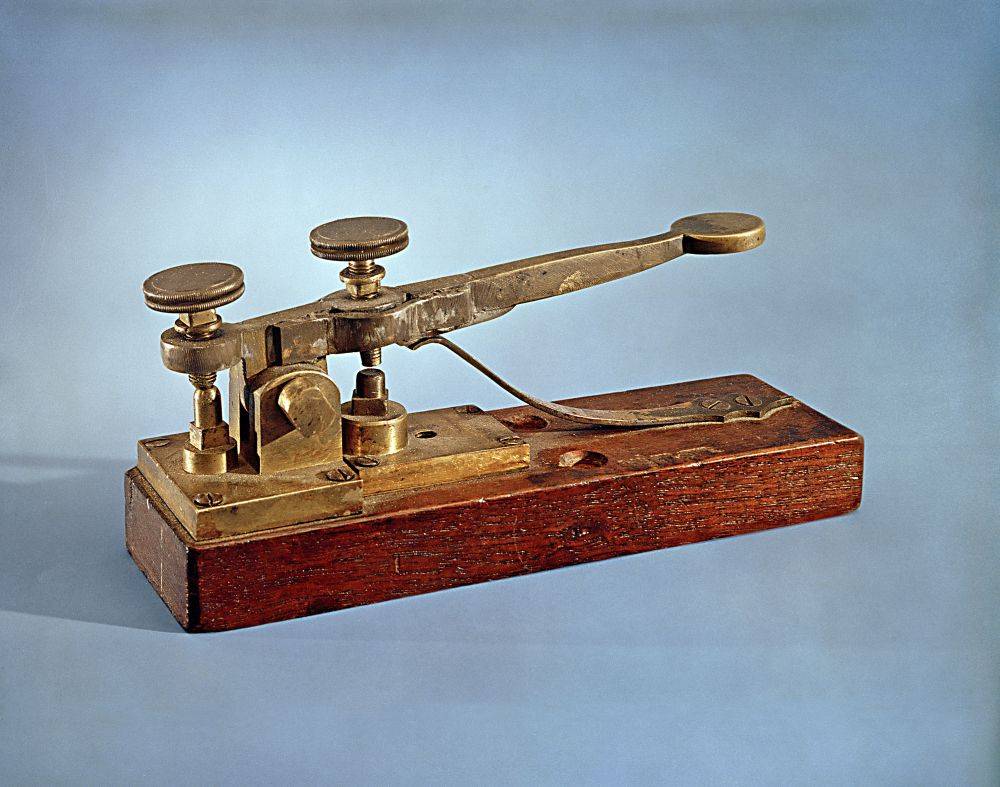
morse_telegraph_keyTelegraphing is when we know what you’re doing or feeling before it is appropriate for us to know.  We know what’s coming next, it’s because you’ve sent out a signal ahead of time.  It’s a form of anticipation, but rather than anticipating your scene partner’s next line, you’re anticipating the play itself.  You’ve jumped into the next beat or one even further down the line.   You aren’t building toward anything naturally, because you’ve already arrived.

It’s when you and your boyfriend are having an argument, and you know that the scene is going to end with the two of you breaking up.  Instead of fighting to save the relationship, which is the action of the scene, you let the climax – when he storms out of the apartment – inform everything that comes before.  You’ve either stopped fighting for the relationship long before the end actually comes or else the nature of your fight is colored by the fact that you know the relationship is doomed to failure.

Not only does this eliminate the dramatic interest of the scene, but you’re cheating your character.  Your character doesn’t know the break-up is coming until the moment it actually happens.  Even if it seems to her that it’s moving in that direction, that the argument is escalating in a way that it hasn’t before, that things are being said that are hard to take back, the moment he says he’s leaving and not coming back should still hit you like a ton of bricks.  Reality, no matter how predictable, is nonetheless shocking in its event.

Spending a week at the bedside of someone who is dying doesn’t take away from the impact of the moment of his death.

When we say that we need to play the scene “moment by moment”, this is what we’re talking about.  It’s all about “staying in the moment”, but the phrase “moment by moment” reminds us to not get ahead of ourselves, to let the story unfold in a way that surprises not just the audience, but the characters we play as well.

If you’re human, you know just how unpredictable life is.  “If you want to make God laugh, tell him your plans.”  How many times have you rehearsed a difficult moment in your life – confronting someone who has been creating a problem for you – only to find that all the things you planned to say get thrown out when the person you’re talking to throws you a curve?

Perhaps what you should do is give some consideration to how your character thinks the scene is going to play out, and compare that expectation with the reality.  Where do differences exist?  If you can spot the differences, you can discover when your character is surprised or has to take another approach to get what she wants (new beat, new tactic, new verb).

Actor’s Etiquette: Working With Directors, Part II

OLYMPUS DIGITAL CAMERAI have a good friend who did a lot of acting for many years before deciding he wanted to branch out into directing as well.  We became friends when he cast me in his first directorial effort, Murder at the Howard Johnson’s.  MHJ is a very funny, physical comedy.  All three actors in the play had considerable experience and Charlie, being new to directing, gave us a good bit of latitude.  It was a very collegial environment, and as he felt his way through the complexities of directing (it’s harder than you think), he was very open to our ideas.  There was a lot of “group think” — real ensemble work — and the final product was something of which I remain very proud.  (The photo in this post is from that production.)

Several years passed, and we met up on stage again for Blithe Spirit.  Charlie had two other productions under his director’s belt, and had considerably more confidence in what he was doing.  But he had also reached the stage where he thought the director needed to control everything in the experience.  He came to rehearsals with distinct and largely immutable ideas about what needed to happen and when.  There was little room for flexibility in the blocking he had created.  Gone was the collegial atmosphere; instead, the cast was busy trying to give him what he wanted, sometimes sacrificing what we felt was true to our character in the process.

Another couple of years, another show:  the ambitious Woman in Mind.  Shortly after Blithe Spirit, Charlie had read and taken to heart Marshall W. Mason’s book on directing, Creating Life on Stage:  A Director’s Approach to Working with Actors.  Gone was the autocratic director; in his place was a director concerned with giving space and assistance to his actors to create more organically-driven characters.

Charlie and I still disagree about whether or not the stage directions in a script are sacrosanct, and have agreed to disagree on this particular point.  Despite this, while Blithe Spirit was a difficult experience for me, given my own approach to acting, Woman in Mind was very rewarding.

Charlie’s trajectory as a director is not unusual.  That middle stage is probably unavoidable.  As with most things in life, it’s difficult to know where “balance” is until you go too far and find yourself out of balance.  A director with self-awareness and a desire to improve will move out of the middle phase, but I’m sure there are others who remain stuck in that position.

So what are you, as an actor, to do when you find yourself working with a director who is in this middle stage, who perceives his role as The Decider, and tells you what to do when?

First, understand that he is learning his job just as you are.  You go through stages as an actor where you aren’t working to your full potential, because you’re still learning your craft, so cut him the slack you’d like yourself.  He is doing the best he can, and doesn’t yet see that controlling everything doesn’t produce the best result.

Don’t challenge his authority too directly.  Control is very important to him; honor that while expressing your own opinions and needs.

Genuinely try to make what he asks work.  Only ask to do something differently if you can’t.  If you do this, he’ll both see your efforts and feel your pain.

Be clear about why something isn’t working for you without making the director sound stupid or wrong.

Don’t demand — instead, ask permission to change something.  “May I . . .?”  “Would it be a problem if . . .?”  “It would really help me if . . .”  “I’m struggling with . . . do you have any suggestions?”

In other words, you can’t change the director’s approach.  You’ve got to figure out how to work within it to produce the best result with the least stress.  Accept that you can’t work in precisely the way you might like to, but negotiate courteously for the things you really need to be comfortable.

There is No Such Thing as a Transition on Stage

transition-managementMany actors interpret the idea of “receiving” from another actor to mean that they actually have to “process” the information or emotion that they get before the can respond, or react, to it.  This misinterpretation has led to the development of the actor’s “transition”.  As in, “Can you pause just slightly before you say that last line, because it will be easier for me to make the transition?”

This is bogus.  People don’t make “transitions” from one emotion to another.  Actors shouldn’t either.

This is a good time to go back and re-read my post on “Why It is (Ultimately) Easier to Act Verbs than Emotions.”  But let me carry the comments in that post just a little bit further.

If you touch a pan that has just come out of the oven, you won’t need to “transition” before you yelp in pain.  If you get a phone call that tells you that your immediate family was just killed in a ten car pileup on the freeway, you won’t need to process anything before you begin to wail.  The winner of a beauty pageant doesn’t wait to hear her full name called before she looks astonished at her good fortune, she just hears “Miss Ari . . .” and she knows they mean her.

So the heavy-handed transitions that we sometimes see on stage, when the actor moves from happy to shocked to fury in the five seconds following the delivery of bad news, are never believable to an audience because they seem like what they are:  unnatural delayed reactions.

An actor who claims he needs a transition has plotted his emotions (“I’m happy to this line, then I get surprised when she says this, which makes me angry.”)  He isn’t connected to his own emotional life overlaid by the character’s life story and situation.  He’s playing externals.  And when you play externals, charting the “transition” from “happy” to “angry” takes more than the split second it takes in real life.  It takes a few seconds, because we’re not reacting to the events of the scene, nor are we reacting to what we are getting emotionally from the other characters.  We are painting by numbers.

These are the same actors who like to throw in a few extra words in a challenging moment, because those words give them the time they need to make their “transition.”

But if you play the verbs – that is, if you just try to get what you want, and if someone throws a roadblock in your way that makes you have to change how you’re trying to get what you want, and that roadblock gets you angry or frustrated because you think you’re being perfectly reasonable, or you have a brilliant new approach you’re sure will work that makes you proud or delighted, or you have to laugh at how ridiculous your “opponent” is being – well, that “transition” will happen naturally.  You won’t have to pre-plan it or force it.  It will just show up on its own, and it will be better than anything you could possibly have planned in advance.

If you are struggling with a moment in a scene, and it feels laborious to move from one emotion to another, so you temporarily forget this post and say to your director, “Gosh, I am having such a hard time making this transition!” – there is really only one cause and one solution.

The thing that is causing your difficulty is that you aren’t connected to your character and what he really wants – you’re floating on the surface, like oil on water.  In other words, you’re faking it on some level.  Stop faking it, get yourself in touch with what is really going on for you emotionally in this scene and go after what you want, and the transition will become effortless.

Why are you faking it?  Either because you haven’t yet learned how to connect yourself to your emotional life, or because whatever is going on with your character, emotionally speaking, is something that is making you very uncomfortable.  You’d rather not dig into it.  But digging is the only way to give the audience a moment worth watching.

Actor’s Etiquette: Deliberate Practice

10648110-got-etiquette-shirtDeliberate Practice, done in solitude, creates elite performers, says research psychologist Anders Ericsson.  What does that mean to an actor, who mostly performs with at least one other person on stage?  How can we, as actors, use Deliberate Practice outside of the classroom?

The fact that athletes in team sports also often spend unusual amounts of time in solitary practice caught my attention, because it’s the most comparable situation to an actor’s.  Yes, a violinist in an orchestra is working on a “team”, but he can practice his part in solitude more effectively than an actor can.  How what he does blends with the rest of the orchestra is secondary to what he does alone.

In football, wide receivers are dependent on their quarterbacks to throw them the ball, but that doesn’t mean that they can only get better by working with their QB.  Jerry Rice’s off-season workouts are legendary; Cris Carter last caught a ball in the NFL in 2002, but he’s caught thousands of them off of automatic throwing machines, and can still catch them one-handed (either hand).  Both Rice and Carter did an extraordinary amount of Deliberate Practice.  Which is one reason why they are in the Hall of Fame.

Monologue work is an obvious choice.  They are incredibly difficult to do well, as I’ll discuss in some distant future.  We do not ordinarily talk to ourselves in the way characters talk to themselves.  When we talk to ourselves, we mumble, or half of it is verbal and half in our heads.  None of which is interesting to watch on stage.

Monologues delivered to the audience are also tough, because they tend to become speeches.  We don’t speak to audiences the way we speak to best friends, and yet that is often exactly what is required.  Learning how to achieve this sort of natural behavior in a very unnatural circumstance is difficult and takes a lot of practice.

If you can learn to do it, however, you’ll find there is a lot of transference to your group acting skills.  The one clue I’ll give you is that the primary question I ask myself as an actor these days is, “Did I just sound like a human being?”  Often, in monologues directed to the audience, there are particular lines that just sound unnatural, and I have to work hard to overcome that.

You can see why casting directors like monologues.  They separate the men from the boys, as it were.

Monologues can only do so much, however.  There are a lot more of them available now than there was when I was growing up.  In fact, I don’t think I did much in the way of monologues until I was a teenager looking to audition.  So what was my form of Deliberate Practice, growing up?

I’ve read a lot of plays.  I mean, A LOT of plays.  Wanting to act is something I was born with, and once I discovered that there were plays out there, I got my hands on every script I could find, largely through libraries when I was in school.  Once I branched out into community theater, I discovered that there were playscripts I could borrow from friends or perhaps find in used bookstores.  Once I had more discretionary  income, I started buying scripts.

I didn’t just read them.  I read them over and over.  I identified characters in them (not always female) that appealed to me, and analyzed them, tried to figure out what made them tick, practiced their lines, tried to make them sound as natural as possible, while still being interesting.  I spent as much time with them as many actors do with their characters in rehearsal.  Enough time that I could see the links between the line in the third act and something that happened in the first.

I read old plays and new plays, classics and predictable modern comedies.  I read bad plays and good plays.  I learned why the good ones were good and the bad ones bad.  I figured out what playwrights had done to give me good material, and what was missing when they hadn’t.  I thought about how I could help disguise their lack, and how I could dig further into the complex characters so that I could show all of their complexity.  I worked to go beyond the obvious and find original ways to present my characters while staying true to them.  I learned how to read the text and let it speak to me without laying my trite perceptions on it.

I played hundreds of characters in my bedroom.  My first readings were about showing off and enjoying whatever attracted me to the character.  But I got pretty serious after that, working on the character as if I was actually going to play it, and doing all the work I still do in rehearsals.

Over and over again.

My sense is that many of my students, even the more ones, often don’t read a lot of plays, much less do the rest of what I’ve just described.  That’s unfortunate, because I think studying scripts is a huge part of actor’s form of Deliberate Practice.  Yes, I was born with a certain instinctive ability to sense what is going on with a character, but the work that I’ve described has most definitely helped me to become the actor I am today.

As with anything you want to do well – there are no shortcuts to putting in the time.