Where Do Line Readings Come From, Anyway?

Good intentions, mostly.

Parrot (1)We’ve been reading fiction and/or plays for years.  We’re accustomed to hearing the dialogue in our heads.  What is simpler (and truer, we think) than to simply parrot that internal reading to an audience?

And often, it sounds pretty good.  As I say, if you’ve got good instincts, you may well hit on a very good way to say the line.  It might even be the “best” way to say the line.  (Not “right”, just “best.”)

There’s just the pesky problem that using the line reading without first discovering what is causing it generally leads to an underdeveloped character.

Sometimes line readings show up out of a desire to please the director.  We commit to them early so that the play sounds good in rehearsals.   We don’t want the director to panic, to think we don’t know what we’re doing, to not cast us again.

Sometimes they come about because we want to impress the rest of the cast, to show them that we can keep up with them.  Or because we want to help them.  The earlier we give them “good stuff”, the more they’ll like us.  Or the better their performance will be, because they’ve got something “good” to play against.

Sometimes they come about because we “act” the role as we are memorizing lines, instead of just memorizing the words without intonation.  It’s easier to memorize lines this way.  But it’s like song lyrics.  There is a musicality to intonation.  And once it’s in your head, it’s in your head.  Just think about those songs you remember from decades ago!

But sometimes they come from our lesser selves, too.  We’re terribly impressed with ourselves for knowing how to say these lines, and we want to show off.  Or we are panicked that we won’t get the play ready in time, so we try to set things in stone early, so we can really hone them.  (The fine-tuning can’t happen without the proper foundation, but we don’t realize that.)
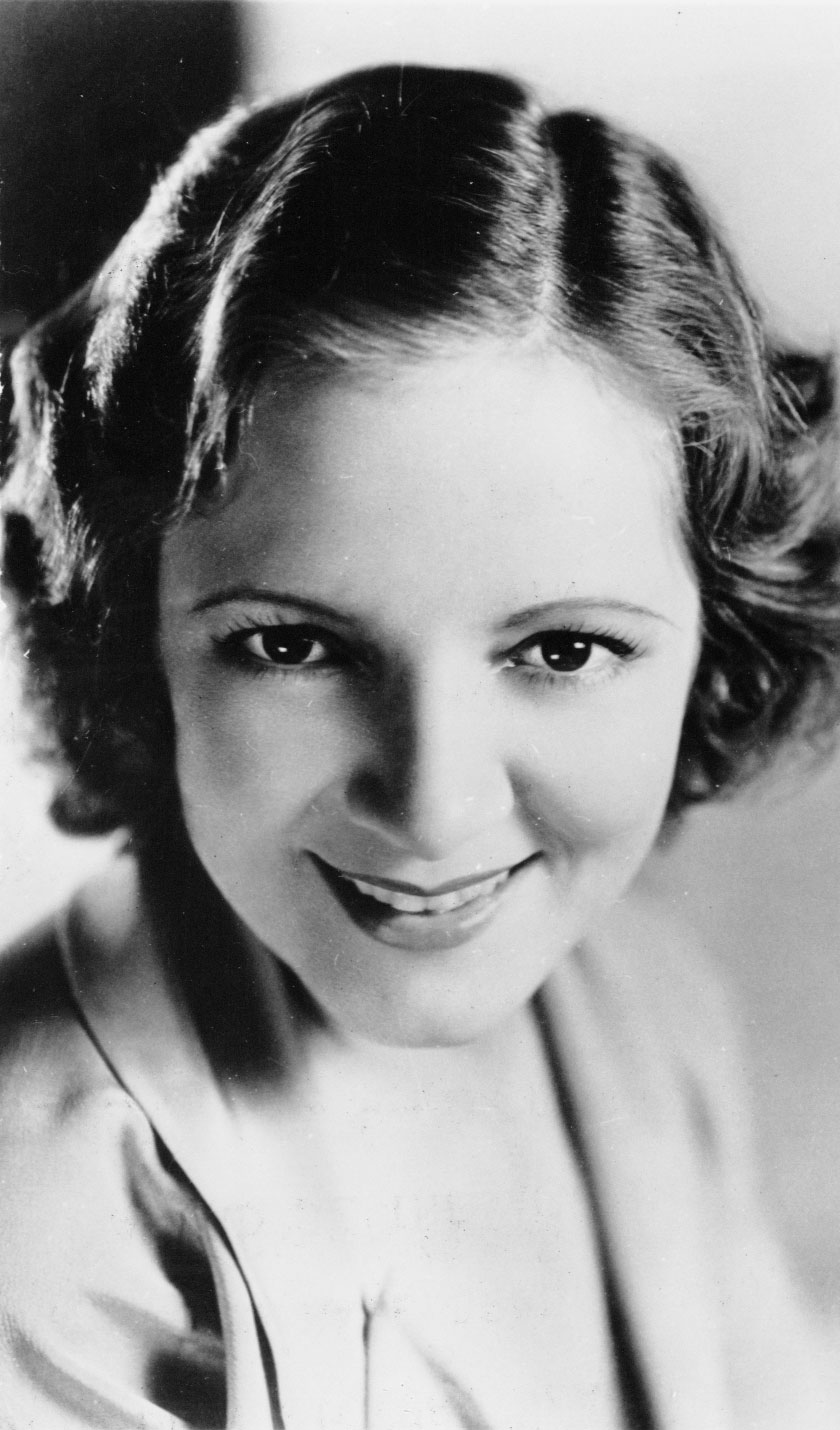
hayesIncidentally, I’ve been guilty of all of the above at some point in my life.  Another golf analogy:  you never have to worry about playing with a really good golfer, no matter how bad you are yourself, because every good golfer has been through what you have.  And we have long memories.

Ditto with acting.  Despite the fact that I have a lot of natural talent and very good instincts, there isn’t a mistake you can make that I haven’t made myself.  That’s how I learned.

So it’s perfectly okay to make the mistake of using line readings.  As I said in class, Helen Hayes used them early in her career (and to great success, too), until a very honest, no-nonsense director called her on it in her fifth Broadway lead, which drove her to acting classes.

The important question is:  Are you willing to give it up in favor of an unknown that will serve you better?  And are you willing to trust that it will serve you better?

To read Line Readings and Why They Don’t Work, go here.  To read So How Do You Avoid Line Readings, go here.

Line Readings, and Why They Don’t Work

dressing windowIn a recent class, Anne asked, “What are line readings?”

A line reading is a pre-determined way of saying a line.  It’s when you plan the intonation you use and the sort of energy and emotion behind it.  It’s a conscious, intellectual choice.  It usually comes from a sense of how the line should sound, what feels right.  And if you have good instincts, your choices in this regard can be very good ones.

Line readings are very much a product of the belief that there is a RIGHT way to do this.  “Can we go back a couple of lines, I said that wrong.”

If you believe there is a RIGHT way to say a line, you will seek it out early and commit to saying the line that way for the rest of your life.  As soon as you find a way that sounds RIGHT, you will stop looking for something better, something more interesting and true to the character.  You may have chosen something good, or even something very good, but you will typically not reach great.

The reason you won’t reach great is because even if the line reading you’ve chosen is exactly “right”, line readings are, by definition, superficial.  They are window dressing.

If you start with what you know is “right”, you lay it on the scene superficially, without undergirding it with emotional need and emotional reality.  It will remain superficial:  an excellent choice with no root structure.  Believe me, the most inexperienced audience will know the difference in seconds.

If the choice is the ”right” choice, you will find it by digging into the character, into what he wants and how he tries to get it, into how he feels about everything that is said and done to him and why he feels that way.  You’ll find it by opening yourself up to what is said and done to him and feeling some real emotion before you respond, naturally and in real-time.   This is why I say you can disregard almost everything in the parentheses in a script; if it’s “right”, you’ll find it on your own, and it will have greater impact when you do.

But if you go for what are essentially externals (inflection, volume, facial reactions, etc.), you don’t really have to search for the emotions, because after all, you’ve got the “final product”, right?  Nothing real has to happen onstage to product line readings.  It’s all artificial.

chinese-noodlesSuperficial actors don’t realize what they are giving up by working this way, so don’t be hard on them (or on yourself, if you’re one of “them”).  It’s very common for untrained actors to do this, and I wish I could say that it is a practice confined to the amateur ranks.  I’ve seen professional performances where this happens, most often in comedies.  An audience may laugh in response to a line reading, but you will never move them, and they will forget the production in short order.  It’s like Chinese food and pancakes:  tastes great, but doesn’t stay with you.

Unfortunately, the people most at risk for making this practice a habit are among the most talented.  Because they have an unerring sense of what is the “right” way to say a line, they can coast.  They can give a very glib, smooth performance that seems to hit all the marks without working very hard.  And the more they do it, the easier it becomes.  They sound great at auditions and in the first few weeks of rehearsals, but their character never grows beyond that.  Their development stalls out halfway through the rehearsal process.  An audience will never really believe them, never really suspend their disbelief in the way that we want them to.

There are worse things.  It’s a shame to pay the money for professional theater and encounter acting like this, but in amateur productions (depending on the quality of the latter), it can sometimes measurably improve the product.

It’s a function, really, of why you want to act.  I haven’t used a golf analogy in a while, but here’s one that’s appropriate.

When a golfer shows up on my lesson tee, I need to find out what his goal is – not just for that lesson, but in general.  What kind of golfer he wants to be will determine how and what I teach him.

People have different reasons for playing golf.  Some do it just to have a reason to spend a few hours with close friends outdoors.  Whether they play well or not doesn’t matter to them.  Some people have a maximum score they can tolerate without getting angry at themselves.  For some, it’s breaking 100 consistently.  For others, it’s bogey golf – high 80s, low 90s.

There are also golfers who want to be the club champ, and are willing to work to get to that point.

Someone who dreams of winning his club championship is going to approach the game very differently from someone who just doesn’t want to embarrass himself when he plays in an occasional golf outing.

All of these reasons are perfectly valid.  As long as the golfer is happy with his score, I don’t care if he’s a good golfer or not.  And I won’t try to make him get better than he wants to be.  My job is just to help him meet his goal, whatever it may be.

Same thing with acting.  If you do it because it’s fun, it gets you out of the house, you get to spend time with other people, and you like performing, then by all means, you should do some acting.  How good you are at it doesn’t matter in the least to me.  As long as you are content with the quality of your own acting and directors keep casting you, feel free to use all the line readings you like.

But if you do want to do some great acting – line readings will never get you there.  That’s all.

To read Where Do Line Readings Come From, Anyway?, go here.  To read So How Do You Avoid Line Readings, go here.

A Character’s Interior Struggle

Equus doraAnne is working on the Dora Strang monologue from Equus, featured in a couple of earlier posts.  I’ll be referring back to it at some point for an expansion of what I’m talking about in this post; today I just want to speak personally to Anne about something we discussed last night.  I am posting it generally because I think others might get a little something out of it, too.

At one point, Anne used the word “unemotional” to describe Dora, and I suggested that in general, it’s not a useful word because it’s boring to watch, but that there is a way to use it that can be effective.  And we went on to talk about the scene in other terms.

You backed off the word, Anne, because you realized it’s an adjective.  I told you that adjectives and emotions are perfectly okay to identify – in fact, they are very good to identify for two reasons.  One is that they typically lead you to Tone, which is an important but sophisticated element we’ll talk about way down the road.  The other is that they are your first clue in script analysis, which is what we’re dealing with at the moment.  We’ve talked about finding your feelings in a scene, relating to your partner, and identifying your beats and playing your verbs.  But as you all discovered last night, your verbs are only part of the equation.  HOW you play them depends on who your character is.  Without having a clear and comprehensive understanding of your character, it is easy to go wrong.

This is one reason why playing adjectives is so dangerous.  You can completely miss out on what is really driving your character if you approach it this way.

So let’s get back to Dora and the word “unemotional”.

“Unemotional”, like all adjectives, is too general to play.  WHY someone is unemotional makes it specific, which in turn makes it interesting.

Am I unemotional because I think it is inappropriate to be emotional in certain contexts, like at work or with people I’ve just met?  Because I was taught as a child that showing emotion results in punishment in my family?  And was that punishment corporal or simply a withholding of love?

Am I unemotional because I’m afraid that people won’t like me if I show them who I really am and what I really feel?  Because I don’t like the “bad” emotions I feel, like anger and envy and so I try to pretend that they aren’t there, or at least make sure that other people don’t see them?  And maybe it’s easier to shut down all of my emotions rather than risk that my anger slip out when I’m not watching myself?

Am I unemotional with Alan because I don’t believe in coddling a child?  The real world is a cold place, better that I should teach him how to function within it!

When I answer these questions, I come up with some basic needs for my character:  a need to be the consummate professional in business and to be perceived as well-mannered by all I meet.  A need to protect myself from punishment from others or to gain their love by being the Good Little Girl.  A need to be liked.  A need to be good, to not be bad, to get into heaven.  A need to give my son the best tools I know for dealing with the world.

These needs drive HOW I do things; that is, they drive HOW I play my verbs.  The mother who doesn’t want to coddle her son is a different woman than the one who doesn’t like her own “bad” emotions.  Although human needs are rarely so simplistic, and so you might find a variety of elements behind Dora’s “unemotional” nature that come into play at different moments.

But the thing all of these alternatives have in common is the need to repress emotions.  Human beings are emotional by nature.  We are all born with them.  Someone who is “unemotional” is working hard to repress them.  And THAT’S what you play as an actor.  You don’t play “unemotional”, because it’s uninteresting to watch.  But someone repressing specific emotions when they rise up in her?  That’s a very active and compelling choice.

When your character is drunk, you don’t play “drunk”.  You play trying desperately to seem sober.

In other words, when you’re on stage, you have to show the audience the Yin and the Yang.  We don’t know what you are repressing unless you let it leak out just the tiniest bit.  In fact, we may not even know you ARE repressing it if you don’t let it leak out.  We may just think you aren’t a particularly good or interesting actor, without understanding why.

Remember, we just met this character, and we have a very limited time with her.  In a case like Dora, who is a supporting character in the play, we may only spend 15 minutes with her.  We don’t have the luxury of learning over time that she represses her emotions, or why.  You need to convey that to us quickly and comprehensively.  And you do that by showing us both the emotions and the repression of them.

This sort of inner struggle – to not love someone you think is wrong for you, to do what you know is right despite your fears, to maintain control of your anger when you have been pushed over the edge by your young child or your boss – is fascinating to watch on stage, and the basis of many moments in dramatic works.

Also, even “unemotional” people have events in their lives that are so traumatic that it creates a windstorm of emotions inside of them that even they cannot repress.  This is such a moment for Dora.  Despite protecting herself for years, she is the proverbial fat that has been flung into the fire.  It is NOT business as usual.  (Plays rarely are.)  Which makes it even more interesting to watch.  What happens to a woman who is losing the battle to hide behind her usual façade?

How Do I Know What the Right Acting Choices Are?

There are no right choices.  All right, there are.  There are right choices for this particular cast in this particular production at this particular moment in time.  But honestly, what is RIGHT for this particular cast in this particular production at this particular moment in time may change from night to night.  And that’s not only okay, that’s RIGHT.

But what IS “right” in each case is debatable.  It’s for you, if you’re in that production, to discover.  Not decide.  Discover.

Some actors get terribly worried about whether they are making the “right” choices.  As if this is the SAT exam, and there is some clear, definitive choice to be made.

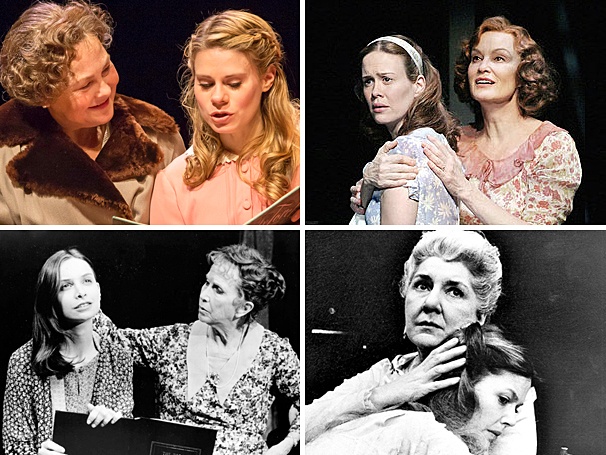
amanda fourHere is a list of actresses who have played Amanda Wingfield in Tennessee Williams’ play, The Glass Menagerie:

Shirley Booth, Julie Harris, Katharine Hepburn, Judith Ivey, Cherry Jones, Jessica Lange, Maureen
Stapleton, Jessica Tandy, Laurette Taylor, Joanne Woodward

Whether you know the play or not – can you imagine all of these disparate women playing the same character in the same way?

Here’s a quote from Meryl Streep:  “Acting is not about being someone different.  It’s finding the similarity in what is apparently different, then finding myself [emphasis added] in there.”

Because YOU are unique, and you are the foundation for the character, your interpretation will be unique.  It will be “right”, whatever it is, if you are working correctly.  And that’s okay.

One doesn’t need to look any further than Shakespeare to realize how many times this has been proven.  Watch multiple versions of Hamlet, Romeo and Juliet, or any of his other plays, and you’ll find a myriad of interpretations of all the main characters.  (Someday I’ll talk about “tone” and how the director’s choices affect your own.)

I recently came across a web post you can read here about The Taming of the Shrew, on how actors change the story.  (Ah!  Storytelling!  That’s a whole other can of worms I’ll open sometime!)  I’m not sure that I’d agree with her interpretation of the 1976 version, but I hope the post makes a clear argument that the videos referred to represent three very different interpretations.

You may like one better than the others, or you may like a fourth option not displayed here.  Personal taste is always at work and perfectly valid.  The point is that there are a variety of logically valid interpretations available to the artist.

I’ve seen Kevin Kline play Hamlet twice.

kline hamletThe first time was in 1986, at the Public Theater in New York City, and he was fabulous.  I thought the whole production was fabulous (the reviews agreed with me about Kline, but not about the rest of the production.)  It was a more humorous version of Hamlet than I had seen before.  Kline’s Hamlet was not the dark brooding Dane I had grown accustomed to.  I loved it.

kline hamlet 3He did the play again in 1990, also at the Public.  The reviews didn’t find much difference between the two productions, other than a stronger supporting cast the second time around.  But I remember the tone of the production being much different – more serious and stately.  But what I really noticed was the difference in Kline’s interpretation.  This Dane brooded more.  Kept his own counsel more.  Was more cynical, less humorous.

I had gone to see the second production hoping, on some level, to see a rerun of the Hamlet I had so loved four years earlier, and saw a very different one instead, despite having the same actor in the leading role.  Both productions were excellent.  Both interpretations by Kline worked.  Very well.

Both were RIGHT.

I’ll leave the last word to Kline, from an interview before a performance of the 1986 Hamlet in the Chicago Tribune.  “’There is no such thing as perfection in the theater,’ he notes, relief apparent in his voice.  ‘You will never get it right because there is no single ‘right.’  With film, there is the lingering illusion [emphasis added] that perfection is possible.’”

To read The Validity of Other Perspectives, go here.  To read About Those Stage Directions, go here.  To read The Half Dozen Rights, go here.  To read Line Readings and Why They Don’t Work, go here.

The Half Dozen Rights

OptionsI hope you’ve had a chance to contemplate my last posts, and at least agree that it is possible that you aren’t always RIGHT; at least, you aren’t always categorically RIGHT.  And that neither is the playwright.

I hope you can also see that if the character you are playing doesn’t occupy space on the same slice of the pie that you do, you might have to reach a little bit to figure out who that character really is and what choices you need to make as an actor to create him believably on stage.  That if you rush to judgment, you might make choices that aren’t the best ones you can make.

But BEST is a very different word from RIGHT.  So let’s stay with RIGHT for a moment or two longer.

I know actors who are convinced that there is a RIGHT way to play a role.  A RIGHT way to say a line.  And it is next to impossible to convince them otherwise.

Some years ago, I was acting in a play, and commented at rehearsal one day that one of the lines another actress delivered was, to my mind, one of the funniest lines in the play.  She was surprised, because she had no idea it was a funny line.  Which explained why she didn’t deliver it in a way that would get a laugh.  But that wouldn’t have mattered if she had understood the character properly.  The humor came out of who her character was, so if she’d been more in tune with her character, the line would have come out correctly and the audience would have laughed.  Automatically.

You don’t have to be a comedian to get laughs in a play.  You just have to know your character well.  (Not that it hurts to understand a little about comic delivery.  A topic for another day.)

Anyway, the actress in question finally begged me to simply tell her the RIGHT way to say the line.  I really hate giving line readings to actors (especially when I’m not the director!), but there comes a point when I will give in if they want it badly enough.  So I gave her a line reading.  She tried using it, although she never got a laugh in doing so.  She didn’t deliver it well, because she didn’t understand what was going on inside of her character.  She was giving a largely superficial performance.

Except for one performance:  One of those happy moments when she accidentally collided with her character, and there was a living, breathing person on stage in the scene that night.  And she said the laugh line perfectly; not at all the way I had suggested, but perfectly.  And the audience roared.  (Unfortunately, she didn’t notice that they laughed, so she learned nothing from the experience and couldn’t repeat it.)

But here’s the real point to the story.  I went home after the rehearsal in which I gave her the line reading.  Had I really given her the RIGHT one?  Or even the BEST one?  And so I ran through various ways of saying it, and realized that I could easily come up with six different ways of saying the line, all of which I was certain would make an audience laugh.  Each reading came from a slightly different understanding of the character at that particular moment.  Each understanding was perfectly valid and workable within the context of the play.  As a director, I wouldn’t argue with any of those six choices.

In other words, there were at least six RIGHTs in that particular situation.

Another example:  I was talking about blocking in class a few weeks ago, and in demonstrating how blocking could work in a particular scene, I realized that there were probably a half dozen ways of moving on a particular line.  Which I would choose as an actor would depend on how I chose to define the character, as well as what the other actor in the scene might do (my movement on that line was, in part, a counter to the other actor.)

As with the example of the laugh line, each of the blocking options I came up with would work.  Obviously, I’d have to make a choice at some point, but which choice I would make would depend on how I ended up interpreting the character and understanding what was going on in that scene for me.  But I could probably make any of them work, if it mattered to the scene.  In other words, if the director really needed me to finish in a particular location, I could find a way to justify that movement.

So again, there were at least six RIGHTs in that particular situation.

I can hear at least one person out there saying, “But which of the six is RIGHT for this production?  I mean, one of them is going to work better than the others, right?”

So now we’re at least moving toward “best” instead of “right”.  But there’s one more thing to say before we can fully do that . . .

To read The Validity of Other Perspectives, go here.  To read About Those Stage Directions, go here.  To read How Do I Know What the Right Acting Choices Are, go here.  To read Line Readings and Why They Don’t Work, go here.

About Those Stage Directions . . .

Gospel-Transformation-Bible-005There are people who feel strongly that the stage directions in the script are The Gospel.  Not just the movements indicated, but the emotional choices for the actor as well (e.g., “angrily”).  I don’t seem to be able to persuade them that these not RIGHT, but they are merely suggestions.  You are under no compunction to follow any of them if you have a better idea.

The people who feel this way credit the playwright with a degree of omniscience that can be misplaced.  Playwrights are human beings, and they make mistakes, just like the rest of us.  Physical movements are often from the original production, not from the playwright, and so don’t warrant slave devotion to them.  The original set used is just one designer’s interpretation of the play, and has nothing to do with the playwright in any case.  And often the physical movement noted is arbitrary.  The play will not be weakened if you stand up two lines earlier or two lines later than the script dictates.  It probably won’t be harmed if you never sit down in the first place.

As for the adverbs playwrights throw in so that you won’t mistake their intention, they simply reflect how the playwright heard it in his head when he wrote it.  It’s not the only way to say the line (see my next post, The Half Dozen Rights, for an expansion on this idea.)

Sometimes these little notes provide clarity where confusion exists, and I’m all for playwrights using them then.  But now that I understand the playwright’s intention, I can say the line however I like – and not necessarily “angrily” – because whatever I end up choosing, it will match the playwright’s intention.  Which I now know.  If I have a more creative choice that is still in line with his intention, I’m going to ignore his specific instruction, and the play will be better for it.

Actor Ray Ficca, playwright Bill Cain, & director Ryan Rilette during a rehearsal for New Book, Round House Theatre, April 2013

Actor Ray Ficca, playwright Bill Cain, & director Ryan Rilette during a rehearsal for New Book, Round House Theatre, April 2013

But sometimes the playwright gets a little carried away with his instructions to the actors.  And you know what?  Sometimes he’s just dead wrong.  I know, I just spoke sacrilege.  But I’ve done plays where I am convinced that the playwright was giving me very bad advice on how to play the role.  I’ve come across stage directions that leave me utterly perplexed as to what he’s talking about.

The lines I say?  Those are sacred, and if I don’t understand what they mean, I better figure it out, and quickly.  But the advice on how to say them, or how to move?  Not so much.  As I said somewhere, if the playwright’s choice is the best one available, you’ll discover it for yourself just by doing the work correctly, and it will be organic when you come across it that way, whereas if you blindly follow the stage directions, you risk it appearing artificial.  So you won’t do any harm most of the time if you ignore them.

I also think it’s important to remember that the playwright is a writer, not an actor.  Now, I’m not saying that all playwrights are terrible actors.  I’m sure there are some who are decent actors.  Maybe even very good ones.  Probably not brilliant, or they’d be actors, first and foremost.  But their stock in trade is putting words on paper.  An actor’s stock in trade is putting the words on their feet.  And sometimes, things look and sound very different in three dimensions than they look on paper.  Sometimes a playwright is simply too close to the work to gain a proper perspective on it.

Theater is a collaborative art.  We each bring something to the table, and the ensemble effort produces the final product.  We actors aren’t there to be marionettes of the playwright.  We are contributing, creative artists.  So when it comes to stage directions, keep what is useful and works.  Use the playwright’s opinions as guidelines.  But don’t turn off your own brain or instinct just because The Playwright Spoke.  He isn’t God.  And he can be wrong.  He didn’t anticipate you playing a role in his play.  If he did, he might have viewed the character differently.  And written entirely different stage directions!

To read The Validity of Other Perspectives, go here.  To read The Half Dozen Rights, go here.  To read How Do I Know What the Right Acting Choices Are, go here.  To read Line Readings and Why They Don’t Work, go here.

The Validity of Other Perspectives (or, You Mean There Actually ARE Other Perspectives?)

I hope you’ll bear with me through the next few posts, because this issue of there being a “right” way to play a role is critical to how you use the first half of your rehearsals.  So it’s worth the time.

Human beings are pre-disposed to thinking that there is a RIGHT.  By definition, the fact that this (whatever “this” may be) is RIGHT, no matter how limited it is, makes anything outside of its limited scope WRONG.

If you’re very young (and perhaps even if you aren’t), you’ll have to take me on faith when I tell you that there is a lot less surety in the world about what is RIGHT and what is WRONG than you probably think there is.  (In twenty years, you’ll probably understand what I’m talking about.  At least, I hope you will.)

Despite the fact that I have an large number of reasons to believe in this uncertainty as being a natural and okay part of existence, I nevertheless fall into the trap of thinking that this, that, or the other thing is RIGHT on a regular basis.  The only thing I have learned, apparently, is to recognize the fall shortly after the fact, so that I can get myself standing again.

Fortunately, rehearsal time allows you the opportunity to backtrack to where you went awry.  To acknowledge that what you were so certain was RIGHT turns out to be largely WRONG, and that you’d better replace it with something else.  Even if you aren’t quite sure yet what to replace it with.  (This is the trial and error that is part of the first half of rehearsals.  Ah, I haven’t gone that far astray, after all!)

You may remember the Kansas example from the post on first-person acting.  I’d like to explain it a little differently now.

SONY DSCImagine all of humanity as occupying a place near the center of a pie.  Carve that pie into a number of slices that corresponds to whatever personality type schema that you’d like to use.  If you use the Enneagram, you’ve got nine slices.  If you use Myers-Briggs, you’ve got 16 slices.

However you slice it, each pie slice represents a general life perspective.  I’m not talking about politics or religion.  It is entirely possible to have completely different politics while occupying the same life perspective space.  (Again, trust me on this one, because I certainly don’t have the space to make the argument.  Go study one of these typing systems in some depth, and you’ll understand what I mean.)

For instance, my Myers Briggs personality type is, among other things, convinced that absolutely everything can be improved.  That colors everything I do.  It’s one of the things that makes me a good teacher; I’m convinced that if I keep trying different ways, I can successfully communicate anything to you.  It’s one of the things that makes me curious and a lifelong student.  In addition, being intensely aware of my own flaws and convinced that everything can be improved, I am the first object of my “I can build a better mousetrap” perspective.  I am my ultimate work-in-progress.

However, not everyone shares this perspective.  Some people just don’t quite see that improving things matters one way or the other.  They aren’t opposed to it; they just don’t see the point in spending the energy on it.  Others take great exception to my perspective.  For them, everything is perfectly fine just the way it is.  And a fourth group of people have a different take, one which says, “I am what I am, and as flawed as I am, I’m never going to change.  Deal with it.”

I hope you’ve noticed that because we’re all standing near the center of the pie, we’re all looking in different directions.  Because we’re looking toward the crust, where our slice is two or three inches wide, we think we’ve got a broad perspective.

The fact that the pie has a circumference of over 28 inches completely eludes us.  As far as we are concerned, our two inches IS the world.  We also assume that everyone else sees the same two inches.  So if they disagree with the party line associated with our slice, they are being purposefully intransigent.  When we’re feeling kindly about them, we’ll just call them stupid.  Or ignorant.

For the most part, these perspectives aren’t things we have a lot of choice about, although once we recognize the limitations of our own perspective, we can start to see why other people’s perspectives make sense to them.  And these different perspectives actually have a very useful function in the world.  I’m a great planner and teacher, but I have no patience for what I see as the tedium of scientific experimentation.  Fortunately, there are personality types who live on other slices of pie who are into science and like their change to come slowly.

The point is that we are inclined to assume, for some peculiar reason, that our slice is RIGHT, and everyone else’s – and remember, everyone else’s constitutes the majority of that dang pie – is WRONG.

But it all depends on where you stand on the pie.  Wherever you are, you think, is RIGHT.  Wherever anyone else is is WRONG.  But they’re standing looking toward their piece of the pie crust, thinking that they are absolutely RIGHT, and you are absolutely WRONG.

So who is RIGHT, and who is WRONG?

To read About Those Stage Directions, go here.  To read The Half Dozen Rights, go here.  To read How Do I Know What the Right Acting Choices Are, go here.  To read Line Readings and Why They Don’t Work, go here.

What’s in a Name? Part II

Just as you need to pay attention to the title of the play, you need to look at the character’s names as well.  Most names have “meanings” that can be found in a book of baby names (these lists are also available on line now.)  For instance, “Thomas” will always be associated with the “Doubting Thomas” of the New Testament.  A playwright may not be referencing this connection if he names a character “Thomas”, but then again, he might.  It’s worth examining the meaning of your character’s name, just to be sure you aren’t missing anything.

Amadeus.  As I talked about last time, Amadeus translates, literally, to “He Loves God.”  As crude as Mozart can be, he must also have moments where his love of and communion with God are clear.

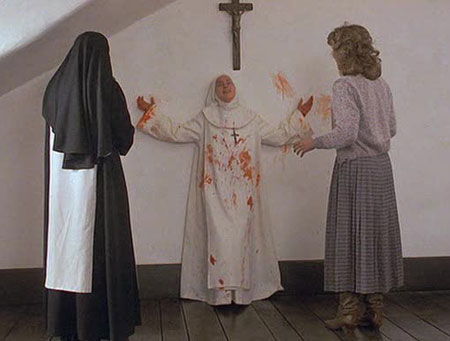
AgnesOfGod-BIGAgnes of God.  St. Agnes chose martyrdom at the age of 14 to giving up her virginity.  There are obvious correlations between her story and the Agnes in Peilmeier’s play.  But for those who don’t know anything about St. Agnes, the appellation “of God” helps to make Agnes’ purity clear to the audience.  If you play Agnes, you need to make purity part of her character; if you play one of the other characters in the play, you need to be aware of Agnes’ purity.  The names of the other two characters, Martha and Miriam Ruth, have Old and New Testament connections worth exploring:  Martha and Mary (a derivative of Miriam) are sisters in the New Testament, and Miriam appears in Exodus while the Book of Ruth is the only book named after a woman.

Doubt.  St. Aloysius is the Catholic patron saint of youth.  For Sister Aloysius to take his name, it says something about what matters to her and how she conducts her life.

The Little Foxes.  Regina is Latin for “Queen.”  Hellman’s choice of this name for her leading character probably speaks to both her bearing and her self-image.

Bright_Ideas_pestoBright Ideas.  Eric Coble’s black comedy is based on Shakespeare’s Macbeth.  Not only should you read Macbeth to understand all the references and correlations, the character’s names in Bright Ideas gives you clues as to who serves what function.  The leads, however, are not named after Lord and Lady Macbeth; their names reference other historical characters, and provide additional meaning to those roles.

Enchanted April.  Three of the characters in this play have names that may give some indication of their character’s nature:  Rose, Mrs. Graves, and Michael Wilding.  This naming convention is often used in comedies written prior to 1900, such as Sheridan’s The School for Scandal (e.g., Lady Sneerwell and Lord Backbite).Frankie & Johnny

Frankie and Johnny in the Clair du Lune.  “Frankie and Johnny” is an old ballad.  The correlation between the story of the ballad and the characters in Terrence McNally’s play may not be readily evident, but it is too famous a song for the choice of their names to be merely coincidence.  You need to figure out what McNally is telling you about the characters and their relationship.

No Man’s Land.  All of the characters in Pinter’s play are named after cricket players.  The obvious question is, “Why?”

Distant Fires.  Kevin Heelan’s play has three black men (Raymond, Foos, and Thomas) and three white men (Angel, Beauty, and General).  The first obvious question is, “What sort of name is Foos?”  Check the Urban Dictionary, there’s a variety of reasons why Heelan might have chosen this name for this particular character.  The second obvious question is, “Why are all the white men known by nicknames, and why do those nicknames reflect such definitive, one-dimensional concepts?”

The Wisdom of Eve.  No one names a character “Eve” by accident!  It’s up to you to figure out what the playwright is trying to tell you by referencing the couple from the Garden of Eden.

To read Part I, go here.

What’s In a Name? Part I

[I am traveling and seem to have left the rest of the series of posts I’m writing on rehearsing at home!  So I’m going to post on some unrelated topics until I get back home to the drive that has them.]

Sometimes a play’s title describes what happens in the play, but holds no mystery beyond that.  Many of Harold Pinter’s plays are named after an event, character, or place in the play (The Birthday Party; The Caretaker; The Room).  The Philadelphia Story is about journalists trying to write an article about a wedding that is taking place in Philadelphia.  The Gin Game is a play about two people in a senior citizens’ home who play gin rummy together.  Dial M for Murder is a clever reference to the letters on a telephone’s keypad, and follows a long tradition of using wordplay when naming murder mysteries, but has little deeper meaning.

But sometimes the title reflects the playwright’s theme or thoughts about the play or a character.  Let’s look at some play titles to see how this can work and why it matters to you as an actor:

Amadeus276Amadeus.  This play is about Wolfgang Amadeus Mozart and another composer of his era, Antonio Salieri.  Salieri is the protagonist, but the play is named after Mozart, a choice which reflects the plotline.  But Peter Shaffer doesn’t call the play “Mozart”.  Instead, he uses the composer’s middle name.  It’s worth asking, “Why?”  If you look at the Latin meaning of the name, “He loves God”, you probably have your answer.  But don’t stop there.  Why does Shaffer want to draw your attention to this, and how should the production as a whole reflect this knowledge?  If you are playing either Mozart or Salieri, how does this focus affect your performance?

lauraThe Glass Menagerie.  One of the characters in Tennessee Williams’ play has a collection of glass figurines, all of which are animals.  But is this the only reason for the title?  Laura is not the main character of the play; why should it be named after her collection?  Perhaps it refers to her family, or to humanity in general.  The unicorn clearly is symbolic; whom does it represent?  And why does Williams choose for the animals to be made of glass rather than wood?  Is the fragility or transparency of glass important?  Are all of the characters fragile, in some way – not just Laura?  If you decide this is what Williams intended, it will undoubtedly change how you play your character.  If you don’t observe this about the title, your Amanda or Jim may be a hardier person than if you do.

Bell, Book and Candle.  The title of this romantic comedy about witches refers to a method of excommunication for one who has committed a particularly grievous sin.  Those last three words need to inform how the leading character feels about her actions as well as the loss of magical powers.

Betrayal.  Harold Pinter’s play about an affair that reveals itself in reverse chronological order is obviously about betrayal.  An adulterous wife has an affair with her husband’s best friend, after all!  But the title reminds us to not get lost in the details of the romance, and to remember that it is, first and foremost, about how we betray those we care about.  At some point in the rehearsal process, you should look at each scene in this light, so that you keep this element front and center.

foxesThe Little Foxes.  In naming this play, Lillian Hellman references a biblical passage from Song of Solomon, which reads, “Take us the foxes, the little foxes, that spoil the vines:  for our vines have tender grapes.”  Perhaps she uses the adjective “little” to make the reference clearer, or perhaps she is saying something about her characters by using it.  The Hubbard family is obviously devious and greedy, but exploring this quote in its fullest (what or who are the vines and the grapes?) and letting it inform your character’s actions will enrich the production.

Rabbit Hole.  Lewis Carroll’s book, “Alice, Through the Looking Glass” turned “rabbit hole” into a metaphor for adventure into the unknown.  Understanding its use in that book gives you food for thought when performing this play.  Does just one person go down the rabbit hole, or do several people make that journey?  What is falling into the hole like for your character?  What can you, as an actor, do to give the audience a sense of that particular experience?

Master Harold and the Boys.  On the surface, the title of Athol Fugard’s play is simply naming the characters, but it does much more.  It presages the end of the play, warning you in advance that no matter what transpires between Hally and Sam, the young boy is the “master” and the adult males are, in this society, merely “boys”.  As an actor, you want that relationship to be an undercurrent throughout the play.

crucibleThe Crucible.  A crucible is a container which has a higher melting point than whatever is inside it.  Think of steel or glass being melted before being re-formed into something else.  John Proctor clearly is in a crucible, but perhaps most of the other characters in the play are as well.  If you are in Arthur Miller’s extraordinary play, what is your character’s melting point?  Are you transformed into something better or worse than what you were originally?  And how do you feel about that transformation?

To read Part II, go here.

Researching the Role: The Playwright’s Opinion

Writers, quite frankly, don’t know everything about their works.  They know more than you do, at least at the outset, and perhaps even on closing night.  But they don’t know everything.  This means that it is possible that even if they know more in general about their own play, you might know something specific that they have somehow missed.

typingHow can they possibly miss anything about something they have given birth to?  Because there are moments for every writer when his experience is that he is channeling his characters, when they speak without being asked to, when they do unexpected things.  When this happens, you have as good a shot at understanding what is going on for them as the playwright does; more, perhaps, because you haven’t started with the preconceived notions that he may have when he sat down at his desk to write.

Since characters have multiple layers and motivations, everything the playwright thinks about a character may be true, but what you think may also be true.  And sometimes it is entirely possible that the playwright thinks he wrote one thing when in fact he wrote another.  I recently spoke with a novelist about one of his character’s motivation in a particular scene.  His explanation took me entirely by surprise, as I interpreted the events very differently.  His explanation may have been what was in his head when he wrote, but that doesn’t mean it’s what he put down on paper.  If he had, I probably would have received that message on some level.

However, give the playwright credit (at least initially) for knowing what she was trying to do and keep an open mind about her opinions.  Sometimes a playwright will include notes about the play in the playscript, either before or after the script itself.  Don’t ignore these pages simply because there is no dialogue on them.  Make sure you’ve looked at every page in the script so that you’re sure you’ve read whatever the playwright wants to share with you, and do this in the first week of rehearsal.

A week or two into rehearsal, do a little research about the play and previous productions.  Don’t get obsessive about it, but if the playwright has been interviewed by anyone regarding the play, read his responses and give them consideration.  Girl-at-ComputerCheck out reviews of major productions and see if that cast was taken to task for not doing something or praised for being wise enough to do something else.  Yours is a different production; you don’t need to imitate what was successful elsewhere.  But sometimes a review will highlight what is particularly challenging in a play, and it’s a nice reminder of what you need to pay attention to.  All plays have inadvertent “traps”, I’m convinced, and if you don’t know what the “trap” of your play is, you’re apt to fall into it.  If the trap isn’t obvious to you or your director, a reviewer or a playwright may be able to point it out to you.

What do I mean by “trap”?  Well, that’s a topic for another day . . .

See Researching the Role here.