
It is. Just don’t assume it is.
Category Archives: Rehearsing
What Do Arbitrary Choices Look Like?
In class two weeks ago, the actors were busily making arbitrary choices about their characters.
It’s fascinating to watch. Despite talking about how unproductive this approach is, people instinctively use it. It’s almost an uncontrollable impulse. (I’m not criticizing my students for doing this. We all do it. Learning how to act is, in part, learning when we’re being arbitrary so that we can stop. When I point out to my students what they’re doing, they quickly recognize what I’m talking about and why it matters. Which is why they are such wonderful students!)
Arbitrary choices are the ones we decide on before trying them to see if they work. “This is what I should do here.” They don’t spring organically out of what actors call “the work”, but are intellectual choices we impose on our performances. It’s the “decider” in us looking for certainty. “There! Thank goodness, another problem put to bed!”
Deciding upon them in advance can prove fatal. We become so attached to them that we will give them up only if they prove to be disastrous. The moment we make the decision, we have closed ourselves off to ANY OTHER possibility, no matter how good it is. Our subconscious even stops working on the problem. It’s done! Solved!
 One actress, following the first read-through of a brand new scene, responded to my question about her gut reaction to the character by saying, “I didn’t really notice, I was busy trying to figure out where I should be laughing.”
Laughter is not something you should plan for unless the dialogue makes it clear that you have to laugh. Then you have no choice. Otherwise, laugh if, as the character, you genuinely find something to be funny. Don’t if you don’t.
I asked her about the times when she did laugh during the scene. Were they the “right” times?
Her: “Well, they were pretty much real laughs.”
Me: “No wonder they worked so well!”
Lesson: Real emotions are very effective on stage. Laughing was entirely appropriate to her character, so those real laughs worked. Artificially imposed laughs rarely are believable.
Another actress, who performed a lengthy monologue, opted to sit at one point in the middle of the speech and then sprang up almost immediately, standing or walking for the remainder of it. We talked about it afterwards.
Me: You sat down at one point . . .
Her: Yes, and it was a mistake.
Me: I’m not so sure it was. It actually seemed to suit the moment very well. It was the springing back up that
seemed out of place.
I suggested that there was good dramatic support for sitting for a portion of the monologue, but that there were a variety of options in terms of timing the sit and stand. At which point, she said, “I know! I should sit on THIS line.”
Maybe. Maybe not.
It is perfectly okay to say, “Let me try doing this here.” That’s a very different thing than saying, “I should do this.” Once you’ve tried it, you can determine its effectiveness. You can then try other alternatives and compare the results. In her particular situation, there were a variety of choices worth exploring. The line she selected was the most obvious choice – predictable, even – but that doesn’t automatically make it the best.
When you make intellectual decisions outside of the framework of actually running the scene, you are making arbitrary choices that have nothing to do with the emotional life of your character. It is an external you are strapping onto your character, whether she likes it or not.
If you find that choice through trying various options during a run-through of the scene, great. But if you choose it based on your intellectual assessment of the play, it will never work well, no matter how “right” the choice is. Like line readings, such choices have a foundation of quicksand that will give way at some point.
To read Isn’t the Obvious Choice Sometimes the Right Choice?, go here.
John Cleese on Creativity
Both of the following videos are well worth watching. After you’ve seen them, read my comments below — just a few things I’d like to highlight about what he says.
And then there is the longer 1971 talk:
Cleese notes that being creative requires a certain mood: a willingness to play like a child, exploring ideas not for any immediate practical purpose, but just for enjoyment. Kids do things for their own sake, without expectations of results. When you’re playing, nothing is wrong.
Cleese talks about open and closed modes, which is directly related to the concept of trial and error that I have mentioned. In the open mode, you are deciding what to try. You go to closed mode to try it, and back to open mode to evaluate its success. Creativity is a matter of toggling between the two positions, although acting requires that you keep one avenue “open” even while you are trying something in closed mode, and I’ll talk about this in the future.
Space and time, his first two requirements, are essentially about giving yourself permission to play, to be creative without the need to solve problems. Cleese suggests it takes a half hour to get yourself into open mode for starters, a time frame I concur with. This half hour is why I suggest that two hour rehearsals are really too short. Cleese’s audience is made up of businesspeople, and 90 minutes is probably as long as that group will find profitable, but acting is slightly different. I believe that 2½ hours is the minimum time to maximize the benefit for an actor. Three is great, if you can manage it, and a ten minute pause in the middle of a 3 to 4 hour rehearsal will not break the spell. Nor will a lunch break in the middle of a longer stretch.
However, while the entire rehearsal should be about “play” on some level, small segments of it can and should be set aside as “let’s just experiment with this one thing” time, giving the actors the freedom to explore while knowing that the production is still basically on track. This is a particularly useful approach in community theater, where actors are often results-oriented.
Cleese’s third requirement (also “time”) is what I have referred to as the “subconscious effect” (he calls it the unconscious, but we’re talking about the same thing.) Creative ideas sometimes need to marinate for a while before they can really germinate.
Cleese uses the word confidence for the fourth requirement, but I use the word courage. I want a stronger word than confidence to convey the importance of this. If you are particularly wedded to the idea that there is a Right, then you need courage, not confidence, to break out of that pattern.
To play is to experiment. To play well, you need to have the courage to fail. Courage to make mistakes. A willingness to be open to anything that may happen. But mostly, as Cleese points out, courage to sit with the discomfort — the absolute anxiety — of uncertainty until you absolutely have to make a decision.
If you can remember that when you’re playing, nothing is wrong, and that you have the ability to evaluate the success or failure of what you’ve tried after the fact, then it is easier to be courageous. While it feels better to make decisions, if you trust the process and wait until you really have to make decisions to make them (and the more you do this, the later you’ll be able to wait), you’ll find it is worth the wait. Which will then make it easier to wait the next time. Once you have experienced the benefit of waiting, you can start to move from courage to confidence.
It’s interesting that Cleese suggests that humor is that fastest way to get into the open mode. Perhaps this is why I laugh so readily during rehearsals, and try so hard to get my cast to laugh, too. Laughter is relaxing. At the very least, don’t take yourself or what you’re doing (even if it’s Medea) too seriously. It’s not nuclear war.
And lastly, Cleese says this about the Subconscious Effect: “This is the extraordinary thing about creativity: If just you keep your mind resting against the subject in a friendly but persistent way, sooner or later you will get a reward from your unconscious.”
It may not come in this rehearsal, or the next. It may show up in the shower on Friday. But it will come. Trust it, and it will come.
To read What is Creativity?, go here. To read What If I’m Not Creative?, go here. To read How on Earth Can I Be Creative as an Actor?, go here.
How on Earth Can I Be Creative As An Actor?
 Dictionary.com calls creativity the ability to transcend the traditional and to create something new. In other words, don’t settle for the obvious, the stereotypes, the ordinary. Don’t go for hackneyed line readings or hang on for dear life to the first decent idea that comes down the pike.
But something new? Really new? Well heck, if that doesn’t put pressure on you, I don’t know what will! So let me rephrase that in a way that will put a lot less pressure on you.
Creativity is about making something unique.
Fortunately, since you ARE unique, you are completely capable of creating something unique, as long as you stay true to yourself. That means avoiding all those obvious choices, because you know what? They aren’t new, and they aren’t you. They are copies of what you’ve seen before, in movies and on television, or on Broadway the last time you visited NYC. They are an imitation of things that impressed you on some level. But even at their best, they are an imitation of someone else. They aren’t uniquely “you”.
Let me repeat what John Cleese said in his 1971 presentation on Creativity: It is NOT a talent. It is simply a way of operating. A way of going about things.
Exactly how you go about being creative depends on your own personality type. Certain types of creativity are easier for each of us, and certain types harder. If you know what it comfortable for you, you can use it to your advantage, probably without thinking too much about it. And if you know what isn’t comfortable for you, you can intentionally go after it, because you’ll be inclined to avoid it otherwise. You expand your own creative potential when you work this way.
The most important thing is to recognize that deep inside you is a completely unique interpretation of any role you might play. It’s deep inside you. It’s not the stuff floating on the surface. What you’ll find there is whatever you’ve most recently absorbed from others, or the stereotypes. You’ll find the flotsam and jetsam.
We’re looking for sunken treasure ships.
It’s okay to start with the obvious, with the stereotypes. Use them as warm-up exercises. Use them to get them out of your system, to understand their limitations. Just don’t stop there. Keep looking for the sunken treasure.
Sometimes you can intentionally dive for it. This is called trial and error. You keep trying different stuff until you yell, “Eureka!” Sometimes all you do is open the hatch to the hull of the ship and get out of the way, and trust that the jewels will float to the surface in their own good time.
Avoiding the stereotypes and seeking out the less obvious alternatives is an act of courage, and some people find it easier to do than others. Trying things you think will fail or at the very least, aren’t sure will succeed is hard. Isn’t it a waste of valuable rehearsal time?
No. As Ben Franklin said, “Just because something doesn’t do what you planned it to do doesn’t mean it’s useless.”
Very often, the stuff that falls on its face helps you to find the thing that soars. Something you would never have found if you hadn’t tried that stupid idea.
To read What Is Creativity?, go here. To read What If I’m Not Creative?, go here. To read John Cleese on Creativity, go here.
What If I’m Not Creative?
 You’re human. You’re creative, by definition.
I hope the previous post goes some distance to convincing you that creativity isn’t just inspiration. The famous Thomas Edison quote on the matter is “Genius is 1 percent inspiration and 99 percent perspiration.” It’s not about sitting around waiting for something good to show up. It’s intentionally working toward your goal and creating opportunities for good stuff to happen.
Creative geniuses don’t just produce works of genius at their first attempt. Yes, apparently Edward Albee wrote Who’s Afraid of Virginia Woolf? in one sitting, but I guarantee you the play had been in his head for quite a while before that.
But even so, that’s the exception to the rule. For most of us, quality work is trial and error. We’ve all seem film images of the writer tearing a piece of paper out of the typewriter and crumpling it up, tossing it on a pile of one hundred similarly treated sheets and holding his head in frustration at his inability to produce one decent paragraph.
We’ve seen images of the composer at the piano, tinkering with a melody and not finding a tune worth keeping.
We’ve seen the tormented artist, unable to capture the light with his paintbrush in the way his eye sees it.
Why the heck do we think, as actors, that we can arrive at our destination any more easily?
I said this before, but it’s worth repeating: You just met this character. How can you possibly know what the RIGHT choices are (or even the BEST ones) until you’ve lived with the character for at least a few weeks and have learned something about him? Would you expect to learn everything you need to know about someone on a first date?
Of course not.
As actors, though, we rush to judgment. We are so scared that we won’t be ready in time that we lock choices into place as quickly as possible. In doing so, we close the door to our own creativity, to spontaneity, to surprise. We suck the life out of the character and the play when we stick with these early and invariably obvious choices.
Yes, the author churns out more words than he keeps, but finally, there IS a moment when he types “The End”, and the paper comes out of the typewriter with a flourish. Mozart, suddenly inspired, starts scribbling notes like a madman. And the artist springs out of bed and takes up his palette, sure of what his painting was lacking.
It is the element of surprise that keeps our attention as theatergoers. When we don’t know what’s going to happen next, we are on the edge of our seats. That’s not just a function of plot twists. When characters don’t follow the stereotype, we want to know more about them. If they do follow the stereotype – the well-worn path – there is no need to stay awake. We can let our attention wander without missing much. “Wake me up when something interesting happens.”
How do we find the something interesting?
Well, it’s this thing called creativity. And as John Cleese says, creativity is NOT a talent. It is a way of operating . . .
To read What is Creativity?, go here. How on Earth Can I Be Creative As an Actor?, go here. To read John Cleese on Creativity, go here.
Actor’s Etiquette: The Actor’s Job
 It’s all on your shoulders.
The quality of your performance is determined by three things:
- How much talent you possess (This is a fixed element. Training can bring out hidden talent; it can’t create it.)
- How much time you put into the work, especially outside of formal rehearsals
- How effectively you know how to use your personal and formal rehearsal time
There is no substitute for time. There are no real short-cuts in acting. Yes, good technique speeds things along and allows you to accomplish more as a result, which leads to better performances. But good acting still takes plenty of time, it’s just that now you know how to use that time to maximum effect.
Being a good actor is, as with most things, a matter of taking responsibility for your own stuff and not expecting someone to hold your hand through the process. If you’re reading this blog, you’re either an adult or you’re going to become one. That means determining what kind of actor you want to be and making sure that you do whatever you need to do to achieve that.
I’ve been doing this a long time. When an actor shows up at rehearsal or to class, I can tell whether he’s done any work on the play since I last saw him. I can tell whether it was work done earlier in the week or hastily done this afternoon. I can tell what kind of work he’s done – whether he’s just been saying his lines or if he’s dug into the character, and if the latter, what kind of digging he’s done.
Whether I’m directing or teaching, there is a limit to what even I can do with you if you aren’t bringing something to the table. THAT’S what you’re responsible for, as an actor. Like me in that play I talked about in the last Etiquette post (when I was playing adjectives, by the way – that much I can recognize in hindsight!), you are only going to be as good as you can be at this particular moment, and that is PERFECTLY ALL RIGHT. It’s where you are right now. It’s the best you can do.
But it’s ONLY the best you can do if you are really putting in the time and effort and doing everything you know how to do at this moment. That’s something the director simply can’t do for you. We might be able to nudge you in the right direction now and then. But we can’t do the work for you.
What Is Creativity?
 I’m going to shut up for this post.
I know. Can I even find it possible?
I’m going to let others speak. And then I’ll pick up the train of thought next time.
“It is a commonplace among artists that masterpieces are made in passing, not by the focused attempt to create one. That very attempt often skewers the spontaneous internal process, the inspired hunch or ‘fine madness’, that makes great art a happy accident that seems inevitable only in retrospect.”—Julia Cameron, Chicago Tribune, 1986.
“You don’t have to be a believer to recognize a moment of grace. By grace I mean those precious, rare times when exactly what you were expecting gives way to something utterly different, when patterns of thought and behavior we have grown accustomed to and at times despaired of, suddenly cede to something new and marvelous. It may be the moment when a warrior unexpectedly lays down his weapon, when the sternest disciplinarian breaks into a smile, when an ideologue admits error, when a criminal seeks forgiveness, or when an addict hits bottom and finally sees a future. Grace is the proof that hope is not groundless.”– Andrew Stillman, “Untier of Knots”, 12/17/13.
“I don’t just use bad writing excerpts as prompts for workshops. I also produce a tremendous amount of bad writing myself. In fact, if some poor graduate student were assigned to do an audit of my entire literary output over the past twenty years, this person—before killing themselves—would find that about 70 percent of what I write is dreck.
“And I know I’m not alone. If you go visit the archives of your favorite writer, as I did with Kurt Vonnegut several years ago, you will find a treasure trove of unpublished work. And, if you’re anything like me, you will be heartened by this discovery. It’s a great relief to realize that all those published writers we idolize aren’t cranking out epic prose every day at the keyboard. Sometimes, they’re stinking it up, just like we do. …..My basic theory is that most pieces of failed writing—whether stories, poems, or novels—are usually attempts to tell a story that the author simply wasn’t ready to tell yet.
“This is why so much of my bad poetry is clogged with overwrought language, because I’m stonewalling basically, trying to sound profound and beautiful rather than telling the truth. …..My own belief is that writing is too intimate and arduous an activity ever to perfect. We need to stop viewing our task as the production of transcendent work. Instead, we should emphasize the process as a gradual reduction of our (necessary and inevitable) imperfections.
“I realize how frustrating it can feel to produce weak work. Believe me. But I’ve also come to accept that bad writing doesn’t just mark a creative dead end. It’s a necessary station on the path to good writing.”– Steve Almond, Blog Post on AWP Website, Feb. 2014.
“Fine writing is never one to one, never a matter of devising the exact number of events necessary to fill a story, then penciling dialogue. Creativity is five to one, perhaps ten or twenty to one. The craft demands the invention of far more material than you can possibly use, then the astute selection from this quantity of quality events, moments of originality that are true to character and true to world. When actors compliment each other, for example, they often say, “I like your choices.” They know that if a colleague has arrived at a beautiful moment, it’s because in rehearsal the actor tried it twenty different ways, then chose the one perfect moment. The same is true for us.
“Finally, it’s important to realize that whatever inspires the writing need not stay in the writing. A Premise is not precious. As long as it contributes to the growth of story, keep it, but should the telling take a left turn, abandon the original inspiration to follow the evolving story. The problem is not to start writing, but to keep writing and renewing inspiration. We rarely know where we’re going: writing is discovery.”– Robert McKee, Story, 1997.
A few thoughts from John Cleese:
“…the most creative professionals always played with a problem for much longer before they tried to resolve it. Because they were prepared to tolerate that slight discomfort and anxiety that we all experience when we haven’t solved a problem.”
“Now, the people I find it hardest to be creative with are the people who need, all the time, to project an image of themselves as decisive. And they feel that, to create this image, they need to decide everything very quickly, and with a great show of confidence. Well, this behaviour, I suggest sincerely, is the most effective way of strangling creativity at birth.”
“And if while you’re pondering, somebody accuses you of indecision, say: ‘Look, babycakes, I don’t have to decide until Tuesday, and I’m not chickening out of my creative discomfort by taking a snap decision before then, that’s too easy.‘ So, to summarise, the third factor that facilitates creativity is time. Giving your mind as long as possible to come up with something original.”
And I’ll leave the final words to Thomas Edison:
“Negative results are just what I want. They’re just as valuable to me as positive results. I can never find the thing that does the job best until I find the ones that don’t.”
To read What If I’m Not Creative?, go here. To read How On Earth Can I Be Creative As an Actor?, go here. To read John Cleese on Creativity, go here.
So How Do You Avoid Line Readings?
 Being aware of when you are using them and when the reading is showing up organically is helpful. “Organically” is a highfalutin’ word that I hate on one level, but is the only way I presently know to describe the difference with coming at a role externally, through a line reading, versus internally, through the unprejudiced exploration of a character. It’s a learned ability, but when you achieve it, it’s very helpful.
Questioning yourself is also useful. At some point down the road, I’ll talk about how I vet my own performances to make sure I’m not unintentionally stuck in a line reading. (Yes, I’ve been acting for longer than I’d like to admit, and I still need to monitor myself for this potentiality, and always will.)
But both of those alternatives are advanced stuff. Where do you start?
For one thing, learn to memorize your lines by rote. That is, just memorize the words themselves, without consideration for how they should be said. (At some point, I’ll create a video which will demonstrate this process.)
But you can also avoid them by doing what I’m going to suggest is the real function of and way to handle the first half of the rehearsal period:
Trial and error.
Intentionally say the line differently each time you rehearse the scene (or at least some of the times you rehearse the scene, until you run out of alternatives). Because you aren’t doing exactly the same thing every time, your brain has nothing yet to memorize. (I’ve got a post coming up on your subconscious, which reiterates how frequency and repetition become reality, whether you like it or not. Or you can check this post out, for the introduction of the concept. Which is really very pertinent and worth reviewing.)
[Also, telling you to “intentionally say the line differently” is perhaps a little glib and apt to be misunderstood, but I don’t want to get bogged down in the details right now. We’ll explore what “trial and error” really means at some point in the future.]
Your brain only memorizes what is repeated. It understands frequency. Nothing else gets through its filter from the outside world.
Your subconscious knows things you don’t realize it knows, and that can be helpful to an actor. But that’s a different matter. When it comes to new data – that is, new lines to memorize – your brain relies on the frequency of the input.
Of course, there is a more important reason for using trial and error, and I’ll talk about that shortly. But this is a nice side benefit of the process!
To read Line Readings and Why They Don’t Work, go here. To read Where Do Line Readings Come From, Anyway?, go here.
The Difference Between Impersonation and Acting
There is an ongoing debate among actors as to whether it is better to start with externals and move to internals, or vice versa.
It doesn’t really matter where you start, as long as you approach the internal aspect in an “organic” way. Whatever triggers that for you is fine, if it works.
Years ago, Paul Muni and Laurence Olivier were among the best actors of their generations, and both began with externals. “What sort of nose does my character have?” Truthfully, they fall a bit short as actors by current standards. Their approach seems like artifice to today’s audience.
Meryl Streep has received criticism throughout her career for paying meticulous attention to hair color, accent, etc., the implication being that it is all about externals for her. The thing which keeps some people from feeling warm and fuzzy about her is probably more a function of the characters she has played than her approach as an actress. In addition, Streep’s chameleon nature is under a microscope in film in a way that it wouldn’t be on stage.
You can develop an honest performance by starting with externals. Joanne Woodward has acknowledged that she starts with what her character looks like, what sort of hat she wears. Woodward is entirely believable in her roles and won a well-deserved Academy Award for The Three Faces of Eve, so she has used this approach to great success.
Probably more actors start with internals than externals, but there is NOTHING WRONG with feeling that you start with externals, as long as you do it properly and dig a good foundation as well.
In fact, I think you’ll find that anyone who starts with externals and does it well is also pursuing the internals simultaneously. He just starts paying attention to externals earlier than some other actors do.
Which brings us to the matter of impersonation, which is not the same thing as acting.
For people who make a living as an impersonator, like Frank Caliendo and Rich Little, capturing the unique identifying characteristics, tics, and vocal peculiarities of well-known personalities and casting them in a humorous light is much more important than creating a completely believable character. They are comedians, not actors. Believable isn’t the point for them; recognizably accurate is.
Any time you play a real, historical person on stage, particularly people we’ve seen and heard on video or film, you risk becoming an impersonator rather than an actor. It is easy to be so concerned about being faithful to their external nature that you forget to do the extra work required to find the inner person who manifests those externals.
It’s not easy – playing real people on stage is very challenging, just as talking directly to the audience is. Combine those two things in a one-person show, and you’ve got your work cut out for you. Line readings become a very strong temptation in this situation. After all, it’s unnatural to speak to people who never talk back, who don’t respond “in character”, because they aren’t characters, they are audience.
One-person shows are a peculiar combination of acting and stand-up work, especially the comic portions of the show. Only the best actors can pull them off in a way that makes the audience entirely suspend disbelief, because “staying in the moment” during them is so damned hard. Without that, we simply make a tacit agreement to be entertained as opposed to moved. We accept the mimic and laugh at the humor inherent in the lines. In other words, we laugh at the jokes, not at the character and his situation. It’s more about entertaining than it is acting.
When you choose to play a stereotype, you risk impersonation. All right, no one “chooses” to play a stereotype, but that doesn’t mean that it isn’t something we can end up with without realizing it. Stereotypes are always based on externals and generalized adjectives. There is some bit of truth behind them, or they wouldn’t be stereotypes. However, if you don’t discover what makes this individual’s stereotypical qualities unique, you won’t be an actor; you’ll be an impersonator.
I don’t think I’ve yet explained the difference between “over-actors” and “under-actors” (we all are one or the other; learning to act is about finding the balance between the two). But I think “over-actors” are more susceptible to mimicking and the line readings that can result, because they are more concerned with “entertaining” the audience than “under-actors” are.
[I am framing this piece with Youtube video links to two of my favorite one-character plays about famous people, with actors who make it look easy: The Belle of Amherst, with the incomparable Julie Harris, who was nominated for more Tony Awards (ten) and won more (five) than any other performer; and Mark Twain Tonight, which Hal Holbrook has been performing for 47 years. Both actors won Tonys for their performances in the original Broadway productions (Holbrook has had three Broadway runs of the show.) The link to Mark Twain Tonight is just a promotional piece, as the full video from the 1967 television production isn’t the best quality, but you can find it on Youtube as well.]
Where Do Line Readings Come From, Anyway?
Good intentions, mostly.
 We’ve been reading fiction and/or plays for years. We’re accustomed to hearing the dialogue in our heads. What is simpler (and truer, we think) than to simply parrot that internal reading to an audience?
And often, it sounds pretty good. As I say, if you’ve got good instincts, you may well hit on a very good way to say the line. It might even be the “best” way to say the line. (Not “right”, just “best.”)
There’s just the pesky problem that using the line reading without first discovering what is causing it generally leads to an underdeveloped character.
Sometimes line readings show up out of a desire to please the director. We commit to them early so that the play sounds good in rehearsals. We don’t want the director to panic, to think we don’t know what we’re doing, to not cast us again.
Sometimes they come about because we want to impress the rest of the cast, to show them that we can keep up with them. Or because we want to help them. The earlier we give them “good stuff”, the more they’ll like us. Or the better their performance will be, because they’ve got something “good” to play against.
Sometimes they come about because we “act” the role as we are memorizing lines, instead of just memorizing the words without intonation. It’s easier to memorize lines this way. But it’s like song lyrics. There is a musicality to intonation. And once it’s in your head, it’s in your head. Just think about those songs you remember from decades ago!
But sometimes they come from our lesser selves, too. We’re terribly impressed with ourselves for knowing how to say these lines, and we want to show off. Or we are panicked that we won’t get the play ready in time, so we try to set things in stone early, so we can really hone them. (The fine-tuning can’t happen without the proper foundation, but we don’t realize that.)
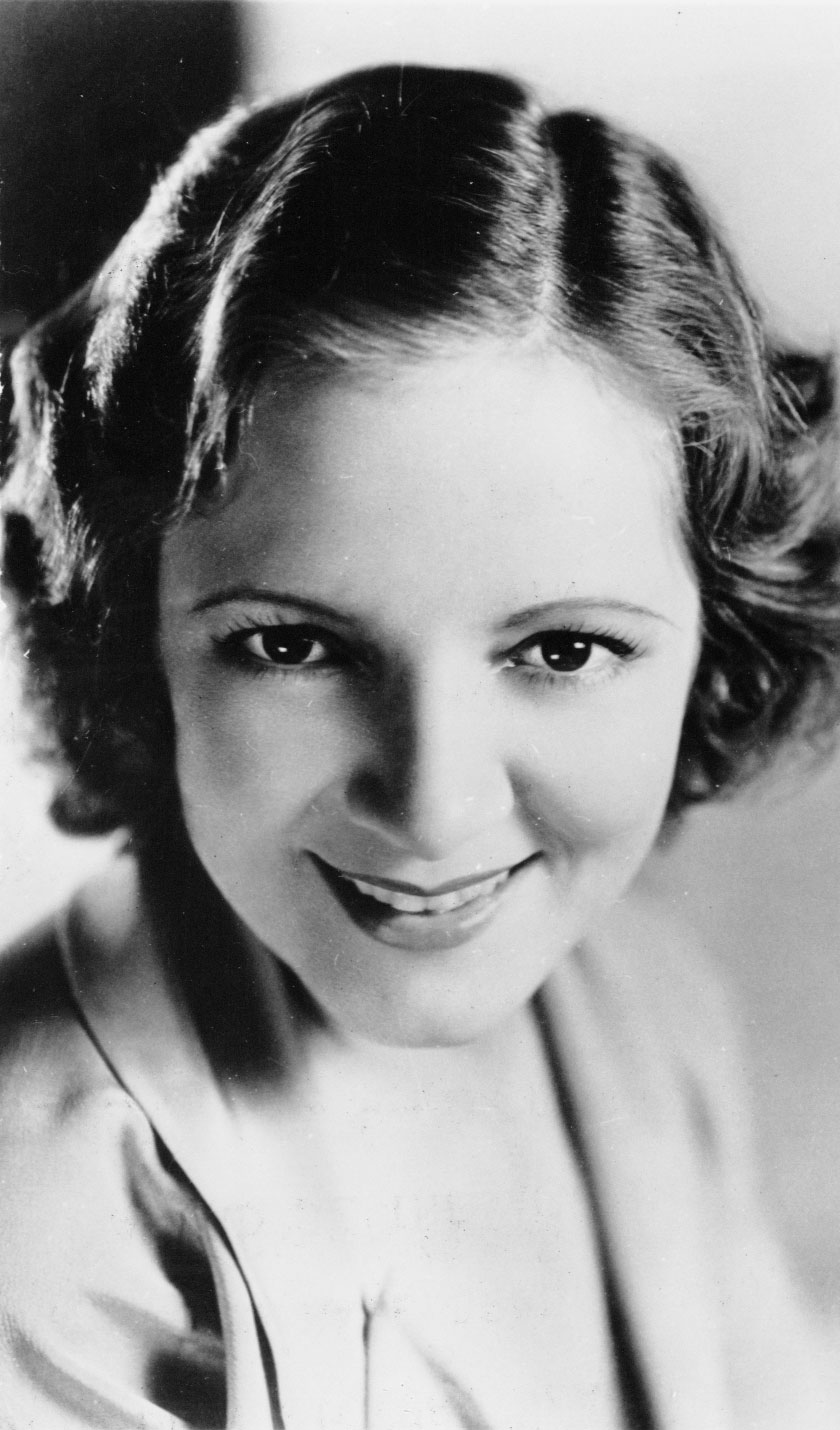 Incidentally, I’ve been guilty of all of the above at some point in my life. Another golf analogy: you never have to worry about playing with a really good golfer, no matter how bad you are yourself, because every good golfer has been through what you have. And we have long memories.
Ditto with acting. Despite the fact that I have a lot of natural talent and very good instincts, there isn’t a mistake you can make that I haven’t made myself. That’s how I learned.
So it’s perfectly okay to make the mistake of using line readings. As I said in class, Helen Hayes used them early in her career (and to great success, too), until a very honest, no-nonsense director called her on it in her fifth Broadway lead, which drove her to acting classes.
The important question is: Are you willing to give it up in favor of an unknown that will serve you better? And are you willing to trust that it will serve you better?
To read Line Readings and Why They Don’t Work, go here. To read So How Do You Avoid Line Readings, go here.
 Spacious Acting™