Harnessing Your Subconscious: Layering a Character

Okay, back to the acting tools.  At long last.

The recipe for this yummy lasagne can be found at http://www.simplyrecipes.com/recipes/lasagna/

The tools I am introducing you to are simply ways to input good, focused, intentional data into the computer that is your subconscious.  Practical ways of using the open/closed modes of creativity.  Your subconscious, brilliant synthesizer that it is, discards what doesn’t work and keeps what does.  You don’t have to tell it what to keep most of the time, not that it would really understand anyway.  It just knows what works in context.

Give it plenty of data, and it will know what works in the puzzle that is your character and what doesn’t.

But remember, it does understand frequency.  It equates frequency with desire, and it considers your desires to be more important than what works.  So if you do a scene the same way every time, it will accept your choice.  It will try to compensate as much as it can for any choices that don’t work, but it has limited abilities in this regard, just as it does with your golf swing.  Make a lousy golf swing, and your subconscious can’t make it perfect.  It will just help to give you better results than you would have gotten if your subconscious hadn’t interfered on your behalf.

So how do you run a scene over and over in rehearsals without encountering the frequency problem?

Simple.  You keep coming at the scene from different angles.  You intentionally avoid doing it the same way every time during the first half of the rehearsal period.

If you can successfully “stay in the moment” – which, as I’ve said elsewhere, is much harder to do than you probably imagine – then by definition, what you’re doing will always be different.  But “staying in the moment” in the first rehearsals isn’t enough.  Later, yes.  But early on?  No.

A really interesting, creative, complex characterization is composed of “layers”.  When we talk about people being complicated, we liken them to onions.  Every time you peel away another layer, you find some different and unexpected aspect to their character underneath.

lasagne 4As an actor, you build a character in reverse, by putting down layer after layer.  You’re taking an unfinished piece of furniture and doing some complex faux finish work.  You sand it, you prime it, you sand again, you paint, you wipe, you paint again, you distress it, etc.  But you put down those layers one at a time.  You examine different aspects of your character’s relationships, needs, worries, desires, etc., individually – with your conscious brain (aided by your subconscious) – but you let your subconscious put the layers together.

When you are examining the components of a given layer, you are free to ignore the other layers.  When you are able to do this, you are giving high quality, focused attention to whatever you’re working on.  Whatever you’re ignoring this time, you’ll pay attention to some other time!

To read Using Tools to Build Layers, go here.



How the Open/Closed Modes Work for Actors

John Cleese talks about open and closed modes, which I’ve noted is what I’m talking about when I say “trial and error.”  (I haven’t been able to find the source for this terminology, if it was originated by someone other than Cleese.)  The modes are very useful in terms of understanding how trial and error works, especially for an actor.

While you don’t want to start rehearsals by saying, “I should do this here!”, it is perfectly okay to say, “Let me try doing this here.”  That’s an open mode decision.  You’re open to possibilities when you say “try.”  Failure or success is not the issue.  We’re just trying something.

Classical_Brainstorming_and_Double_BrainstormingOpen mode is about figuring out what to try.  Brainstorming.  Think of ad execs, sitting in a conference room, throwing around every idea they can think of, many of them stupid, while trying to get pencils to stick in the ceiling tiles.  Saturday Night Live writers toying with skit ideas until they find the ones with the most potential for this week’s show.

That’s what the cast and director should be doing at early rehearsals.  (You can also do some brainstorming on your own time, and bring your ideas of things to try into rehearsals.)

In closed mode, you take the idea you came up with in open mode and take them for a test drive.  (If you’re an SNL writer, this is when you sit down and turn the skit idea into a script.)  You give it the old college try, fully committing to that choice when you run the scene.  Then you go back to open mode, and say, “In what way did that work?  In what way did it not succeed?  What else can I try?”

Note that you haven’t said, “Yeah, I think that works.  Next?”  Instead, you’ve said, “Okay, I know what impact that has.  What else can I try?”  Now you go back to closed mode with the “what else”.  You try as many alternatives as you can think of, and each time you’ve completed the scene, or beat, or whatever, you go back to open mode and evaluate it for pros and cons.

You may not be able to try all the ideas you’ve got for a scene in a single rehearsal.  You have to try out your ideas within the context of how your director wants to use the time.  If you are very confused about your options and want to go through them all in one night, tell your director.  He may be able to accommodate you.  If not, you just try them out as you have opportunities to run the scene.  You’ve got plenty of time.

Once you’ve tried out all the ideas you can think of, you have good information on which to base a decision.  You can choose one of the alternatives, or you can say, “Well, this is the best one I’ve got so far, but it’s not as good as I’d like.  Maybe I’ll find something better down the road.  I don’t really have to choose yet, so I’m going to just put this on the back burner for a while and see if my subconscious can do anything with it.”

Even if you do choose one of your alternatives, keep an open mind.  Something better might pop up, even if you aren’t actively looking for it.  Just be open to it in case it does come knocking.

There is another sort of “openness” you need to maintain even in closed mode, and that is the openness related to staying in the moment.  It’s an ability to recognize when something new and unexpected has arrived, and make room for it and respond to it.  That particular gate needs to always be left open.

Can’t I Make Any Decisions?

DECISIONS-DECISIONS1Of course you can, and you will.  There are three different ways decisions get made:

Sometimes conscious choices that have to be made.  This doesn’t mean that you can’t change them down the road if you realize there is a better alternative.  Blocking choices are an obvious example.  We’ve got to get you off stage somehow, so we explore the options we think are available and choose from among them.  We may revise it later, but we’ve got some place to start.

When it comes to comedic action, I do a lot of exploring in rehearsal and choose the funniest alternatives.  I once directed a play that had a young woman sneaking through the window of her own apartment in order to spy on her roommate.  We worked to find all the ways we could to make it difficult for her to do so and comic ways for her to overcome the difficulties.  The exploring happened over a number of rehearsals, and with each rehearsal, the bit got longer and deeper and funnier.  Explore, then choose.

These decisions often have to do with storytelling.

This is one of the times when the director is invaluable as a third eye:  Yes, that works.  No, that is too small for the audience to be able to read clearly.  What if we do this instead?  Or even better, what if we try . . .?  Yes, that’s good.  I like that.

It’s intentional, conscious decision-making, but it comes out of trying alternatives.  It’s for the actor to say, Yes, this is emotionally true and I can play it, or No, we need to find something better.  But we can choose something that is dramatically interesting, that tells the story as well as we think it can be told right now.

The second sort of decision is when you’re rehearsing and a moment happens and we recognize its goodness and say, “Eureka!” or “Thank God.”  Moments when we know that something has fallen into place the way it should.  Again, it doesn’t preclude the possibility that we can find a way to make it even better.  But we know we are moving in the right direction, and so we choose to stick with it, for now at least.

The third sort of decision is the one that just seems to make itself, over time.  This is your subconscious at work.  Just keep providing it with information and trust that it will do its job.  Most of your decisions will be made this way.

What if you find, three-quarters of the way through rehearsals, that there are decisions that it hasn’t made?  Now you can feel free to make them consciously, and spend the rest of your rehearsal time to really making them work.  They are decisions that have not been rushed to, that have considered everything you have learned about the character up to this point.  You aren’t forcing anything on to your role.  Rather, the role has revealed itself to you over time so that you can make the best choices possible.

To read How to Make Decisions About Your Character, go here.

Actor’s Etiquette: Being Creative in an Ensemble

etiquette_thingsyouneedtobetoldI hope that my recent posts on creativity indicate that coming up with ideas and trying them out in rehearsal is a good thing and to be encouraged.

So how do you offer ideas if you aren’t supposed to do anything that another actor can interpret as you telling him what to do?  Everyone talks about “Ensemble Acting” as if it’s a good thing to do.  If I’m part of an ensemble, shouldn’t voicing my opinions about the play as a whole be acceptable?

Yes, and no.

First, ensemble acting primarily implies a certain equity among actors strictly in terms of their importance to the piece.  In ensemble acting, there is no obvious “starring role”, and this equity carries into the way the actors work together, too.  Actors accustomed to working together may be able to respectfully generate ideas in a brainstorming sort of way that offends no one, and if the ideas are offered up without any one idea being strongly advocated by an actor who isn’t the one enacting the idea, it’s all good.  But that’s the sort of thing that comes over time, typically in resident companies.

But here’s the truth about ideas. If they do involve you, just do your part of it and the rest will come.   If you throw something new and inventive to your partner, she’ll have the chance to respond to it in whatever way she likes, which may be better than your idea.  Or maybe she’ll find your suggestion on her own, simply because you have given her something good to work with.  That is all that is required most of the time.  Experiment as much as you like, but don’t demand a certain response to your own behavior.  Your own creativity encourages other people to follow you.

Sometimes an actor may be frustrated and be open to general help with his problem.  In that case, you can perhaps gently say, “May I offer an idea?  I don’t know if it’s any good, but . . .” or “I have a thought, but I don’t know if it will work.”  If you are invited to give your thoughts, you may, but do so in such a way that it puts them under no obligation to take your suggestion.  State it simply and leave it at that.  Don’t argue on its behalf, and take its rejection gracefully.

Ensemble work also means being generous to the other people in the cast.  But that’s another topic . . .


How to Make Decisions About Your Character

chrysanthemumBefore I get into how to use trial and error effectively (and why it matters) in the first half of rehearsals, let me answer the questions that have probably flitted through your brain by now, if they haven’t taken up permanent residence:

“But I have to make choices eventually, don’t I?  Ultimately, even if I’m choosing what is ‘best’ rather than what is ‘right’, I have to determine what is ‘best’, right?  So how do I do that?  And when do I do it?  When is it safe to make choices without worrying that I am choosing the wrong ones?”

Truthfully, I’m not sure how many active decisions you need to make if you are working properly.  Try enough different things often enough, and those decisions will start to make themselves.

Let’s say you’re working on Scene 1.  You try it three or four different ways, and they each have their merits.  Should you weigh their merits, debate the pros and cons, and make a choice to use Option C?

Not yet.  No need to, yet.  You’re still in the early days of rehearsal.  There’s still a ton of things to learn about the character.

Characters don’t reveal themselves easily.  If you think they do, then you’ve probably chosen a stereotype.

No, characters reveal themselves over time, over the course of weeks, as you read and reread the play.  As you rehearse each scene again and again.  The more you review the play, either through study or performance, the more it will open itself to you, in the same way that a chrysanthemum moves from a tight bud to a fully open blossom with a hundred petals revealed to you.

As you work on each scene, trying a variety of approaches, a pattern will start to emerge.  You’ll start to see some consistencies in the character from scene to scene.  You’ll start to see how a character trait in one scene is more fully developed in a second scene.  How something that happens later in the play reveals something about your character in an early scene.  That something which was confusing to you is suddenly explained by a line you never took much notice of before.

By remaining open to possibilities for longer than you may be comfortable with (thank you, John Cleese), you will discover that the possibilities that don’t work will simply fall by the wayside.  It’s like letting the chaff blow away in the wind.  Give the wind enough time, it will reveal the wheat to you.  What you will be left with is a focused performance with both adequate consistency and surprise.

Decisions get made for you over time without you having to do much about it, if you’ve explored sufficiently.

To read Can’t I Make Any Decisions?, go here.

Equus, Part III: The First Five Minutes

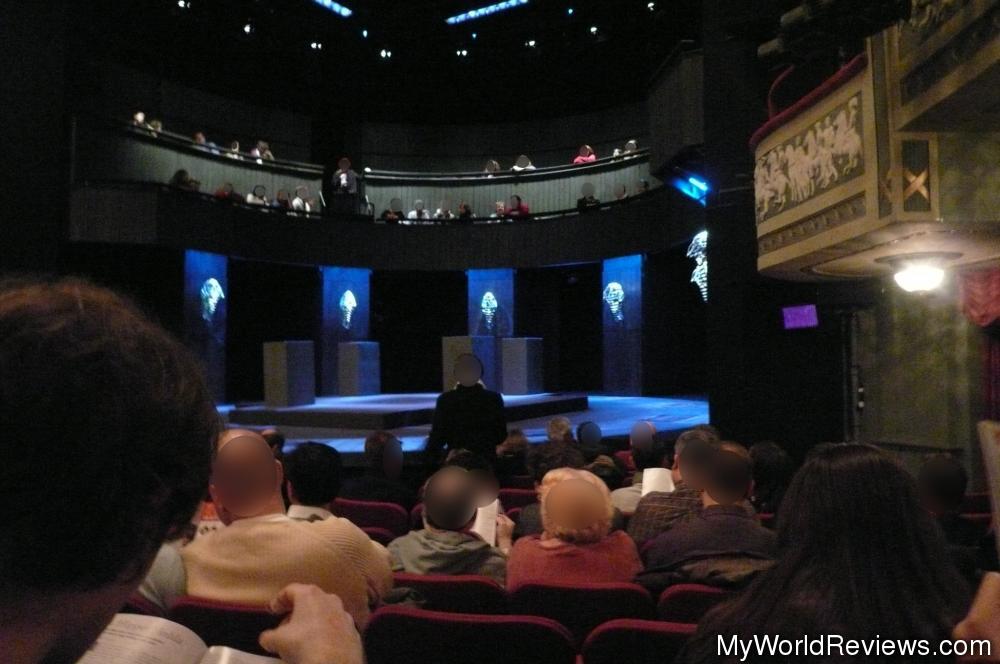
equus set

The major concern that impacted how my student interpreted the opening monologue in Equus was a need to grab and hold the audience’s attention in the first five minutes of the play.   I agree with the premise in principle.

Should you, as an actor, concern yourself with this?  Honestly, I think it’s the director’s responsibility.  Your responsibility is to make your character a believable person who fairly represents the playwright’s intention.  If you do that and the script is a good one, then the matter of “is the audience going to stay awake for the play” probably won’t arise.  If it does, the director will notice and correct it.

In a quality script, the playwright has eliminated this problem.  Peter Shaffer is one of the best British playwrights of the 20th century.  Equus won a Tony, a Drama Desk, and a Drama Critic’s Award.  It’s very likely that my student was worrying needlessly, but let’s not take anything for granted, and talk about why the script works in this regard.

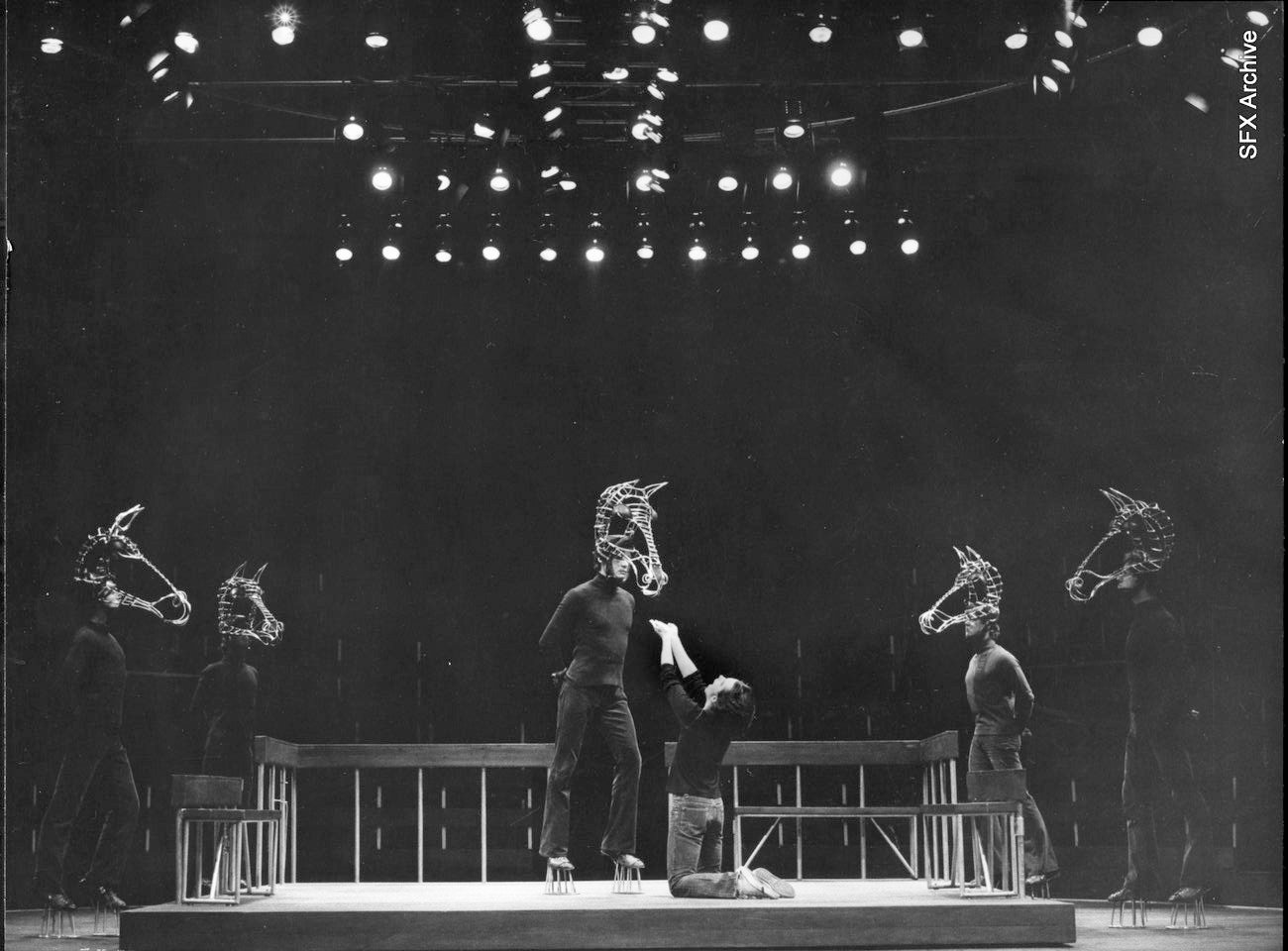
First, Shaffer prefaces the script with some Author’s Notes about the staging.  The photo above is from the recent Broadway revival, and it is loyal to the playwright’s concept in the important ways.  The original Broadway set is below, with the “boxing ring” described by Shaffer.

equus original

Shaffer asks that the entire cast sit on benches behind the boxing ring throughout the performance and enter the ring for their scenes.  When the horses enter the action, the actors playing them rise from the onstage bench and strap on one of the horse heads that hang around the perimeter.  At the start of the play, Dysart sits to one side and speaks to the audience while Alan and Nugget embrace center stage.

The 1974 photo shows you what Nugget looks like.  This highly theatrical and creative imagining of the horse captures the audience’s attention from the moment the lights come up.  All the actor playing Dysart has to do is not lose the audience’s attention in the three minutes between Nugget’s exit and the revelation that the boy embracing him blinded six horses while tending them in the stable.

Shaffer’s gives Dysart a wonderful opening monologue, one that raises more questions than it answers.  Dysart is clearly a man in pain, at a crossroads we don’t yet understand.  He uses words like “lost” and “intolerable” to describe himself, providing intrigue.  Equus plunges us into suspense on a number of levels almost immediately, and when we learn about the blinding at the five minute mark, we are firmly hooked.

This frees the actor playing Dysart to simply play the truth of this man’s life.  At least, this is where he should start.  A month into rehearsals, once he begins to get a good handle on who Dysart is, the director can evaluate whether the first five minutes is strong enough to grab the audience.  A good actor can make the necessary adjustments in a rehearsal or two.  But in the early days of the production, you want to throw yourself into what your character is feeling.

Does the actor need to go out of his way to make Dysart likable?

There is nothing in the script that makes Dysart unlikable.  You may or may not want to have dinner with him, but audiences empathize with good people in painful circumstances.  Make him a real human being with real feelings and needs, and the odds are very good that he will be likable.

What about intentionally playing the humor of the first half of the monologue to deliberately contrast with the serious tone of the second half, as my student did?

The opening of a play is not just about grabbing and holding the audience’s attention.  It establishes the world of the play as well as its tone (hopefully, your director defines both for you; in scene class, you need to figure that out yourself.)  As an actor, you must be faithful to both and not sacrifice either in the name of making yourself well-liked by the audience.  Humor should be injected when it is appropriate, not for its own sake.

The solemn and almost sexual ritual between Alan and Nugget takes place during the first half of Dysart’s monologue.  Use too much or the wrong sort of humor, and you risk mocking this moment, violating the sacredness of what happens between the boy and horse in the rest of the play.

Equus is an intriguing and moving drama, one that doesn’t end on a hopeful note.  It’s not a laugh fest.  All dramas typically have moments of humor, and I encourage you to find and play all of them in order to give your audience some stress relief, BUT you want to discover the tension of the scene first.  Only then can you determine if there is pressure that must be relieved.

We want to entertain the audience, to get and hold their attention.  But we don’t want to make choices that aren’t in keeping with the play.  That’s where you have to start.  When you focus on “likable” and “how can I grab the audience’s attention”, you’re going for product, not process.

I don’t know if humor is appropriate in that monologue or not.  It’s certainly worth investigating.  However, deciding to play up the humor to make the character likable without first examining the character to see if that choice is appropriate is an arbitrary choice.  You can’t choose unless you have options.  Use your rehearsal time to discover the options.  Then, and only then, can you make the best choices.

To read Equus, Part I: The Three Questions, go here.  To read Equus, Part II: Poetic Language, go here.

Actor’s Etiquette: There’s a Director of This Play, and You Should Listen to Him

9780520267848Directors have a number of responsibilities regarding the production that are different from yours as an actor.  Among them is the responsibility (and right) to determine how to generally interpret the play, which includes his vision for it and the tone the production should strike.

You may not agree with his choices, but you have to make your way to being at peace with them, or the production will suffer.  You can discuss your opinions with him, if you differ in a material way.  You may find you aren’t really far apart; you’re just using different language.  Or you may find he’ll appreciate your input and adjust his vision in some way.

But you may just have very different views, and in that case, he wins.  Ties always go to the director.  This means that it is your job to listen carefully to what he has to say and to try to adjust your own thinking to meet what he is asking for.  Lecturing him on what YOU think is right is only going to create bad feelings.  Take it too far, and the director may wonder if he can ask you to do anything without you putting up a fight.  (I’ve seen this in action.)

Even differences of opinion about small character choices should be dealt with this way.  Yes, you know the character better than the director does.  Eventually.  A good director, if he’s done his homework properly, knows more about your character initially.  My actors start to overtake me in this department somewhere around the halfway mark.

If a director makes a suggestion to you about your character, listen with an open mind.  Trust that he has a reason for it, and that it has something to do with the fact that he is seeing how what you are doing is playing out in the house.

It’s not always easy to do this, I know.  When a director makes a suggestion to me, sometimes I immediately know that he’s right, and all is well.  Sometimes I am in a generally receptive mood and consider it and we have a nice conversation about it.  Sometimes it sounds to me like an idiotic idea, but because I am in a receptive mood, I do my best with it.  If it’s really idiotic, it will probably become apparently in playing it.  If it doesn’t and he still seems attached to the notion, we can now have an honest discussion about its merits and I can politely and reasonably defend my opinion.

And sometimes my worst self emerges and I have a kneejerk reaction that sounds something like this:  “No, my character wouldn’t do that.”

These are words that should never be uttered.  They will, and I’ll probably be one of the actors saying them.  But they shouldn’t be said.

Don’t assume that suggestions from the director are inflexible mandates.  They may be, but they won’t always be.  So go ahead and try what he suggests and see if there is any merit to it.  You’d want the same courtesy if you suggested something; extend it to him.

When my bad self rejects an idea, I always end up considering it later.  “Later” may mean five minutes, and if it does, I make sure I respond to the director before the rehearsal is over, and tell him that I’ll try his idea the next time we do that scene.  Sometimes I think about it overnight, and I’ll talk to him about it at the next rehearsal.  The important thing is that I get back to him about his comment.  Integrating it without acknowledging that is what I am doing isn’t enough.  I need to keep the lines of communication with my director open, and to show him that I respect his input.

Most of the time, I end up realizing that he has a point, and that whatever he is suggesting is more creative and interesting than what I’ve been doing.  It’s easy to get stuck in a rut, and he is throwing me a lifeline.  If I can’t come around to his way of thinking, the time between rehearsals gives me a chance to figure out how to explain my objection to my director, which may open up new possibilities for us.

The director’s “third eye” is critical to a good production.  Trust it.  At the very least, respect it.

Equus, Part II: Poetic Language

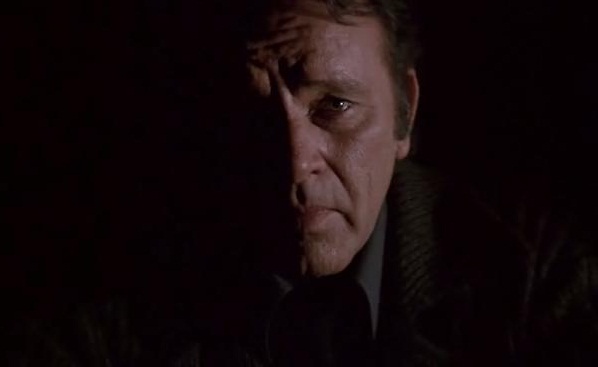
equus burton

I am in complete sympathy with the actor about not feeling up to par against Richard Burton when it comes to speaking the poetic language in Equus.  If you don’t feel you have the resonant, deep voice that Burton possesses, or the hypnotic charm of Anthony Hopkins’ tenor, feeling inadequate is completely understandable.

Ignoring that aspect of the writing this early in rehearsals isn’t really a problem.  Going for the emotional connection to the material is the primary concern when you first pick up a script.  Getting to know who your character is and why he responds to his circumstances as he does is more important than the language that he uses.

There is plenty of time to give close attention to the nature of the language later in the rehearsal period.

On the other hand, I’m not sure that you should entirely ignore it up front.  My own inclination when I deal with poetic plays is to pay attention to the language for its own sake first, for a single reading.  To say the words out loud, to feel them in my mouth, to hear the sounds mingle, to let the images they create rise up before me.

I don’t read much poetry.  It’s not my thing.  But poetic prose grabs my attention.  There is an element in it that doesn’t exist in non-poetic prose and which cannot be separated from the meaning of the words.  They are entwined.

What is poetic prose?  It’s when a character speaks in a way that people don’t ordinarily.  Newspapers write to an eighth grade education level, and most of us use that same vocabulary in everyday speech.  But poetic language is different.  It uses words and phrases like “embrace”, “straining to jump clean-hoofed”, and “one more dented little face”.  When was the last time you spoke like that?

There is a reason why Burton and Hopkins have played this role.  They are unafraid of poetic language.  They are happy to savor it, to lay it out for your inspection.  They understand its power.  It is subtext on steroids.

Their success lies not so much in their vocal instrument as it is does in their appreciation of the power of language and their willingness to let the words work their magic.  That is something you are capable of doing, as well, no matter what sort of voice you have.

Part of the key to understanding Dysart involves throwing yourself into the language.  You may not reach a full appreciation of it until deep into rehearsals, but you need to deal with its impact on the play well before then.  You can’t separate out the fact without the feel that goes along with it.  Shaffer’s later works are ALL poetic in nature.  It is part of who he is as a playwright.

No, you shouldn’t try to imitate Richard Burton’s way of wrapping his voice around words.  But you do have to find your own way of entering them and letting them wash over your tongue.

Poetry is dense.  It takes a while to uncover its mysteries.  Understanding poetry is work for the subconscious.  You must revisit it, over and over, out loud – not silently, in your head, for poetry is meant to be spoken – in order to let your subconscious infiltrate it and unwrap its meaning.

But apart from that – to refer back to what I wrote last time – Shaffer begins both acts with the same eight words:  “With one particular horse, called Nugget, he embraces.”  It begs the question, “Why?”

Not having worked on the play, I don’t have the answer to that, and in any case, my answer might not be yours.  But it’s a question I would ask myself at the start of rehearsals.  I would revisit it every day until I had the answer.  Playwrights only repeat themselves when it matters.  (The repetition of the chained mouth seems to me much more evident.  I assume it is to you, too.  If not, do let me know.)

To read Equus, Part I: The Three Questions, go here.  To read Equus, Part III:  The First Five Minutes, go here.

Equus, Part I: The Three Questions

equus-1977-07-g

In class, an actor was working with Martin Dysart’s opening monologue in Equus.  He had done a cold reading of the speech the week before, and we had talked about the need to understand what the play is about, who the protagonist is, and why Shaffer has Dysart talking to the audience throughout the play.

When he brought the monologue back the following week, he had clearly done some work on it.  The speech was segmented into three parts, aligned with the divisions marked by the stage directions.  The first part was said in profile, with a certain amount of professorial distance and bemusement.  The second part connected him to the audience, and the third part gradually became more serious and contemplative.

I asked him if he had found the answers to the questions I’d asked the week before.  He had not.  In fact, it seemed that he still hadn’t thoroughly read the script, but was really just focusing on the monologue in isolation.

As for his choices, he told me that he couldn’t compete with Richard Burton and so had to start with himself, a position I affirmed.  We had talked about the fact that Equus is a poetic play in its use of language, but he had decided, at least for the moment (or permanently?  I couldn’t tell which), to ignore the poetry.

He was also concerned with the need to “grab” the audience in the first five minutes of the play, and in service of this goal, to make Dysart a likable character.  I think he had read something about the importance of doing this with any play.  It was certainly governing his performance that night.

Where do I begin?

The first problem is that you can’t work on any part of a play without reading the whole play attentively at least once.   I talk about this in an Actor’s Etiquette post, so I won’t go into the reasons here.  But you just can’t.  Don’t waste your time.

Here are just two of the things you will notice if you read Equus in its entirety, both of which impact this monologue.  The first is that the same sentence opens both acts:  “With one particular horse, called Nugget, he embraces.”

The second is that five sentences into the play comes the line, “I keep seeing that huge head kissing him with its chained mouth.” The last lines of the play are:  “There is now, in my mouth, this sharp chain.  And it never comes out.”

I’ll talk about the opening sentence when I talk about poetry.  But the part about the chained mouth bears directly on the question of what and who is this play about.

Equus is NOT about a boy who blinds horses.  It is about the psychiatrist who treats him realizing that the boy lives with a passion that he, Dysart, does not.  In the opening monologue, we meet a man in crisis.

While he does talk with another character about his life, it is the monologues that reveal the true torment he experiences.  In them, he shares secrets we just don’t share with other people, except perhaps a psychiatrist.  Dysart is psychoanalyzing himself.  The fact that he has no close friend or lover with whom he can share his feelings is part of the point – part of the reason he is in this predicament.

And when he talks about the horse’s head, he is talking about himself.  He admits as much in the second half of the monologue, and the final lines of the play remind us of this sympathy he has with the horse.  This identification has to be present from the beginning of the monologue.  It’s not intellectual curiosity on Dysart’s part that makes him wonder about what the horse feels.  He – and Shaffer – are indirectly examining Dysart’s own internal goings-on.  The horse is merely metaphor.

Understanding the answers to the three questions I raised in the opening paragraph gives you some clear direction as to where to take the monologue.  You’ll find those answers only by reading the play.

I’ll talk about other issues with this monologue in the next two posts.

To read Equus, Part II: Poetic Language, go here.  To read Equus, Part III:  The First Five Minutes, go here.

Actor’s Etiquette: There’s a Director of This Play, and It Isn’t You

51V3ETWY0FLIt is always very bad form to direct another actor or to otherwise ask another actor to do anything for you.

It doesn’t matter if the director isn’t very good.  Or if he seems to have trouble communicating something and you think you know where the disconnect is.  It’s not your show.  Keep your mouth shut.

You undoubtedly have plenty of work to do on your own role.  That’s where your attention should be.

I once watched an actor who wasn’t hired until halfway through rehearsals start directing his scene partner ON HIS VERY FIRST DAY AT REHEARSALS.  My jaw nearly hit the floor.  The director was gracious and let him speak, and the actor to whom he was speaking was so green that he didn’t realize what a faux pas Mr. Newcomer had made.  I probably would have slapped Mr. N. upside the head.  (His behavior only confirmed my feeling that he was a bit full of himself, and it will probably always color how I view him.)

I’ve also seen an actor ask another to alter the timing of his entrance, which was prescribed by the text, because the way he was doing it (at the director’s instruction) “is throwing me off.”  This was even more egregious because the moment belonged to the entering actor, not Mr. Sensitive (see a future post called “It’s Not Your Scene”).

If you genuinely think you can help the director and feel compelled to do so, do it in private, after rehearsal is over.  This gives the director the opportunity to either listen without you undermining his authority in front of the cast or else tell you to mind your own business without making a scene.

Your job is to simply receive and respond to what you get from the other actor, not to demand what he isn’t giving you because he’s not good/clever/insightful enough to give it to you.  Even if you’re asking for the right thing.

Even if the other actor is upstaging you in the worst way and you have every right to be upset, don’t challenge him on it directly.  Let the director know and let him deal with the problem.  He can handle it better than you can.  You risk making the other actor hate you on some level (theater people are not always mature and professional), and it will make the experience miserable for you both and affect the play.

This doesn’t mean that there isn’t room for you to make suggestions in the moment that you think might be helpful to the production, but they should always be made to the director, not to the other actors.  Phraseology matters, too.  “Could we try . . .?”, “I wonder if it might work if we . . .?”, and “Might it be even better if . . .?” leave open the possibility that you’ve just come up with a terrible idea and give the director the ability to turn it down politely.  Creativity in a play is a group activity, and you are a full player in that.  But you aren’t in charge.

And if you aren’t involved in the scene in question, I don’t care how great the idea you have is.  Keep it to yourself and share it with the director privately, after rehearsal.  It’s not the last time the scene will be worked on; it can wait. Never butt in with your two cents on someone else’s scene unless the director expressly asks for suggestions from the cast as a whole.

In brief:  Don’t make the people you work with look stupid or incompetent.