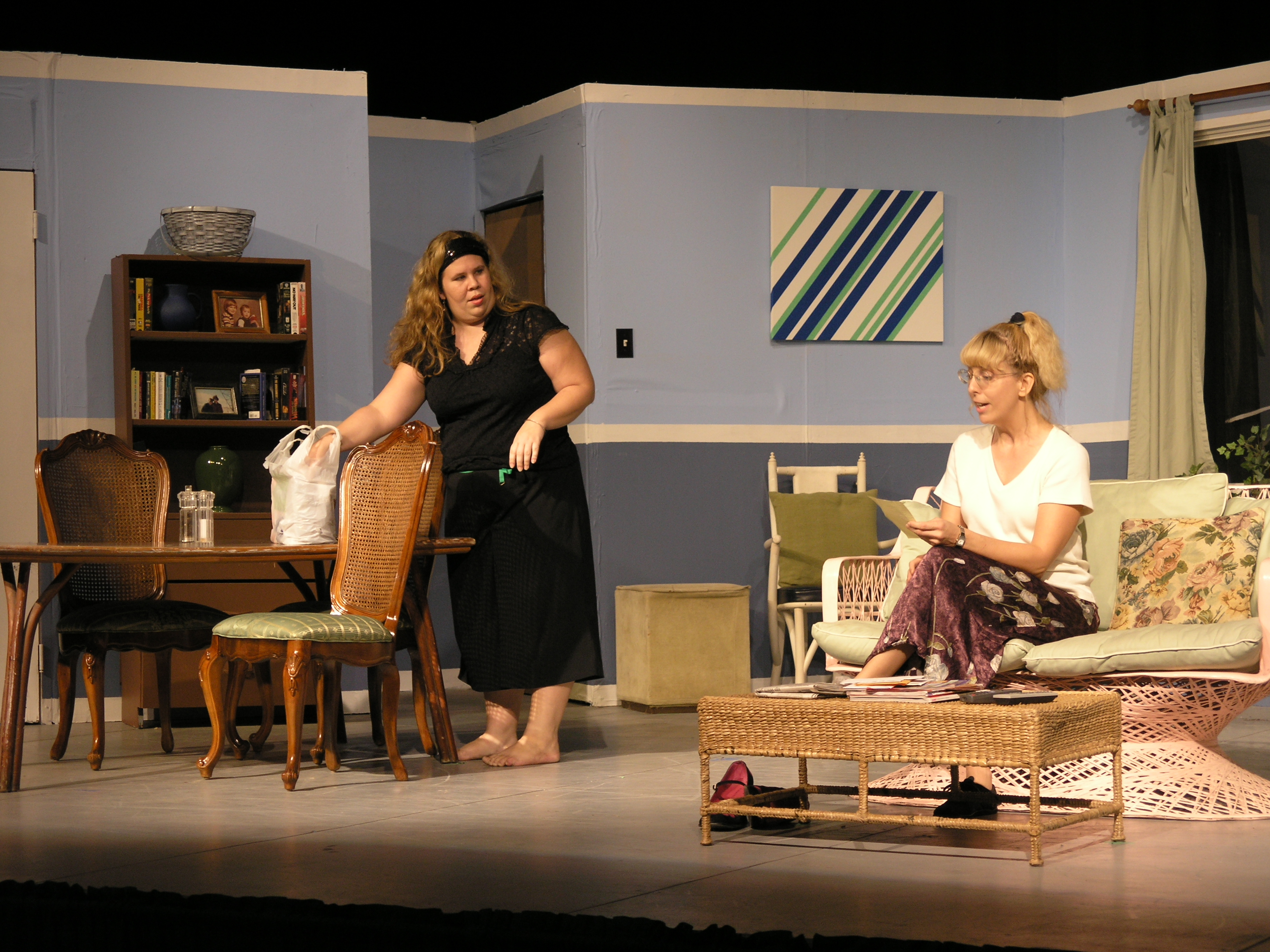
The Stage Directions You Should Pay Attention To

There is, of course, an exception to every rule.  So there are stage directions that I wouldn’t think about ignoring.

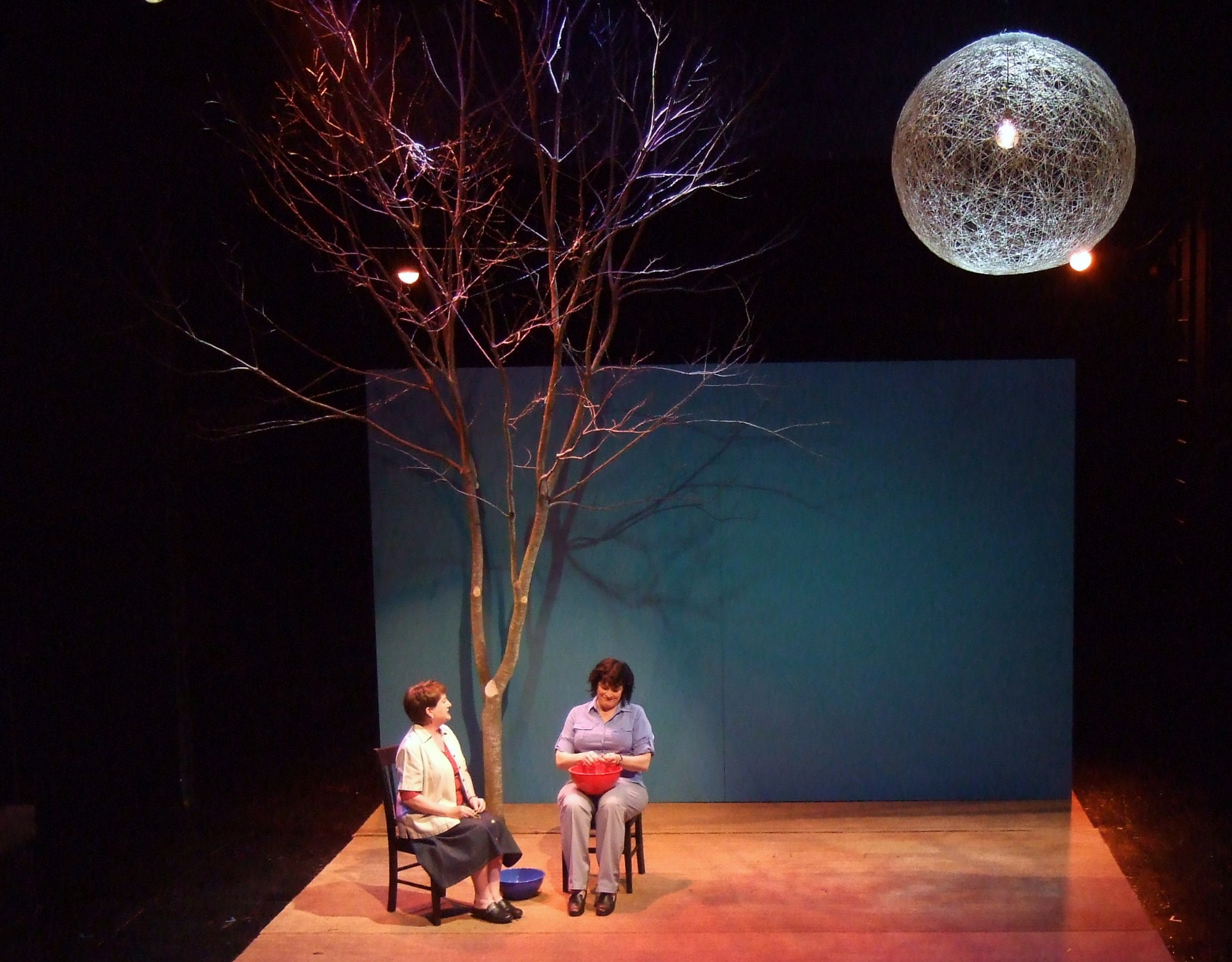
godot3_p1250709Samuel Beckett’s plays are a good example.  Waiting for Godot specifies a single tree in a barren landscape.  To populate the set with some scrub brush as well would be to damage Beckett’s intention.

To have Hamm stand or Clov sit in Endgame would similarly harm the play.

In Equus and in Christopher Schario’s A Christmas Carol, the playwright calls for the actors to be on stage at all times, seated on benches at the sides when they are not part of the action.  This is a choice that should be honored in the production.

Thornton Wilder makes no such request for Our Town, but productions of his play have been staged this way, and I don’t see it as problematic.

Schario’s play calls for a fiddler on stage, who plays music at various points throughout the night.  When I directed the play, there was no fiddler available.  We turned four of the actors into a singing quartet who fulfilled Schario’s intention faithfully, I think.  However, striking the musical component entirely would have lessened the play.

Our townNoel Coward’s estate insists that his plays be staged with complete fidelity to the stage directions, including the smoking.  I’m not sure that every cigarette in Coward’s oeuvre must stand lest his plays be harmed.  (A red pen to some of his dialogue would strengthen the plays, but alas, we must draw the line there.)

Full realistic sets for Our Town would completely contradict the playwright’s purpose; however, if you indicated the gardens with something other than arched trellises, I doubt an audience would be disturbed.

In other words, examine the stage directions, playwright’s notes, and dialogue for the playwright’s intention.  Honor the intention.  If you succeed in this goal, then whatever you do will be all right.

How I Use Stage Directions

This is just how I use them.  Since I am a big proponent of NOT using them, I think I should probably help you understand exactly what I mean by that.

When I direct, actors love to say to me, “But it says in the stage directions,” to which my typical response is “So?”  But the truth is that I do use them.  I’m just not a slave to them, that’s all.

The first time I read a script, I skip the stuff in parentheses altogether, unless I’m unclear as to what is going on or if the stage directions are very lengthy, in which case they usually represent physical action that isn’t reflected in the dialogue.  In this latter case, what happens is usually material to the plot, and I need to know what is happening.

But my first reading is to get my visceral reaction to the play and to my character.  What hits me between the eyes when I read it?  What is my experience like?  What is the tone of the piece?  In broad strokes, what seems to jump off the page about my character?  What seems important?  Do any images or sounds come up for me?

The second time I read the play, I read it very closely.  I breeze through the first reading, but I slow down the second time, making sure I get every word and its meaning, and this time I read the stage directions, just as carefully.  I know that they are an amalgam of the playwright and the original production, but I like to know what those who have gone before me thought.

The third time through, I highlight my lines.  The fourth time through, I blacken the stage directions with a Sharpie.  But not before reading them again.  Some I actually leave in.  Here’s my logic:20080912-black-marker
Sometimes what is in those parentheses are unnecessary.  A year ago, I did Alan Ayckbourn’s Woman in Mind.  Virtually every adverb instruction (nervously, indignantly, affectionately) was obvious from the writing, I felt.  And with a good writer, this is usually the case.  When that’s the case, I blacken them out.

When I come across an adverb that surprises me, I stop and consider it.  Clearly, I have had a different reaction to the line than the playwright expected.  So what about his choice?  Is it valid?  Is it more interesting than I what I felt?  Does it change the meaning?  Is it playable?

If, after giving it consideration, my reaction is, “Oh, I see!  Of course!”, then I’ll probably blacken it, too.  I’ve made a reasonable commitment to it in that moment, or at least I am confident that I will remember the playwright’s opinion when I rehearse the scene.  But if I’m not confident that I’ll remember, or I find it an interesting idea and want to try it, I’ll let it stand.  Anything I don’t blacken out is there because I want to revisit it, and so I’ll notice it again every time I read the script.  Once I’ve made a decision to use it or not to use it, I’ll blacken it.  (Note that I’m blackening it out whichever I choose.)

The same thing goes for physical movement.  If the business suggested is inherent in the dialogue –   “(lifting his glass)  Here’s to us, darling!” – I’ll strike the “lifting his glass.”  It’s just unnecessary and is cluttering the page, which makes it hard for me to find my lines.  If it’s a physical cross – “crosses to table” – I’ll strike it.  These kinds of movements are entirely flexible and may be different in each production.  “Sits down” may seem obvious, especially if I’ve been invited to sit down, but I want the freedom to sit down when I want to.  Perhaps I’ve been invited to sit, but have reasons of my own to delay sitting.  I’ll sit eventually, but I’ll discover in the course of rehearsals exactly the right moment to sit.

(Bear in mind, too, that actions in the script don’t necessarily happen at the exact moment indicated.  The convention of writing often requires that the movements be noted before or after a line, when in fact they happened in the middle of the line in the original production.  But many actors are determined to do it at the exact moment the words show up in the script!)

Physical action or business which isn’t clearly indicated in the dialogue (such as an ironic lifting of a glass in a silent toast, unaccompanied by the words, “Here’s to us, darling!”) is worth considering.  I may or may not use it, because I may or may not end up coming to the conclusion that it is in character or that it’s an ironic moment.  Or I may find something better to do.

But if it’s worth trying, and I think it is original enough that I might not think of it myself, I’ll leave it be, to remind myself to try it on for size.  If I think it’s an option that will readily occur to me during rehearsals, I’ll strike it.

Any action that is essential to the plotline but isn’t indicated in the dialogue gets to stay in my script.  Descriptions of fight sequences or other complicated physical bits get to stay.  I may or may not use what is suggested, but the stage directions help remind me of what’s important, and give me a base to work from.  A lot of the stage directions in a farce like the Farndale Avenue series stay in, because the script would be incomprehensible without it, there is no need to start from scratch on everything, and it is the cleverness of the authors in coming up with all those sight gags that makes the plays work.

But everything else is pretty much gone after the fourth reading.

salt shaker TooFarNorth textIf you can take the stage directions with a grain of salt, then there is no need to blacken them.  I do it both to clarify what is spoken and what isn’t, as well as to force myself to work a little harder, on the theory that if I have to dig, sometimes I’ll come up with gold.

Every once in a while, I’ll be deep into rehearsals and a scene isn’t working.  So I go back to my script to find how the original production solved it.  Only to find I blackened it out.

But not to worry!  Because most of the actors have left their stage directions untouched, I always have access to them if I need them!


About Those Stage Directions . . .

Gospel-Transformation-Bible-005There are people who feel strongly that the stage directions in the script are The Gospel.  Not just the movements indicated, but the emotional choices for the actor as well (e.g., “angrily”).  I don’t seem to be able to persuade them that these not RIGHT, but they are merely suggestions.  You are under no compunction to follow any of them if you have a better idea.

The people who feel this way credit the playwright with a degree of omniscience that can be misplaced.  Playwrights are human beings, and they make mistakes, just like the rest of us.  Physical movements are often from the original production, not from the playwright, and so don’t warrant slave devotion to them.  The original set used is just one designer’s interpretation of the play, and has nothing to do with the playwright in any case.  And often the physical movement noted is arbitrary.  The play will not be weakened if you stand up two lines earlier or two lines later than the script dictates.  It probably won’t be harmed if you never sit down in the first place.

As for the adverbs playwrights throw in so that you won’t mistake their intention, they simply reflect how the playwright heard it in his head when he wrote it.  It’s not the only way to say the line (see my next post, The Half Dozen Rights, for an expansion on this idea.)

Sometimes these little notes provide clarity where confusion exists, and I’m all for playwrights using them then.  But now that I understand the playwright’s intention, I can say the line however I like – and not necessarily “angrily” – because whatever I end up choosing, it will match the playwright’s intention.  Which I now know.  If I have a more creative choice that is still in line with his intention, I’m going to ignore his specific instruction, and the play will be better for it.

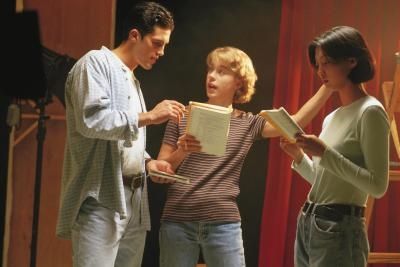
Actor Ray Ficca, playwright Bill Cain, & director Ryan Rilette during a rehearsal for New Book, Round House Theatre, April 2013

Actor Ray Ficca, playwright Bill Cain, & director Ryan Rilette during a rehearsal for New Book, Round House Theatre, April 2013

But sometimes the playwright gets a little carried away with his instructions to the actors.  And you know what?  Sometimes he’s just dead wrong.  I know, I just spoke sacrilege.  But I’ve done plays where I am convinced that the playwright was giving me very bad advice on how to play the role.  I’ve come across stage directions that leave me utterly perplexed as to what he’s talking about.

The lines I say?  Those are sacred, and if I don’t understand what they mean, I better figure it out, and quickly.  But the advice on how to say them, or how to move?  Not so much.  As I said somewhere, if the playwright’s choice is the best one available, you’ll discover it for yourself just by doing the work correctly, and it will be organic when you come across it that way, whereas if you blindly follow the stage directions, you risk it appearing artificial.  So you won’t do any harm most of the time if you ignore them.

I also think it’s important to remember that the playwright is a writer, not an actor.  Now, I’m not saying that all playwrights are terrible actors.  I’m sure there are some who are decent actors.  Maybe even very good ones.  Probably not brilliant, or they’d be actors, first and foremost.  But their stock in trade is putting words on paper.  An actor’s stock in trade is putting the words on their feet.  And sometimes, things look and sound very different in three dimensions than they look on paper.  Sometimes a playwright is simply too close to the work to gain a proper perspective on it.

Theater is a collaborative art.  We each bring something to the table, and the ensemble effort produces the final product.  We actors aren’t there to be marionettes of the playwright.  We are contributing, creative artists.  So when it comes to stage directions, keep what is useful and works.  Use the playwright’s opinions as guidelines.  But don’t turn off your own brain or instinct just because The Playwright Spoke.  He isn’t God.  And he can be wrong.  He didn’t anticipate you playing a role in his play.  If he did, he might have viewed the character differently.  And written entirely different stage directions!

To read The Validity of Other Perspectives, go here.  To read The Half Dozen Rights, go here.  To read How Do I Know What the Right Acting Choices Are, go here.  To read Line Readings and Why They Don’t Work, go here.

Learning the Blocking, Part II

Okay, this time I’ll really answer the question of how you go about learning your blocking:

First, you have to write it down.  Clearly.  In pencil, because it may change.  You’ve got to develop a “shorthand” that is easy for you to remember.  A script doesn’t give you enough space to write full sentences, and you can’t be reading a full sentence about your movement while you’re saying your lines.  Using an “X” for cross, as well as the usual directionals (“DR” for downstage right, etc.) are obvious choices, but you may need to invent abbreviations for set pieces or kinds of movements (jump, run, stand, etc.)  I’ve sometimes drawn a floor plan on the stage and used numbers to indicate locations I am to be on certain lines, and noted those numbers on the lines in question.  I’ve also used arrows.marked script

How you note your movements is up to you.  The point is that they should be legible (no scribbling you can’t decipher later); clear in intent; and complete.  You may need to stop the rehearsal’s forward progress to make notes in your script.  This is perfectly all right; it saves everyone time later, so no one objects to the stop-and-go nature of blocking rehearsals.  Just make sure that you get everything written down, because I promise you, you won’t remember the things you don’t write down.

Here comes the really important part:

When you get home from rehearsal, walk through your movements in your living room.  Don’t worry about your lines.  Just make sure you know the movements.  Notice what the line is that you’re moving on, but jump from one movement to the next.  Skip all of the dialogue that happens while you’re stationary.

Don’t just read your notes.  Physically move through the pattern.  Twice.

If you are very active in a scene, you might want to break the scene into smaller pieces; pieces that allow you to remember a number of consecutive movements, so that the second time through goes fairly smoothly.

If you can, get to your next rehearsal a few minutes early, and walk through your blocking again in the rehearsal space.  In all likelihood, you’re blocking a different part of the play and won’t be running the scenes from the previous night, but you want to revisit the blocking while it is still fresh in your mind.  If you can’t get to rehearsal early, stay for a few minutes at the end.

If you don’t do these little walk-throughs, then by the time you rehearse the scene again, you’ll have forgotten much of your blocking.  But if you DO do them, you’ll gain comfort with your movements early in rehearsals, which will free you up to do the more important (and fun) work on your character!

To read Blocking the Play, go here.  To read Part I, go here.

Learning the Blocking, Part I

How do you learn your blocking?  The same way you learn your lines:  by practicing it over and over.

I am surprised by how many people rely strictly on rehearsal time to learn their blocking.  If your blocking is fairly simple and you make clear notes in your script, this is a perfectly do-able approach.  However, if the blocking is at all complicated or there is simply a good deal of it, it is difficult to get it down quickly if you go about it this way.  And you do want to learn your blocking quickly, because until you have it down, you can’t do much else.

How quickly do you need to learn it?  Let’s say we block the first scene on Monday night.  The next time we run that scene, there are apt to be some moments when an actor is confused about where he is supposed to be, or someone has come up with a better alternative than what was done on Monday.  So the second night we work on the scene, we sort out all of these moments, and we should end that night with a clean run.  And that should be the end to 95% of blocking confusion, and by blocking confusion, I mean the actor who says, “Oops, I was supposed to have crossed to the door four lines ago!” as he dashes to the correct place, or the actor who is surprised to find that he’s supposed to be somewhere other than he is.

actor scriptThis DOESN’T mean that once blocking is completed, it can’t change.  It can.  As you get into rehearsals, you may realize that you can change the blocking to make something funnier or otherwise more effective.  Once you get familiar with the lines, you may realize that the timing is incorrect and the blocking needs to be changed to accommodate this new reality.  As you learn more about your character, you have little epiphanies about what your character will do that you couldn’t have back in the first week of rehearsal when you blocked the show.  To not change the blocking for any of these reasons would be silly, and you should definitely do so.

So yes, that means you have to unlearn what you learned to begin with and replace it with something else.  The nature of the beast, I’m afraid.  The point is that you need to quickly memorize your blocking be doing whatever you’re supposed to be doing at whatever point in the rehearsal process you are.  If you don’t, then your rehearsals stop being about making discoveries about your character and are just about figuring out where you’re supposed to move when.  Just as rehearsals when you haven’t fully memorized your lines but you insist on running the scene without your script are just about you trying to remember your lines.  It’s a waste of everyone’s time and disrespectful of those you are working with.

To read Blocking the Play, go here.  To read Part II, go here.

Blocking the Play

[This is a purely introductory piece on blocking — I have much more useful stuff to say about it down the road.  But I’ve got to start somewhere, and I’m still traveling, so this and the next two posts will fill in the gap until I can get back to my Rehearsing series.]

How you go about this depends at least in part on your director.table reading

There are directors who like to sit around a table with the script, working on relationships and script analysis, until the actors have their lines memorized.  Only then will he allow them on the set.

There are directors who like to begin with blocking, perhaps preceding blocking with a single read-through.

The directors who begin with blocking may come into rehearsals having pre-blocked the entire show, and will tell you where to stand and when to move.

Or they may let you make your own decisions about blocking and suggest changes either in their role as traffic cop or because they think they have a better or more interesting choice they’d like to try.  But first, they want to see where your instincts take you.

blockingIn this last group, there are directors who, once they’ve settled on something that works, will stick with it for the rest of the rehearsal period.  And then there are directors like me, who will continue to tweak the blocking as rehearsals unfold and we learn more about the characters and the play.

And then there is yet another group of directors, who will allow the actors to wander as they will for a few weeks and then put some structure to it.  The wandering is all part of the exploration of the play, and if you explore efficiently, you will have a pretty good sense of what works at the end of this initial period.  But this approach is best used with experienced actors who are all very comfortable with creating their own blocking.

How long blocking takes depends in part on how physical the play is, and of course two different productions of the same play may end up being very different in this regard.  Farces or very episodic plays (The 39 Steps, A Christmas Carol) take the longest time to block.  In a community theater rehearsal of a blocking heavy play, eight to ten pages may be as far as you can go in one night.

A word about the movement in the stage directions of a script:  Sometimes the movements are the playwright’s vision; sometimes they are from the original production.  Either way, you should view them as suggestions and not mandates, especially if your set is configured differently than either the original production’s set or the one the playwright had in his mind’s eye when he was writing (and who knows WHAT that looked like!)  Your job as an actor is to find and use movements that are organic to your own interpretation of the character and the play.  Honor the dialogue given to you by the playwright both in terms of your characterization and your physicality, and the result will be “right” – whatever THAT means!

The only exception to this is when the playwright describes movements that are essential to the plot and not revealed clearly through the dialogue (such as in Frederick Knott’s Wait Until Dark).

To read Learning the Blocking Part I, go here.  To read Part II, go here.

How Action Enhances the Play

Most physical action used in plays is not indicated in the script.

Yes, sometimes there are stage directions that appear in parentheses.  Some scripts have more of this than others.  These days, playwrights steer away from including any stage directions unless they are absolutely necessary to understanding what is going on in a scene.  For instance, if a character says “Here”, and then pulls a packet of unmarked bills from his jacket pocket, and the other character says “Thanks”, you’d have no reason to know that it’s a bribe and not a throat lozenge unless the playwright tells you.  But directions such as “sits” or “stands” are rare in today’s scripts.  The playwright understands that it often doesn’t matter exactly when the sitting or standing happens, and that if it does, a good actor will be able to figure it out without assistance.

But even in older scripts where stage directions are sprinkled in here and there (and sometimes these are not the playwright’s opinions but merely the stage manager’s recording of what was done in the original production, which you should not consider to be sacrosanct), there is much that isn’t included.  It’s your job as an actor to add physical movement that underscores, enhances, or adds to the fun of the play.

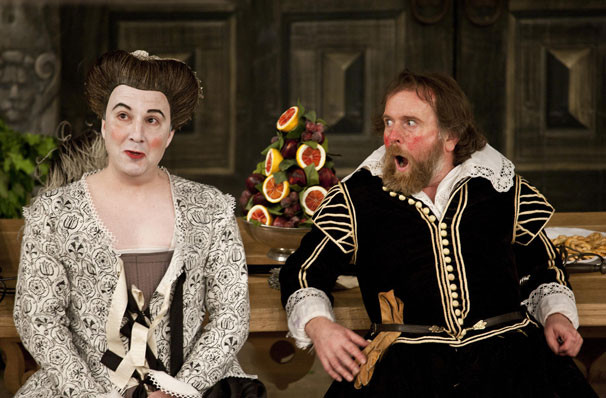
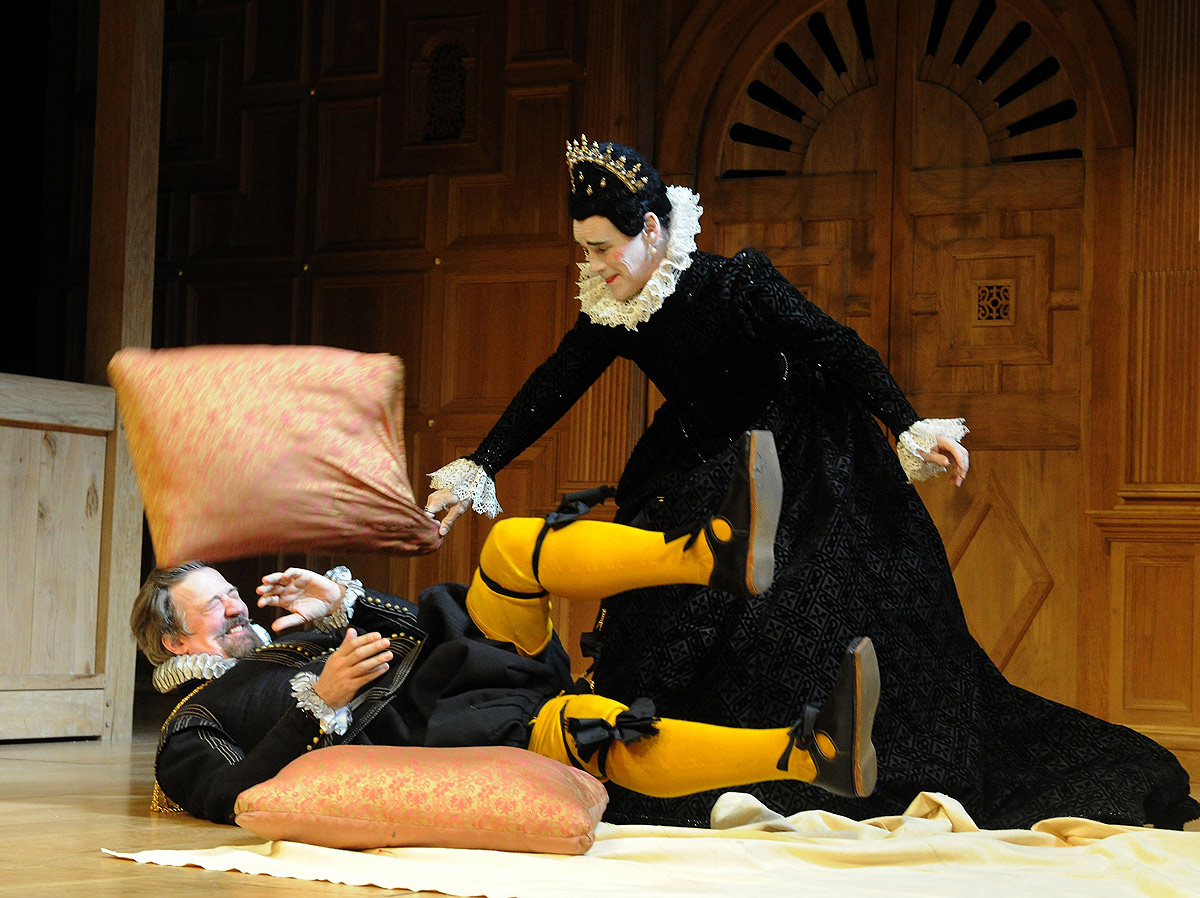
If you’ve ever read a Shakespeare play, you’ll know that aside from entrances and exits, there isn’t much recorded in the script in terms of movement.  Watch a good production, however, and you’ll find lots of action, especially in the comedies.  I just saw the London production of Twelfe Night with Mark Rylance and a host of exquisite actors at the Belasco Theatre in New York, and it was full of marvelous physical bits that made us all laugh.  Here’s a few photos to give you an idea of what is possible when you let your imagination loose and express yourself through more than words (you can also check out Youtube for the American Conservatory Theatre’s commedia del’arte production of The Taming of the Shrew — links in the right column — for some very physical Shakespeare!):

TN4

TN3

Twelfe Night

TN6

TN1

Comedic Action

OLYMPUS DIGITAL CAMERAI was just going through photos of the first play I directed on St. Croix , a one-act play called “When Men Are Scarce” for Caribbean Community Theatre in 2006.  I no longer remember the name of the playwright, but it was a play from the early 1960s — very Doris Day-ish.  Certainly before the Sexual Revolution!

While very dated, it was a well-constructed play.  We did our best to overcome its age, and we turned it into very physical comedy.  I told the cast that it was, in effect, an episode of “I Love Lucy”, with the brunette in the photo (wose name I’ve forgotten, sorry) playing Lucy, the blonde (Lisa Vaughan) playing Ethel, Mariah Mays playing Ricky, and Emily Van Buren playing Fred.

At the time, WWJD (What Would Jesus Do?) bracelets were still in vogue.  So our mantra became “What Would Lucy Do?”  (I gave the cast WWLD bracelets on closing night.)

Some of the physical action of the play was indicated in the script, although not in the quantity or detail that we ended up using.  “Ricky” and “Fred” dressed the set up to look like a romantic dinner had happened.  (We had a lot of props!)  Some of it wasn’t in the script at all:  “Lucy” trying various ways to build a “step” so she can come in through the fire escape window, or pushing the menswear under the loveseat with her foot while pretending the coats aren’t really there.

OLYMPUS DIGITAL CAMERAThe real fun of doing this show, for me, was finding ways to really push the envelope and pack the stage with comedic action.  Don’t settle for token activity if you can find a way to enrich the visual with movement, especially if you can use the movement to underscore the emotional context of the scene (which you generally can.)

And when you’re playing comedy, remember that virtually all comedy is physical.  Even verbal jousting, like Noel Coward, is much funnier when you add the physical to it.  Don’t let the punchlines do all the work.  If you do, you are cheating both yourself and your audience.

Check out the Facebook page for more photos from “When Men Are Scarce”!

Why you need to practice onstage physical movements. A lot.

Activities are typically more complicated than movement.  For instance, I can get comfortable with crossing the stage fairly easily.  But if once I get there, I need to pour myself a scotch and soda on the rocks and drink it – well, that’s considerably more complex.

Not only are there many more moving parts, so to speak, I actually have to pay some attention to the activity.  I have to make sure the ice gets into the glass, not on the floor.  I have to be careful that the soda in the Schweppes bottle doesn’t spray all over when I open it.  I need to be sure not to pour too much “scotch”, unless my character is intent on getting drunk, in which case I need to be sure I do pour too much.  And I need to not overfill the glass and make a mess of things.

If I have a limited number of lines in which to accomplish this, I’ve got quite a challenge in front of me.  In other words, I better practice this early and often.

scotchFirst I have to get comfortable with the action itself.  I’m not in my own home, so I have to get familiar with where things are.  If I’m using ice tongs, I’d better practice moving ice with them so that I can do it quickly and without mishap.  I don’t drink scotch and soda, so I have to learn what the right level for the scotch is in the glass I’ll be using.  I have to practice with both bottles, so I learn how quickly I can expect the liquid to pour.  Do I have to unscrew a top?  How long does that take, and should I have the top almost completely unscrewed as part of the pre-set?

In other words, I need to remove the mystery of the actions.  Even activities that I am ostensibly doing for the first time need to be thoroughly explored, so that I know how to imitate the first-time experience.

Once I’m comfortable with the action, I need to add the words to it.  This will throw all my well-practiced actions into chaos!  I won’t say the lines right, and I won’t do the activity properly.  I’ll be a mess, in other words.  But as I continue to practice, the two – words and action – will start to blend naturally.  I’ll come to understand how the rhythm of my lines fit with the rhythm of the action.  Where I can pause to give my full attention to the action, and when I can momentarily stop the action to make a dramatic point with the words.

But all this explains – I hope – why you need to start experimenting with anything physical, whether it be a change in location or a physical activity, as early in the rehearsal process as possible.

Physical Activities, Part III

Before you choose your activity for a scene, it’s a good idea to examine all the possibilities.  Let’s say your character enters the house at 6:00, arriving home from his job at the bank.  He might change out of his suit, because he wants to be more comfortable.  He might unpack the groceries he picked up on his way home, because then they’re out of his way.  He might look through the mail, because he wants to see if there is anything important he needs to deal with.  He might pour a drink and sit down to finish the crossword puzzle he started on his morning commute, because he only has three more words to fill in and he likes to finish every puzzle he starts.  He might begin to prepare dinner, because he’s hungry or because it’s his night to cook.

Man Preparing a SaladThere are other alternatives, too, but you get the point.  Don’t worry so much at this early stage about what this particular character would do.  You just met this character, and quite frankly, you have no reason to be certain yet about his activity when he enters the scene unless the playwright has provided him with one.

So explore every possibility of what someone might do when he comes home from work, even the options that you are “sure” at this early stage don’t suit your character.  Thinking through and discarding the “wrong” options can sometimes lead you to the right one.

Whatever your banker does, he probably has a good idea of what he’s going to do when he gets home before he opens the door.  And unless something happens to stop him from doing it, that’s what he’s going to do.  He’s not going to make a big production out of it.  He’s just going to do it, as simply and naturally as possible.

When he walks in the door, he doesn’t yet realize that something dramatic happened while he was at work that is going to change his life.  He doesn’t know that his wife got the news that she is being transferred to a job 1,000 miles away.  That the rabbit died.  That his wife’s sister left her husband and has moved in with them.  Or that his son got in trouble at school for lifting a girl’s dress.

He’ll find all that out in the middle of chopping vegetables for the salad.  Maybe he finishes making the salad, maybe he doesn’t.  Maybe he tries to continue cooking, but finally gives up and makes a peanut butter sandwich (which he better not actually eat unless he has no lines for a page or two!)  But he’s got a viable activity to keep him busy while his world caves in!

See Part I here.  See Part II here.