Telephone Booths, Cat’s Paws, and Wanderlust, Part 2

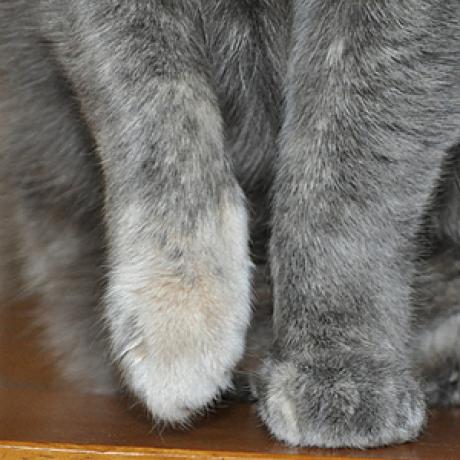
cat pawCat’s Feet is what happens when a director tells someone with Telephone Booth Syndrome to “move around, use the stage”.

Have you ever seen a cat knead?  If you have, imagine an actor doing the same thing with his feet.

Kneading doesn’t require that you leave the telephone booth.  Because actual movement is involved, actors think they are doing what the director asked.  They honestly don’t realize that they haven’t really relocated their body but instead are wearing a hole in the carpet.

They may be rotating left to right, and both feet may be moving, but they haven’t actually taken a full step in any direction.  It’s more like a quarter step.  Keep encouraging them to move, and you might get them to use 6 square feet of space (3 feet wide, 2 feet deep).  But that’s about it.

It’s as if there is a leash that keeps pulling them back to their original position every time they stray too far from “home base”.

Eventually, they realize that physical movement means horizontal, not vertical, movement.  They may even come to understand that the stage is their oyster, and they are welcome – no, encouraged – to use every bit of it.

This is when they become Wanderers.

Wanderers move, alright.  They may cover the entire stage (although typically, they wear a path in the carpet from point A to point B.)  But usually, they move slowly in one direction and then reverse when they reach the “end point”.

The important thing to understand about Wanderers is that there is no connection between their emotional life and their movement.  They are walking because the director told them, “this is your scene, use the whole stage.”

Name one person you know who wanders aimlessly while they are talking and who doesn’t have a distinct psychiatric disorder.  I doubt that you can.

There is ALWAYS a purpose to our movement which results in a distinct start, movement with purpose, and a distinct end.  Wanderers tend to blur these divisions.  They stay in motion for the sake of staying in motion, not because they have any practical or emotion need to be in motion.

Let’s say that I’m playing a scene where my character is very angry at someone and has a lengthy speech where I rail at my scene partner.  “Work the room,” says my director.  “Use the whole stage.”  Given these instructions, I’ve seen actors slowly and deliberately, often without relating back to their scene partner in any meaningful way, traverse the set in a way that is counter to the deep emotions they are feeling.  Sometimes they are in constant motion, but any stops along the way rarely have any connection to what is going on in the text.

To the audience, they look like they’re wandering.  Because, in fact, they are.

Stage movement is essentially punctuation to the script.  It needs to buttress the emotional arc of the characters.  It therefore needs some intentionality and to be chosen carefully.

More on this in a future post . . .


Actor’s Etiquette: When Things Go Wrong (and They Will)

10648110-got-etiquette-shirtThings don’t always happen the way they are supposed to on stage, beyond the matter of whether or not you remember your lines.  Props don’t get placed, or they’re in the wrong place.  Things break.  Sound cues go awry.  What’s an actor to do?

The first thing, as with dropped lines, is not to panic.  There is always a way out or around the problem, even if it’s not ideal.  It’s easier to deal with than dropped lines or forgotten entrances, because you can generally speaking stick fairly close to the script without anyone suddenly feeling lost.

Here’s a common one that often is mishandled:  Something falls to the ground:  an earring, a potato chip, a pencil.  No one retrieves it, because (a) it’s not in the script and (b) they’re afraid of disrupting the play, because they have to move several feet out of position to retrieve the object.  They might have to move on someone else’s speech, and they want to be polite to their fellow actors.

If you don’t retrieve it, the audience will obsess over it:  “Are they going to pick it up?”  “What if someone steps on it accidentally?”  “Why aren’t they picking it up?

Why, indeed?  Wouldn’t you pick it up if this was real life?

I rest my case.

In reality, moments like these are great opportunities to show that you really are “staying in the moment” and add a degree of verisimilitude to the scene.  Don’t let them pass you by!  Take the challenge!

I once played Madame Arcati in Blithe Spirit.  The “seance” scene requires a certain number of chairs, and one night, I realized in the middle of the scene that we were short one.  Not a problem:  I suggested to my host that we needed one more chair given how many people we were, and perhaps he’d be so kind as to fetch an extra from the dining room.  I filled the gap when he went to fetch the chair with some plausible conversation, and the very practical problem was addressed without the audience being aware of any problem.

Need to pick up that earring?  You can do so while still staying in character and listening to what’s going on in the scene.  If it’s your line, that’s even better.  Covering unusual moments while you are the one speaking gives you full control over the situation, and you can add dialogue as necessary to make it seamless and get yourself back into position.

But what about things that are material to the plot that go wrong, things over which you have no control?  Missed sound and light cues, for instance?

The doorbell is supposed to ring, and it doesn’t?  How about, “Did you hear something?  It sounds like there’s someone outside.”  Say this while being generally puzzled and concerned about why there would be someone at your door who isn’t ringing the bell, and the audience will never know the sound cue was missed.  (These are adjectives, but the underlying verb might be something like “to worry about one’s security at home.”)

Does the phone ring too early?  Not a problem, answer it, ask the party to hold, and finish the necessary lines before beginning the phone call section of the script.  Does the phone not ring when it should?  Call the other person yourself, or create dialogue or activity that will wake up the sound booth, if only by the fact that you’re doing something that isn’t in the script.  Or, if you can, find a way to incorporate the information conveyed by the phone call (“By the way, I spoke to Joe earlier today, he said he’ll be here around 3:00, which is in ten minutes.”)

Of course, sometimes things just go wrong, and there is nothing to be done except to pretend that the mishap didn’t occur.  Does the gun not go off?  Just pretend it did and fall down dead.  The audience knows we live in an imperfect world and that this is, after all, a play, not real life.  It may deflate the drama a bit, but they’ll forgive you.  As with the missed line issue — audiences appreciate the professional effort to deal with the unexpected.


Telephone Booths, Cat’s Paws, and Wanderlust, Part I

telephone boothThere are three bad onstage habits that actors are inclined to have, with regard to movement:  Telephone Booth Syndrome, Cat’s Feet, and Wanderlust.

“Habits” is perhaps too hard-hitting a word.  Actors aren’t aware they are doing any of these things until it’s brought to their attention.  These seem to just be natural behaviors that many, and perhaps most, actors are inclined to exhibit until they learn how to NOT do them.

If they are such bad choices on stage, then why do actors do them?  Don’t know for sure, but I’ve got some hypotheses:  Fear.  The inability to pay attention to too many concurrent activities (talking, listening, emoting, moving).  Fear.  A conviction that saying one’s lines is the primary, overriding concern.  Fear.

Whatever the cause, I find that when I bring it to an actor’s attention, he will usually understand why it isn’t the best choice available to him and why it doesn’t reflect real life.  However, the ease with which he can learn to overcome it and use movement effectively varies from person to person.  Nevertheless, I believe that everyone can, because after all, it IS something we do quite naturally in real life.

Funny how difficult it seems to be to do on stage what we do so naturally the rest of the time, huh?

So what are these three habits, in brief?

The first is Telephone Booth Syndrome.  For those of you too young to remember them, telephone booths were narrow, four-walled spaces designed for privacy for making a phone call from a public phone.  (Yes, once upon a time we didn’t care to conduct personal business while walking down the street!)  Even with one shoulder against a wall, it was impossible to fully extend one’s other arm.

Actors with Telephone Booth Syndrome act if they are similarly restricted.  They are inclined to remain rooted to one spot (trapped in the confines of the booth), and the idea of using gestures which would violate the dimensions of their invisible booth is unthinkable.  Their upper arms tend to remain in contact with their torso, while the lower arm does all the necessary pointing.

For these actors, holding their arms out to the side, parallel to the ground, in a gesture that is inclusive, encompassing the world and all its possibilities, is nearly impossible.  It’s fascinating to me that while these actors will take direction and move from Point A to Point B when the director asks them to, asking them to exercise the freedom to fling their arms wide as a reflection of a line that says something about “the whole wide world” causes them to panic.

They try to oblige, but their elbows are still distinctly bent.  They THINK they’re responding to the direction, but they aren’t, and it’s massively uncomfortable for some of them to go to full extension.

These are also they actors who usually need to be given all of their blocking by the director, because they are either uncomfortable creating their own or else don’t know how to, and they will perform the direction to the letter.  Their emotions don’t drive their movement, it’s only the director’s wishes that does

But imagine, if you will, five actors standing on stage, each in their own little telephone booth.  How dynamic or interesting is that to watch?

Telephone Booth Syndrome is perfectly understandable, because it is our “personal space”.  By personal space, I mean the area around us that we prefer other people to not enter.  You know the stranger you just met at a party who gets uncomfortably close to you, invading your personal space?  Well, it seems that not only do we not like others to invade our personal space, we don’t really want to leave our space ourselves (at least, not when we’re on stage)!

But the rules are different on stage!  Knocking down the personal space walls is essential.  Actors need to feel the freedom to let their emotions run amuck.

Next up:  Cat’s Paws and Wanderlust

When You Forget Your Lines

embarrassment-2It happens to everyone at some point.  No matter how well you know your lines, there will come a moment where you become unglued and can’t remember a thing about what is supposed to happen next.  It will come in a spot you’ve never had trouble with in rehearsals or any performance.

So what do you do when the inevitable arrives?

Don’t panic.

I know, that sounds ridiculous.  How can you not panic?  The world is about to come to an end!  You will be exposed as a fraud or worse, a fool!   You will be the laughingstock of the county for years to come.

Believe me, it’s not that bad.  But also believe this:  If you don’t panic, the odds are that at least half the time, the audience will not have any idea that anyone has dropped a line.  And the other half of the time, they will happily watch you deal with the moment professionally, relax when it is clear that you are back on track, and praise you afterwards for how well you handled that moment.

So okay, you’ve managed not to panic, or to at least limit that moment to a split second.  Now what?

Move.  Anywhere.

Physical motion on stage does not necessarily have to be attached to the spoken word.  So moving does three things for you in this situation.  One is that it distracts the audience.  They assume that your motion is planned and is part of the play, so they are still hanging in with you, blissfully unaware that the train has jumped the rails and life as we know it is about to end.

The second benefit is that because you have created an activity (scrounging around in your purse or pocket for a piece of gum or a pen, looking for the earring you lost this morning, digging through the couch for change for the parking meter), you have bought yourself time to think about what your line must be, or what the next line you can remember is.  And yes, it is entirely possible to create meaningless, occasional dialogue to add to your activity while still using the other part of your brain to search for the words you’ve forgotten.

The last benefit is that it immediately tells your fellow actors that you’re in trouble.  They can now start figuring out what they can do to save the moment; can they paraphrase your line or otherwise give you a hint that will jog your memory, or can they just skip to the next beat without leaving out any essential information?

Bad Dates HeadshotYears ago I did a one-woman show, and it DID NOT OCCUR TO ME that I might forget my lines and that there would be no one on stage to save me until the moment it actually happened.  In the two second pause that ensued, I held my focus and scoured my brain for enlightenment, but none was forthcoming.  Fortunately, the scene had plenty of physical activity in it, and so I just did more of what I’d been doing (trying on shoes and dresses) while talking to myself about how I looked in a way that was perfectly in character.  And miracle of miracles, manna from heaven arrived after 20 to 30 seconds, and we were off to the races again and the audience was none the wiser.

That was, by far, the longest “gap” I’ve ever personally experienced in terms of forgetting a line.  Since I had no one to help save me, it dragged on longer than such gaps ordinarily do.  But because I kept moving and kept talking, I don’t think anyone in the audience realized anything had gone wrong.

I’ve seen actors who’ve forgotten their lines swivel their heads to the wings and look beseechingly at the stage manager for the words that have left them.  This is probably the worst thing you can do.  It not only lets the audience know that you’ve forgotten your lines in a way that is very jarring, it also means that you’ve got no intention of trying to fix the problem yourself.  To an audience, that is both unprofessional and disrespectful, and they judge it harshly.  They will sympathize and forgive if they see you muddle through a dropped line, but they are very critical of an actor who has given up the ghost.

The better you know both your character and the rest of the play (the other characters, the plot line, etc.), the easier it is to improvise believable “filler”, and having some experience with improvisation as a form of theater can make handling such moments much easier.  You may find, however, that you just aren’t very good at thinking on your feet and improvising your way out of such calamities.  It’s not everyone’s cup of tea, and as long as there is one actor on stage who can handle such moments, you can probably rely on them to bail you out.

But what if it’s a two person scene, and it’s your scene partner who suddenly goes up in her lines?  Or the nature of the scene is that it is very difficult for the other actor to save you?  (I’ve been in such scenes.)  If you’re nervous about your own ability to cover the dropped line, then prepare some possible ways to cover such moments by preplanning things you can do and say to cover such moments.  Hopefully you’ll never need them, but if you do, you’ll be glad you did!